Spotlight Interview: Karen Bey, Vice President, Global Sales at FCS Solutions


This interview first appeared on Hotel Technology News.
Karen Bey, Vice President of Global Sales & Channels at FCS Solutions, brings more than 25 years of hospitality and hotel technology experience to her role. After beginning her career in hotel operations, she held positions with MICROS-Fidelio and InterContinental Hotels Group, working across property technology, system implementations, hotel openings and technology standards throughout Asia Pacific. That combination of hotel-side and technology-provider experience has given her a practical understanding of how technology must work for the people using it every day.
In this Spotlight Interview, Bey discusses how hotel technology priorities are changing, the operational challenges hotels most often ask FCS Solutions to address and the thinking behind the browser-based FCS1 In-Room Guest Services platform. She also shares her perspective on digital self-service, connected workflows, automation and AI — and why technology should give hotel employees more time to deliver the personal service that remains at the heart of hospitality.
Could you begin by sharing a little about your professional journey and what led you to your current role as Vice President, Global Sales & Channels at FCS Solutions?
I have spent more than 25 years in hospitality and hospitality technology, and I have been fortunate to experience the industry from several different perspectives. I started in hotel operations before moving into hotel technology, including roles with MICROS-Fidelio and InterContinental Hotels Group, where I was involved in property technology, system implementations, hotel openings and technology standards across Asia Pacific. Today, at FCS Solutions, I bring that hotel-side experience into conversations with owners, operators, corporate teams and technology partners around the world.
Having been both an operator and a technology provider has shaped my approach. Technology is never just about the technology itself. It is about the people using it, the operational problem it solves and the value it ultimately creates for the hotel.
From your global perspective, how have hotel operators’ technology priorities changed over the past few years?
Hotels are becoming much more focused on operational outcomes rather than simply adding technology. For many years, hotels accumulated different systems to solve individual problems. The challenge is that staff can then find themselves moving between applications, communication channels and manual processes just to get their work done. Today, operators are asking much more practical questions: Can the technology connect departments? Can my teams use it easily on the move? Can management see what is happening across the operation? And can it help us deliver better service with the people we already have?
My experience working across very different markets has also shown me that there is no single technology model that fits every hotel. Understanding the local hospitality environment and how a hotel actually operates is critical i.e., adapting technology and partnerships to very different markets rather than assuming that what works in one geography can simply be replicated elsewhere.
What operational challenges are hotels most frequently asking FCS Solutions to help solve today?
A common issue is fragmentation. A guest request might come into one part of the hotel, while the person responsible for fulfilling it works in another department. Housekeeping has its workflows, engineering has another, and guest services may be managing requests through calls, messages or manual handoffs.
Hotels are therefore looking for better visibility and accountability across the entire operation: what needs to be done, who is responsible, whether it has been completed and how quickly the hotel responded. This becomes particularly important when hotels are operating 24 hours a day and teams are constantly balancing guest service, efficiency and commercial pressures.
FCS Solutions has been serving the hospitality industry for more than four decades. How has the company evolved while keeping pace with changing hotel and guest expectations?
FCS started more than four decades ago with Call Accounting and Voicemail solutions, addressing very specific operational needs within hotels. As hotel operations became more complex and guest expectations evolved, so did we—expanding our solutions to support more areas of the hotel operation.
Today, that evolution is reflected in FCS1, our unified, mobile-first, cloud-based platform that brings together key operational functions such as housekeeping, maintenance, guest services and incident management. What has remained consistent throughout is our focus on developing technology specifically for hotel operations.
What was the strategic thinking behind the development of FCS1 In-Room Guest Services, and what gap in the guest journey was the team aiming to address?
We saw a disconnect between the digital guest experience at the front and hotel operations behind it. Guests increasingly expect the convenience of using their own phones to request services, but digitizing the guest interface alone doesn’t necessarily solve the hotel’s operational problem. If the request still needs to be manually transferred to another team or system, you have simply moved the bottleneck.
The thinking behind FCS1 IRGS was therefore to connect the guest directly with the operational workflow. A guest can make a request digitally, and that request can flow into FCS1 Jobs for assignment, tracking and fulfilment. That connection between the guest-facing experience and the hotel’s back-of-house operation is the important part.
Why was a browser-based, QR-code experience chosen instead of requiring guests to download an app?
We wanted to remove as much friction as possible. For a hotel guest staying for a few nights, asking them to download an app, register and learn another interface can be a barrier. With a QR code and browser-based experience, the guest can access the hotel’s services using their own device without having to install anything. It also gives hotels a digital service channel that is easy for guests to access while still connecting into the hotel’s operational workflows.
FCS1 IRGS connects guest requests directly with hotel operations through FCS1 Jobs. How does that change the workflow compared with requests received by phone, messaging channels or manual handoffs?
The biggest difference is that the request becomes actionable immediately. Traditionally, a guest might call the front desk, someone writes down the request, calls another department and then has to follow up to see whether it was completed. Every handoff creates an opportunity for delay or information to be missed.
With IRGS and FCS1 Jobs, the request enters the operational workflow directly. It is routed to the appropriate team, assigned, tracked through completion and made visible to supervisors and management. It changes the process from a series of communications into a managed workflow.
Which guest services and request types are proving most valuable to digitize, and where do hotels typically see the quickest operational impact?
The strongest opportunities for digitization are frequent, routine guest requests that hotel teams handle repeatedly throughout the day. That can include requests for additional towels or mineral water, housekeeping services, maintenance assistance and other common guest-service requests.
These may appear to be simple tasks, but at scale they generate a significant amount of communication and coordination. Digitizing them reduces the number of manual steps required and allows hotel employees to concentrate on fulfilling the request rather than managing the communication around it.
How can hotels introduce digital self-service without making the guest experience feel impersonal or diminishing the role of staff?
Digital self-service should never be about removing hospitality. It should be about removing unnecessary friction. If a guest simply wants another towel, they may prefer to request it in seconds rather than wait on the telephone. But when a guest has a complicated issue, needs advice or wants a recommendation, the human interaction becomes much more important.
The role of technology is therefore to take care of routine transactions and give hotel teams more time for the interactions where their experience, empathy and judgement genuinely add value. That reflects my broader view that hotel technology should always be considered in terms of the people using it and the operational problem it solves.
What have you learned about guest adoption of mobile self-service across different age groups, regions and hotel segments?
One thing I have learned from working across different markets is that we should be careful about assuming every guest behaves the same way. Guest expectations differ by market, hotel segment, purpose of travel and individual preference. That is why digital self-service should provide choice rather than become the only channel.
The aim isn’t to force every guest into a digital journey. It is to give those who value speed and convenience an easy way to access services while maintaining traditional service channels for guests who prefer them. The same principle applies when entering new markets: you need to understand the local hospitality landscape and make the technology relevant to that environment.
How important are multilingual capabilities and accessibility in designing a digital guest-services experience for an international audience?
They are extremely important, particularly for hotels serving international guests. A digital guest service experience should be about convenience, giving guests an easy and intuitive way to access the services they need. Supporting multiple languages helps reduce communication barriers and allows guests to interact with the hotel more confidently. It is also one of the advantages of a digital interface: the experience can be adapted to different guest profiles and markets without changing the hotel’s underlying operational workflow.
FCS1 IRGS is described as customizable. How can a property adapt the experience to reflect its brand, service model and available amenities?
Every hotel operates differently, so IRGS is designed to allow properties to configure the guest-facing experience around the information, services and amenities they actually provide. That means hotels can determine what services are presented to guests and structure the experience to complement their own service model and brand. Importantly, the front-end experience remains connected to FCS1 behind the scenes. So while the guest sees a simple, hotel-specific service experience, the hotel retains the operational workflow needed to manage those requests.
What integrations are most important for creating a seamless flow from a guest request to assignment, fulfillment and follow-up?
The objective should always be to reduce unnecessary handoffs between systems and departments. With FCS1, the important connection is between the guest-facing request and the operational teams responsible for delivering it. IRGS connects into FCS1 Jobs, while the broader FCS1 platform connects workflows across areas including housekeeping and maintenance. The value isn’t the number of integrations a hotel has. It’s whether information moves through the operation on its own, without staff re-keying it or manually relaying it between systems.
How does the platform help prevent missed requests, improve accountability and give managers clearer visibility into service performance?
Once a request enters a digital workflow, it’s logged, timestamped and assigned. The hotel can see that the request was made, where it has been assigned, its status and whether it has been completed. That provides accountability for operational teams while also giving supervisors and managers a clearer picture of what is happening across the hotel.
Through the FCS1 dashboard, managers have a real-time view of operational activity across departments, allowing them to quickly see what is outstanding, what is in progress and where attention may be needed. This gives management greater visibility without having to rely on manual updates from individual teams. Over time, that information can also help management identify recurring issues, service bottlenecks and areas where processes could be improved.
Which metrics should hotel leaders track to determine whether a digital guest-services platform is improving efficiency and guest satisfaction?
I would focus on metrics that connect technology to actual operational performance. Response and completion times are important, but hotels should also look at the volume and types of requests, overdue or escalated tasks, recurring service issues and workload patterns across departments. Ultimately, the question should be: Did we respond faster? Did fewer requests get missed? Did our teams work more efficiently? How did we fare in the surveys? And did we create a better experience for the guest?
Can you share an example of how a hotel has improved service delivery or staff productivity using connected operational workflows?
Rather than focus on one property, a common example we see is the removal of manual coordination around everyday guest requests. Imagine a guest requesting an additional amenity. In a traditional workflow, that could involve a phone call to the front desk, a manual message to another department and a subsequent call to confirm completion.
In a connected workflow, the guest’s digital request can become an operational task, be routed to the relevant team and tracked through completion. The productivity gain comes from removing those unnecessary steps while creating visibility throughout the process.
With hotels still facing staffing pressure, where can automation make the greatest difference, and which parts of hospitality should always remain distinctly human?
Automation makes the greatest impact in repetitive coordination—routing tasks, updating statuses, sending notifications, tracking outstanding work and making operational information visible. Those activities are necessary, but they don’t always require the judgement or personal interaction of an experienced hotel employee.
Hospitality itself, however, remains human. Understanding why a guest is unhappy, recognising a special occasion, e.g., an anniversary, making a thoughtful recommendation or knowing when to go beyond the standard procedure. Those are human qualities. Technology should give hotel teams more capacity for those moments, not replace them.
How is FCS Solutions approaching AI within hotel operations, and where do you see the most practical near-term applications?
Our approach is very practical. AI has to solve a genuine operational problem rather than be introduced simply because it is AI. Hotel operations generate a large amount of information through requests, tasks, incidents, maintenance activity and service patterns. Over time, AI can help hotels make better use of that operational data—identifying patterns, surfacing priorities and helping teams make faster, better-informed decisions. For us, the important principle is that AI should support hotel employees and management rather than create another disconnected layer of technology.
What should hotel leaders consider when evaluating the security, privacy and scalability of guest-facing technology?
Hotel leaders should look beyond the guest interface and understand the technology architecture behind it. Data encryption, secure authentication, access controls and data privacy are important considerations, along with how securely the platform exchanges information with other hotel systems.
It is also important to consider how guest data is collected, stored and accessed, ensuring that only the information necessary to deliver the service is captured. From a scalability perspective, the technology should be able to support growing volumes of users, requests and properties while maintaining consistent performance and security.
Hotels should also consider the company behind the technology. Having experienced technical teams, 24/7 local support and people who understand not only the solution but how it fits within the hotel’s wider technology stack can make a significant difference—particularly when issues need to be resolved quickly.
Looking ahead, how do you expect digital guest services and hotel operations platforms to evolve, and what is next on the roadmap for FCS1 IRGS and the broader FCS1 platform?
I think the distinction between “guest technology” and “operational technology” will increasingly disappear. A guest doesn’t think about which hotel department or system is responsible for their request. They simply expect the hotel to respond, and fast. The technology behind that experience therefore needs to connect the guest journey directly with the people and workflows responsible for delivering the service.
For IRGS, the opportunity is to continue developing that connection between the digital guest journey and the broader FCS1 operational platform, making the experience increasingly seamless for both the guest and the hotel team. The direction we are taking with FCS1 is creating a more connected environment where guest services and hotel operations work together rather than as separate technology layers.
Featured posts

次の生産性向上は、ホテルのテクノロジーシステム間でまだ残っている手作業をなくすことかもしれません。
ホテルで最もコストのかかるテクノロジー問題は、システムが機能しないことではないかもしれません。それを回避しなければならないのは従業員かもしれません。
ホテルは何年もかけて、ハウスキーピングやメンテナンスからゲストのリクエストや部屋のステータスまで、すべてをデジタル化してきましたが、これらのシステムが常に通信しているわけではありません。従業員は今でも、電話をかけたり、メッセージを送ったり、情報を探したりして仕事をこなすのに時間を費やすことができます。
そのため、ホテルオーナーにとっては、業務を連携させるために必要な人件費という隠れたコストが生じます。オペレーターがサービスを犠牲にすることなくコストを管理しなければならないというプレッシャーにさらされていると、ほんの少しの不必要なコミュニケーションや手動による調整でも、何百人もの従業員と何千もの日常業務をこなすことになります。
ホテルが生産性に重点を置くにつれて、この問題はますます深刻になっています。 Hoteldata.comの2026年第1四半期人件費レポート 米国のホテルでは、占有部屋あたりの時間を前年比で 2.3% 削減した一方で、占有部屋あたりの人件費は 1.8% 増加したことが判明しました。ハウスキーピングの生産性も向上し、占有部屋あたりのルームアテンダント時間が 4.3% 減少しました。
ホテルはすでに、従業員をより効率的に配置する方法を模索しています。次の機会は、仕事の調整によってまだどれだけの労力が消費されているかを調べることかもしれません。
仕事の合間の仕事
ホテルでの日常的なやりとりを考えてみましょう。ゲストがフロントデスクに電話をするのは、部屋の中の何かがおかしいからです。従業員がリクエストを受け取り、どの部署が対応すべきかを決定します。エンジニアリング部門の担当者がリクエストを受け取り、誰が対応可能かを判断して対応します。その後、フロントデスクがゲストに最新情報を伝えている間に、問題が解決されたことを誰かが確認する必要があるかもしれません。
修復には数分しかかかりません。それを取り巻く調整にはかなり時間がかかることがあります。
ハウスキーピングでも同じダイナミクスが発揮されます。ルームアテンダントが部屋の点検中にメンテナンスの問題を発見しても、その情報をエンジニアリング部門に伝え、作業を割り当てて完了させ、ルームの状態を運用の他の場所に正確に反映させる必要があります。
これらは必ずしも個々の従業員の失敗ではありません。多くの場合、それらはワークフローの失敗です。
Deloitte によると、調査対象のホテルの 45% が、テクノロジーとデータが断片化されているため、顧客と業務の全体像を一元的に把握できないと回答しています。約 3 分の 1 が、既存のテクノロジースタックとの統合を懸念事項として挙げています。
システムが効果的に通信しなければ、従業員はシステム間のつながりになります。これにより、いわゆる「目に見えない人件費」が生じます。つまり、情報を業務のある部分から別の部分に移動させるために必要な電話、メッセージ、フォローアップ、手動による更新などです。
より多くのテクノロジーが必ずしも答えではない
だからといって、ホテルが単にテクノロジーをもっと購入する必要があるわけではありません。すでに断片化されている環境に別のアプリケーションを追加しても、従業員がすでに使用しているシステムと通信しなければ、さらに複雑さが増す可能性があります。
より重要な問題は、テクノロジーが業務をつなぐかどうかです。
ゲストリクエストは自動的に適切な従業員に届きますか?ハウスキーピングによって特定されたメンテナンスの問題を、エンジニアリングワークフローに直接組み込むことはできますか?同じ情報を 2 回入力しなくても、部屋のステータスをシステム間で移動できますか?
ホテルがスタッフの生産性と業務パフォーマンスを向上させる能力に基づいてテクノロジーを評価するにつれて、これらの質問はますます重要になっています。
オペレーションの接続
FCS Solutionsは何十年もの間、ホテル運営の連携に注力してきました。このホスピタリティ・テクノロジー企業には40年以上の業界経験があり、70か国以上で2,800以上の施設が同社のテクノロジーを使用していると述べています。同社の FCS1 プラットフォームは、ハウスキーピング、メンテナンス、ゲストサービス、インシデント管理を、共通の運用環境で連携させます。
FCSによると、ゲストのリクエストは自動的にルーティングされ、追跡され、エスカレーションされ、ハウスキーピングによって特定されたメンテナンスの問題はメンテナンスワークフローに直接移行できるという。マネージャーは、個々の部署に連絡して最新情報を求めなくても、何が起こっているかを確認できます。
また、このプラットフォームは、施設管理システムやサードパーティソリューションなどの既存のホテルテクノロジーと統合するように設計されているため、手作業によるデータ入力を減らすことができます。
FCS の報告によると、ホテルでは FCS1 を使用してタスクの応答時間を最大 40% 短縮し、ハウスキーピングタスクの効率を 25% から 30% 向上させることができます。これらは独立した業界ベンチマークというよりは企業が報告した数値ですが、接続されたワークフローがもたらす生産性の機会を示しています。
ホテルの顧客は同様の言葉で特典を説明しています。ローゼンホテルズ&リゾーツのゲストコンタクト&レベニューマネジメント担当バイスプレジデントであるジェニファー・ライス・パーマー氏は、FCS1はゲストのリクエストとメンテナンスタスクをより正確に管理するのに役立つと述べています。カリブ・ロイヤル・オーランドのホテルマネージャーであるフィル・クリンケンバーグ氏は、このプラットフォームのおかげでハウスキーピング、エンジニアリング、フロントオフィス間の効率と部門間のコミュニケーションが改善されたと述べています。
共通点は、従業員が業務の別々の部分をつなぐ役割を果たす必要がなくなったときに何が起こるかということです。
リターンの測定
所有者は、システムのコストと機能だけに焦点を当てるのではなく、「従業員の作業時間をどれだけ削減できるか」と尋ねることができます。電話やフォローアップの件数はどのくらい減りますか?ゲストからのリクエストは、それを解決できる従業員にどれくらい早く届きますか?部屋が汚れている状態から検査済みで空いている部屋にどれだけ早く移動できるか?
これらの節約額は個人的には小さいように思えるかもしれませんが、ホテルの運営は繰り返しの上に成り立っています。1 つのタスクで節約できる数分は、部門、施設、そして最終的にはポートフォリオ全体で掛け合わせると時間になります。
ホテルは労働生産性を向上させることができることを実証しました。次の機会は、テクノロジーによって部門間の不必要なコミュニケーションや手作業による調整が排除されれば、従業員の生産性がどれだけ向上するかを判断することです。
なぜなら、分断されたホテル運営の隠れたコストは、必ずしもテクノロジーそのものではないからです。それを回避するのに必要なのは人件費です。
著者について
ロブ・シュナイダーはテキサス州を拠点に活動するフリーランスのホテル投資ジャーナリストで、最近では「ホスピタリティ・インベスター」、「ホテル・マネジメント」、「ラグジュアリー・トラベル・アドバイザー」、「スキフト」などに作品が掲載されています。それ以前は、グローバルなホテル投資とホスピタリティ不動産セクターに焦点を当てたデジタルB2Bメディアプラットフォーム、ホテル・インベストメント・トゥデイのマネージング・エディターを務めていました。また、以前はダラス・ビジネス・ジャーナルやダラス・モーニング・ニュースでも働いていました。
この記事はホスピタリティネットにも掲載されています。記事を見る ここに。
Equips housekeeping staff with secure mobile access, eliminating lost keys and access delays
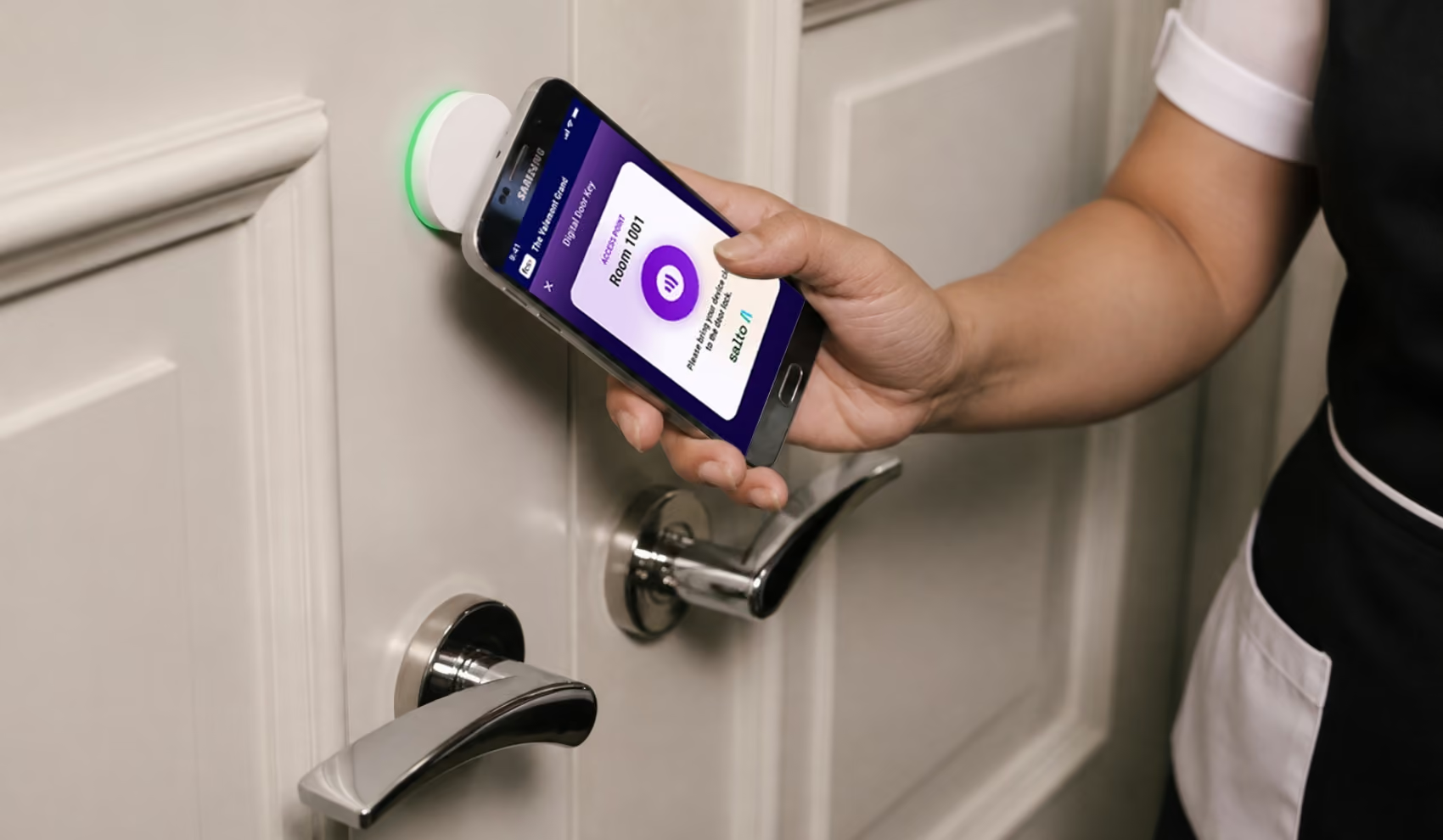
FCS Solutions integrates its FCS1 platform with Salto's smart access control, letting room attendants unlock assigned guest rooms via mobile app and replacing master keys with a digital audit trail.
Singapore, 11 Aug 2026 - FCS Solutions, a cloud-native hospitality operations technology provider, today announced its integration with Salto, a global leader in smart access control solutions. The integration connects FCS1 Hospitality Operations Platform with the Salto Space smart access control platform, enabling hotels to digitize housekeeping operations through secure, keyless room access, enhancing hotel security, operational efficiency, and accountability.
With the integration, Room Attendants can unlock assigned guest rooms directly from the FCS1 mobile application after a Cleaning Order (CO) is initiated. Access is automatically authorised only for the assigned room and active task, ensuring staff can enter only the guest rooms they are scheduled to service. Replacing traditional master keys with secure digital access helps hotels maintain a clear audit trail of room access.
"Master keys are one of the last analog weak points in hotel security because they are difficult to track, easy to lose, and impossible to audit in real time," said Karen Bey, Vice President of Sales, FCS Solutions. "Our partnership with Salto closes that gap by giving hotel operators greater visibility and control over room access, with a clear record of who accessed which room and when."
"Access should be intelligent, secure and seamlessly integrated into daily hotel operations," said Winston Ng, Regional Manager, Strategic & Enterprise Accounts, Salto. "By partnering with FCS Solutions, we're extending that intelligence into one of the hospitality industry's most widely used operations workflows. A lock is no longer just a lock. It becomes part of a hotel's real-time operational ecosystem. Housekeeping teams gain faster, secure access, while operators benefit from the visibility, accountability, and audit trail that traditional master keys cannot provide.”
This collaboration reinforces FCS Solutions' commitment to an open hospitality platform connecting hotels with the partners and technologies that are shaping the future of hotel operations.
About FCS Solutions
FCS Solutions is a leading provider of hospitality technology, trusted by more than 2,800 properties across 71 countries to improve operational performance, staff productivity and guest satisfaction. Its flagship solution, FCS1, is a cloud-based hospitality operations platform that streamlines housekeeping, maintenance and guest services through intelligent automation, AI-powered capabilities, mobile workflows and real-time operational visibility. By connecting people, processes and technology on a single platform, FCS Solutions empowers hotels to operate more efficiently and deliver exceptional guest experiences.
CONNECT WITH FCS SOLUTIONS
WEBSITE | LINKEDIN | FACEBOOK | YOUTUBE
About Salto
Salto is a leading global access solutions provider, part of the SALTO WECOSYSTEM. We develop pioneering facility access, identity management and electronic locking technology that ensures seamless, reliable and secure experiences. Through close customer relationships and innovative solutions, our global team of experts create timeless and meaningful products that positively impact people and our planet.
CONNECT WITH SALTO SYSTEMS
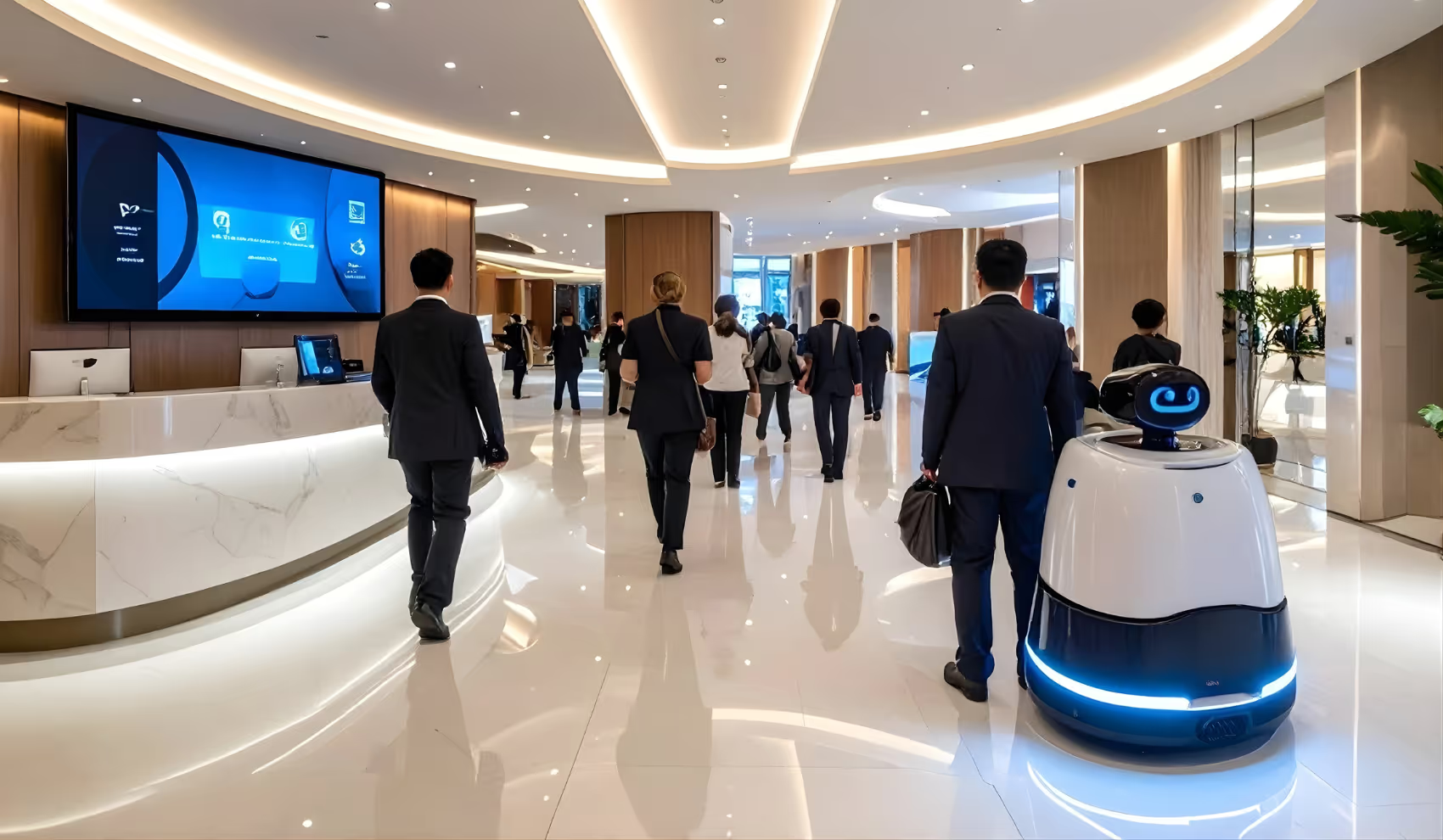
In every era of hospitality, a single technology quietly transforms how hotels think, work, and connect with guests. The first Property Management Systems digitized reservations. Channel managers expanded reach. Mobile apps gave guests control at their fingertips. Now, a new frontier is emerging, driven by hotel business intelligence tools that go beyond automation. Artificial Intelligence is no longer just an assistant to humans. It is becoming a co-operator that thinks, adapts, and acts alongside them. We are entering the age of cognitive hospitality.
From Reactive Operations to Predictive Intelligence
Today, most hotels still operate reactively, responding to guest requests, occupancy changes, or service gaps. But the next evolution will be guided by hotel business intelligence software that predicts needs before they even appear. Imagine your property’s digital systems like PMS, housekeeping, maintenance, CRM, all feeding data into one unified intelligence. It can recognize early check-in patterns, forecast service bottlenecks, and allocate staff automatically based on what’s happening in real time. In this near future, a housekeeping system doesn’t just schedule cleaning rounds; it senses when rooms are ready through motion, temperature, and guest device signals. Maintenance no longer waits for a service ticket. It detects unusual vibration patterns in the HVAC system and creates a task before anyone calls. The hotel of tomorrow will not just run faster. It will run smarter, continuously learning from its own rhythm and data patterns.

Where Conversations Become Commerce
The guest journey is turning into a continuous conversation. Instead of scrolling through websites or apps, travelers will simply tell their digital assistants what they want, and those assistants will handle everything.
“Find me a resort in Kyoto with private onsen villas, a mountain view, and electric vehicle pickup.”
“Book me a three-night stay in Paris near the Louvre with a large workspace and late checkout.”
In seconds, the system compares live inventories, reviews, and prices, completes the booking, processes payment, and even pre-selects preferred amenities. Guests may never touch an OTA or open a browser again. The entire transaction could happen through a single exchange between two digital assistants, the traveler’s and your hotel’s AI-powered system. This is already becoming real. Stripe’s Agentic Commerce allows AI agents to handle payments securely, while conversational systems like PolyAI are learning to speak the language of hospitality naturally and intelligently. For hotels, the next booking engine might not be a webpage. It could be a smart hotel system that knows when a traveler is ready to book.
The Rebirth of the Concierge
As hotel business intelligence tools and automation handle routine work, the human role will shift from transactional to emotional. Front-desk teams will no longer be valued for speed, but for empathy, and for noticing small cues, handling recovery moments, and adding human warmth where technology cannot. The AI concierge will take care of confirmations, reminders, and upgrades. The human concierge will become the storyteller, curating experiences that make every stay memorable. We will no longer train staff to follow steps. We will train them to design moments.
Data: The New Language of Hospitality
AI thrives on clarity, not just volume. In tomorrow’s hospitality landscape, your property’s visibility will depend on how well your data can be read, understood, and trusted by hotel business intelligence tools. Every room description, amenity tag, and review becomes a digital signal. Hotels that organize their data properly like linking services, locations, sustainability, and experience details, will appear more naturally in AI-powered searches and travel planning tools. Your ranking will not only live on a website anymore. It will be decided in a conversation between two intelligent systems that understand which hotel truly fits a traveler’s intent.

Hospitality Intelligence: Beyond Automation
Real transformation begins when technology becomes a collaborator rather than just a helper. This is where hospitality data intelligence takes center stage. AI and analytics will blend data, timing, and emotion into a learning system that helps your hotel:
- Predict occupancy and staffing needs before demand rises
- Detect guest emotions through voice and behavior in real time
- Adjust pricing dynamically based on market context and guest sentiment
- Recommend sustainability actions that improve efficiency and reduce waste
When every department, from housekeeping to CRM, becomes part of one connected network, the hotel evolves into a living system powered by hotel business intelligence software. It starts to feel the rhythm of its guests and respond with precision.
Redefining What It Means to Be Human in Hospitality
This future doesn’t remove the human touch in hospitality; it enhances it. Teams will have more time for empathy, creativity, and genuine connection, the parts of service that can’t be coded. Leaders such as General Managers and Directors of Operations will no longer just manage performance metrics. They will design intelligence itself, deciding how systems think and what values they optimize for. The real question for tomorrow’s hoteliers isn’t “How do we use AI?” but “How do we teach it to understand what makes hospitality human?” Imagine a stay where your hotel already knows you but still manages to surprise you. Your favorite cookie is waiting in the room. The temperature, pillow firmness, and music are just the way you like them.
The age of cognitive hospitality and hotel business intelligence is here. The question isn’t when it arrives. It’s whether your hotel is ready to think.