


.svg)
How AI is Driving a New Era of Housekeeping Efficiency in the U.S. Hotels


In the evolving landscape of U.S. hotel operations, housekeeping has emerged as one of the most consequential yet often underexamined frontiers for efficiency improvement.
While industry attention frequently gravitates toward revenue management, distribution strategy, and guest-facing technologies, operational performance continues to be shaped by back-of-house functions that directly influence room availability, service responsiveness, and guest satisfaction. Housekeeping, positioned at the center of this operational ecosystem, is increasingly impacted by structural labor constraints, rising wage pressures, and heightened service expectations.
Within this context, artificial intelligence is moving from conceptual promise to practical operational tool.
Efficiency Pressures Reflect Structural Industry Shifts
Across the United States, hotel operators are navigating a labor environment that reflects a long-term structural reset rather than a temporary disruption.
Many U.S. hotels are still struggling to hire and retain enough employees especially in core operational roles like housekeeping, front desk, and maintenance. Nearly two-thirds (65%) of U.S. hotels still report staffing shortages as of 2025. Housekeeping is consistently cited as the top hiring need and hardest role to fill, according to a survey conducted by the American Hotel & Lodging Association (AHLA). Even with wage increases and incentives, properties continue to report multiple open positions per hotel, creating workload gaps and adding stress for existing staff. Rising wages and cost-of-living pressures further heighten financial strain, while unpredictable occupancy, late check-outs, and fluctuating service demands introduce operational volatility. At the same time, evolving guest expectations and new technology adoption increase role complexity, requiring staff to learn and balance multiple skills. These factors combine to create high burnout risk, morale challenges, and retention difficulties.
These pressures manifest acutely within housekeeping departments. Housekeeping workflows must now absorb:
- Greater occupancy volatility
- Shorter booking cycles
- Increased service request variability
- Tighter staffing conditions
Efficiency challenges, therefore, are less about labor intensity alone and more about coordination complexity.
The Hidden Drivers of Housekeeping Inefficiency
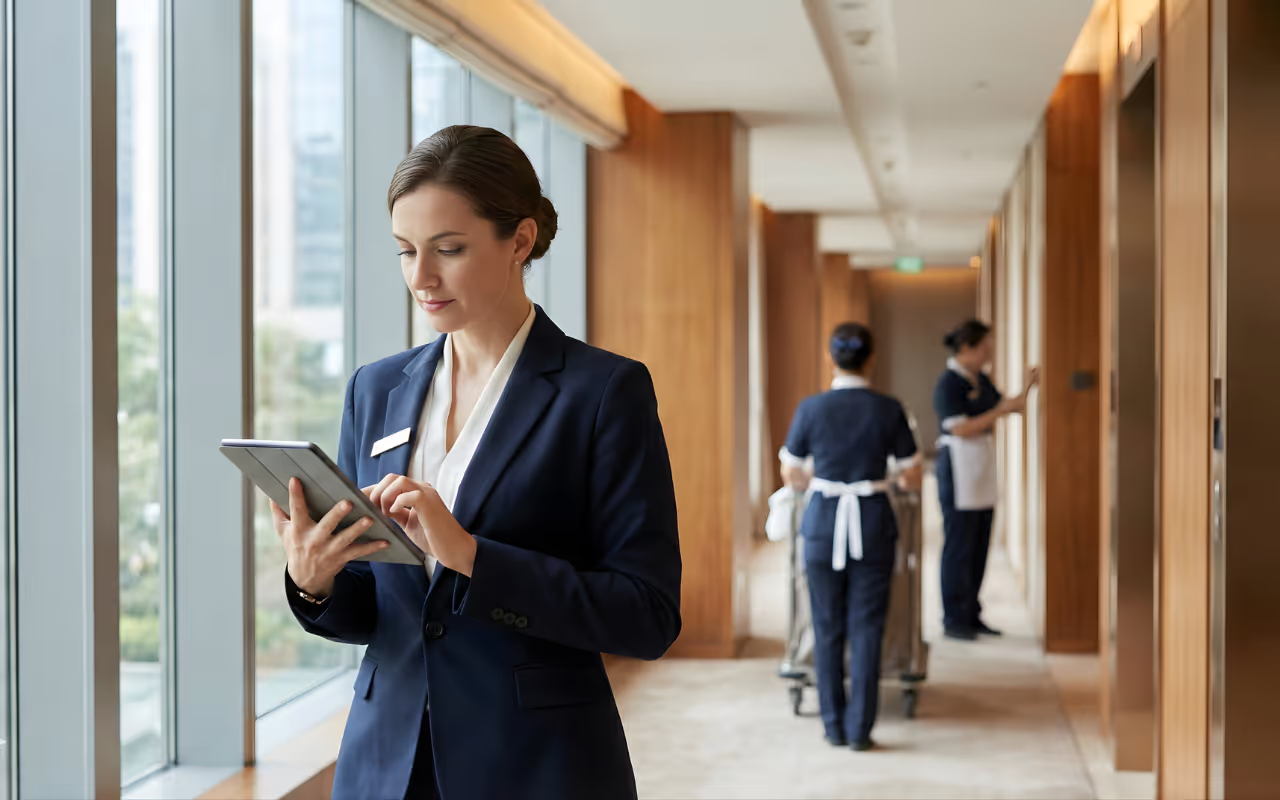
Operational inefficiencies in housekeeping rarely stem from cleaning execution alone. Instead, they accumulate through systemic friction in how work is planned, assigned, tracked, and adjusted throughout the day.
Experts in hospitality operations note that productivity losses are often driven by process breakdowns, fragmented communication, delayed or incomplete information, and manual coordination, rather than staffing levels alone. When frontline teams operate with partial visibility, even well-resourced departments experience wasted time, rework, and uneven output.
Variability, not workload volume, has become the dominant challenge in service operations. Demand shifts, room readiness uncertainty, late check-outs, maintenance overlaps, and guest requests introduce constant volatility that traditional static workflows struggle to absorb.
Within housekeeping, this volatility concentrates friction at points where information must move quickly and accurately between people, systems, and tasks.
Coordination Rigidity in a Dynamic Environment
Traditional housekeeping workflows often rely on static room assignments or fixed cleaning sequences. Yet modern hotel operations are inherently fluid.
Early arrivals, late check-outs, VIP movements, maintenance dependencies, and guest requests continuously reshape priorities. Without mechanisms for dynamic reprioritization, teams are forced into reactive adjustments, introducing delays and operational strain.
AI-driven systems address this by continuously interpreting live operational signals, enabling priorities to shift in real time.
Communication Dependency and Workflow Interruptions
Routine guest requests represent a persistent source of friction.
Extra towels, amenities, housekeeping items, and servicing calls frequently interrupt planned workflows. In traditional models, these requests depend on staff availability, triggering multi-step communication chains that introduce latency.
AI-enabled solutions such as Lucy, the AI Operator by FCS AIOP, reduce this dependency by functioning as a constant guest-facing interface. By answering routine calls, interpreting guest requests, and routing them to the right department, Lucy stabilizes task flow while reducing communication overhead across front desk and housekeeping teams.
Information Integrity and Operational Noise
Information delays and inconsistencies remain significant efficiency constraints.
Research on operational performance consistently shows that decision-making quality is inseparable from information clarity. In housekeeping environments, delayed updates, duplicate assignments, and incomplete task logging create operational noise that directly erodes productivity.
AI-supported workflows contribute to information stability through consistent task capture, timestamp accuracy, and synchronized updates.
AI's Emerging Role: From Automation to Operational Stability
The adoption of AI within housekeeping reflects a broader shift in how U.S. hotels define efficiency.
Rather than focusing narrowly on labor compression, operators are increasingly prioritizing operational resilience. Organizations facing structural workforce constraints must redesign workflows to reduce friction, variability impact, and coordination overhead.
AI, in this context, functions as an enabler of stability. It supports:
- Dynamic prioritization
- Continuous service responsiveness
- Reduced workflow disruption
- Improved information clarity
Importantly, this shift does not disminish the role of housekeeping professionals.
Reframing the Efficiency Conversation
The relationship between AI and housekeeping efficiency is often oversimplified. AI does not clean rooms or even clean the rooms.
AI removes what slows cleaning operations down:
- Coordination delays
- Communication bottlenecks
- Prioritization rigidity
- Information inconsistencies
A Strategic Imperative for U.S. Hotels
As labor dynamics, guest expectations, and operational complexity continue to evolve, housekeeping efficiency is becoming a strategic priority rather than a departmental concern.
Artificial intelligence is no longer positioned solely as an innovation initiative. It is emerging as operational infrastructure supporting hotels in managing variability, protecting service continuity, and sustaining productivity under structural constraints.
Solutions such as FCS AIOP - Lucy exemplify this progression: AI designed not as a technological replacement, but as a stabilizing force within modern hotel operations.
Featured posts

O próximo ganho de produtividade pode vir da eliminação do trabalho manual que ainda existe entre os sistemas de tecnologia hoteleira.
O problema tecnológico mais caro em um hotel pode não ser um sistema que não funciona. Podem ser os funcionários que precisam contornar isso.
Os hotéis passaram anos digitalizando tudo, desde o serviço de limpeza e manutenção até as solicitações dos hóspedes e o status dos quartos, mas esses sistemas nem sempre se comunicam. Os funcionários ainda podem passar o tempo fazendo ligações, enviando mensagens e procurando informações para realizar o trabalho.
Isso cria um custo oculto para os proprietários de hotéis: a mão de obra necessária para conectar as operações. Quando os operadores estão sob pressão para controlar os custos sem comprometer o serviço, até mesmo pequenas quantidades desnecessárias de comunicação e coordenação manual podem se somar a centenas de funcionários e milhares de tarefas diárias.
O problema está crescendo à medida que os hotéis se concentram na produtividade. Relatório de custos trabalhistas do primeiro trimestre de 2026 da HotelData.com descobriram que os hotéis dos EUA reduziram as horas por quarto ocupado em 2,3% ano após ano, enquanto o custo de mão de obra por quarto ocupado aumentou 1,8%. A produtividade do serviço de limpeza também melhorou, com os minutos de atendente de quarto por quarto ocupado caindo 4,3%.
Os hotéis já estão encontrando maneiras de implantar suas forças de trabalho com mais eficiência. A próxima oportunidade pode ser examinar quanto trabalho ainda é consumido pela coordenação do trabalho.
O trabalho entre o trabalho
Considere uma interação rotineira com o hotel. Um hóspede liga para a recepção porque algo no quarto não está funcionando. Um funcionário aceita a solicitação e determina qual departamento deve lidar com ela. Alguém da engenharia recebe a solicitação, determina quem está disponível e responde. Posteriormente, talvez alguém precise confirmar que o problema foi resolvido enquanto a recepção atualiza o hóspede.
O reparo pode levar apenas alguns minutos. A coordenação em torno dela pode levar muito mais tempo.
A mesma dinâmica ocorre nas tarefas domésticas. Um atendente de sala descobre um problema de manutenção durante a manutenção de uma sala, mas as informações devem chegar à engenharia, o trabalho deve ser atribuído e concluído e o status da sala deve ser refletido com precisão em outras partes da operação.
Essas não são necessariamente falhas de funcionários individuais. Freqüentemente, são falhas no fluxo de trabalho.
A Deloitte descobriu que 45% dos hotéis pesquisados disseram que a tecnologia e os dados fragmentados os impediram de obter uma visão única e completa dos clientes e das operações. Aproximadamente um terço citou a integração com sua pilha de tecnologia existente como uma preocupação.
Quando os sistemas não se comunicam de forma eficaz, os funcionários se tornam a conexão entre eles. Isso cria o que poderia ser chamado de imposto de mão de obra invisível: as chamadas, mensagens, acompanhamentos e atualizações manuais necessárias para mover as informações de uma parte da operação para outra.
Mais tecnologia não é necessariamente a resposta
Isso não significa que os hotéis simplesmente precisem comprar mais tecnologia. Adicionar outro aplicativo a um ambiente já fragmentado pode criar outra camada de complexidade se ele não se comunicar com os sistemas que os funcionários já usam.
A questão mais importante é se a tecnologia conecta a operação.
Uma solicitação de hóspede pode chegar automaticamente ao funcionário adequado? Um problema de manutenção identificado pelo serviço de limpeza pode ser transferido diretamente para o fluxo de trabalho de engenharia? O status da sala pode se mover entre sistemas sem exigir que alguém insira as mesmas informações duas vezes?
Essas questões são cada vez mais importantes à medida que os hotéis avaliam a tecnologia com base em sua capacidade de melhorar a produtividade da equipe e o desempenho operacional.
Conectando a operação
A FCS Solutions se concentrou em conectar as operações hoteleiras por décadas. A empresa de tecnologia hoteleira tem mais de 40 anos de experiência no setor e afirma que mais de 2.800 propriedades usam sua tecnologia em mais de 70 países. Sua plataforma FCS1 conecta limpeza, manutenção, serviços aos hóspedes e gerenciamento de incidentes em um ambiente operacional compartilhado.
A FCS afirma que as solicitações dos hóspedes podem ser encaminhadas, rastreadas e escaladas automaticamente, enquanto os problemas de manutenção identificados pelo serviço de limpeza podem passar diretamente para o fluxo de trabalho de manutenção. Os gerentes podem ver o que está acontecendo sem precisar ligar para departamentos individuais para obter atualizações.
A plataforma também foi projetada para se integrar à tecnologia hoteleira existente, incluindo sistemas de gerenciamento de propriedades e soluções de terceiros, reduzindo a entrada manual de dados.
O FCS relata que os hotéis que usam o FCS1 podem alcançar tempos de resposta de tarefas até 40% mais rápidos e um aumento de 25% a 30% na eficiência das tarefas de limpeza. Esses são números relatados pela empresa, em vez de benchmarks independentes do setor, mas ilustram a oportunidade de produtividade que fluxos de trabalho conectados podem criar.
Os clientes do hotel descrevem o benefício em termos semelhantes. Jennifer Rice Palmer, vice-presidente de gerenciamento de receita e contato com hóspedes da RosenHotels & Resorts, diz que o FCS1 ajuda a gerenciar as solicitações dos hóspedes e as tarefas de manutenção com mais precisão. No Caribe Royale Orlando, Phil Klinkenberg, gerente do hotel, diz que a plataforma melhorou a eficiência e a comunicação entre departamentos entre tarefas domésticas, engenharia e front office.
O ponto comum é o que acontece quando os funcionários não precisam mais servir como conexão entre partes separadas da operação.
Medindo o retorno
Em vez de se concentrar apenas nos custos e nos recursos do sistema, os proprietários podem perguntar: Quantos minutos dos funcionários isso elimina? Quantas ligações e acompanhamentos desaparecem? Com que rapidez uma solicitação de hóspede chega ao funcionário que pode resolvê-la? Com que rapidez uma sala pode passar de suja para inspecionada e disponível?
Essas economias podem parecer pequenas individualmente, mas as operações hoteleiras são baseadas na repetição. Alguns minutos economizados em uma tarefa se transformam em horas quando multiplicados por um departamento, uma propriedade e, eventualmente, um portfólio.
Os hotéis demonstraram que podem melhorar a produtividade do trabalho. A próxima oportunidade é determinar o quanto mais produtiva essa força de trabalho poderia se tornar se a tecnologia eliminasse a comunicação desnecessária e a coordenação manual entre os departamentos.
Porque o custo oculto das operações hoteleiras desconectadas não é necessariamente a tecnologia em si. É a mão de obra necessária para contornar isso.
Sobre o autor
Rob Schneider é jornalista freelancer de investimentos em hotéis com sede no Texas, cujo trabalho apareceu recentemente na Hospitality Investor, Hotel Management, Luxury Travel Advisor e Skift. Anteriormente, ele atuou como editor-chefe da Hotel InvestmentToday, uma plataforma de mídia digital B2B focada no setor imobiliário global de investimento em hotéis e hospitalidade. Ele também trabalhou anteriormente no DallasBusiness Journal e no The Dallas Morning News.
Este artigo também foi publicado na HospitalityNet. Veja o artigo aqui.
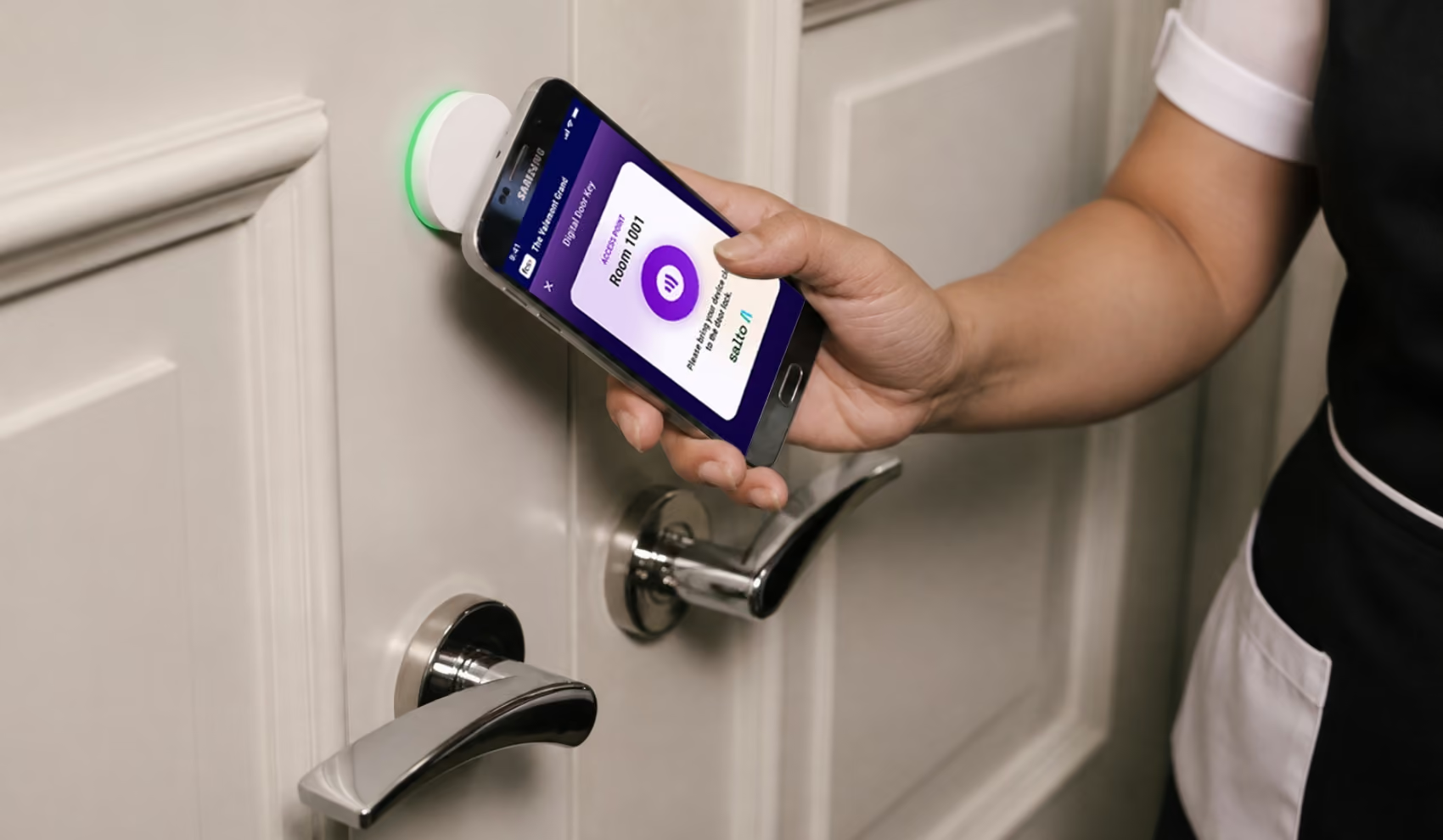
Equipa a equipe de limpeza com acesso móvel seguro, eliminando chaves perdidas e atrasos no acesso
A FCS Solutions integra sua plataforma FCS1 ao controle de acesso inteligente da Salto, permitindo que os atendentes de quarto desbloqueiem os quartos designados por meio de um aplicativo móvel e substituindo as chaves mestras por uma trilha de auditoria digital.
Cingapura, 11 de agosto de 2026 - Soluções FCS, fornecedora de tecnologia de operações hoteleiras nativa da nuvem, anunciou hoje sua integração com a Salto, líder global em soluções inteligentes de controle de acesso. A integração conecta FCS1 Plataforma de operações de hospitalidade com o Salto Plataforma de controle de acesso inteligente Space, permitindo que os hotéis digitalizem as operações de limpeza por meio de acesso seguro e sem chave ao quarto, aprimorando a segurança, a eficiência operacional e a responsabilidade do hotel.
Com a integração, os atendentes de quarto podem desbloquear os quartos atribuídos diretamente do aplicativo móvel FCS1 após um Limpeza O pedido (CO) é iniciado. O acesso é autorizado automaticamente somente para a sala atribuída e a tarefa ativa, garantindo que a equipe possa entrar somente nos quartos que estão programados para atender. Substituir as chaves mestras tradicionais por acesso digital seguro ajuda os hotéis a manter uma trilha de auditoria clara do acesso aos quartos.
“As chaves mestras são um dos últimos pontos fracos analógicos na segurança de hotéis porque são difíceis de rastrear, fáceis de perder e impossíveis de auditar em tempo real”, disse Karen Bey, vice-presidente de vendas da FCS Solutions. “Nossa parceria com a Salto fecha essa lacuna ao oferecer aos operadores hoteleiros maior visibilidade e controle sobre o acesso aos quartos, com um registro claro de quem acessou qual quarto e quando.”
“O acesso deve ser inteligente, seguro e perfeitamente integrado às operações diárias do hotel”, disse Winston Ng, gerente regional de contas estratégicas e corporativas, Salto. “Ao fazer uma parceria com a FCS Solutions, estamos estendendo essa inteligência para um dos fluxos de trabalho de operações mais usados no setor de hospitalidade. Uma fechadura não é mais apenas uma fechadura. Ele se torna parte do ecossistema operacional em tempo real de um hotel. As equipes de limpeza obtêm acesso mais rápido e seguro, enquanto os operadores se beneficiam da visibilidade, responsabilidade e trilha de auditoria que as chaves mestras tradicionais não podem oferecer.”
Essa colaboração reforça o compromisso da FCS Solutions com uma plataforma de hospitalidade aberta conectando hotéis a parceiros e tecnologias que estão moldando o futuro das operações hoteleiras.
Sobre a FCS Solutions
A FCS Solutions é uma fornecedora líder de tecnologia hoteleira, com a confiança de mais de 2.800 propriedades em 71 países para melhorar o desempenho operacional, a produtividade da equipe e a satisfação dos hóspedes. Sua principal solução, a FCS1, é uma plataforma de operações de hospitalidade baseada em nuvem que simplifica a limpeza, a manutenção e os serviços aos hóspedes por meio de automação inteligente, recursos baseados em IA, fluxos de trabalho móveis e visibilidade operacional em tempo real. Ao conectar pessoas, processos e tecnologia em uma única plataforma, a FCS Solutions capacita os hotéis a operar com mais eficiência e oferecer experiências excepcionais aos hóspedes.
CONECTE-SE COM SOLUÇÕES FCS
SITE | LINKEDIN | FACEBOOK | YOUTUBE
Sobre Salto
A Salto é uma provedora líder global de soluções de acesso, parte da ECOSSISTEMA DE SALTO. Desenvolvemos tecnologia pioneira de acesso às instalações, gerenciamento de identidade e bloqueio eletrônico que garantem experiências perfeitas, confiáveis e seguras. Por meio de relacionamentos estreitos com clientes e soluções inovadoras, nossa equipe global de especialistas cria produtos atemporais e significativos que impactam positivamente as pessoas e nosso planeta.
CONECTE-SE COM SISTEMAS DE SALTO
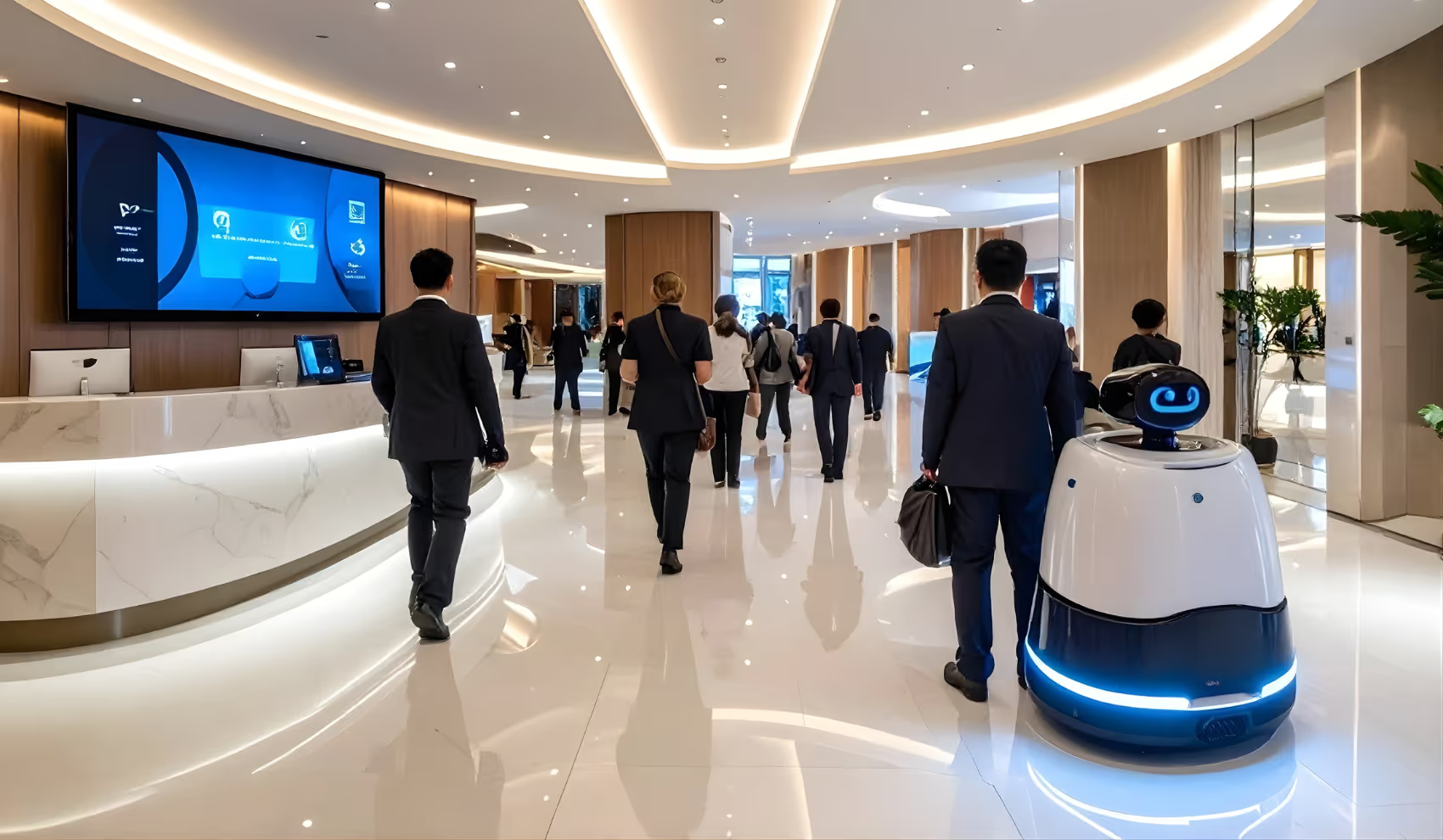
In every era of hospitality, a single technology quietly transforms how hotels think, work, and connect with guests. The first Property Management Systems digitized reservations. Channel managers expanded reach. Mobile apps gave guests control at their fingertips. Now, a new frontier is emerging, driven by hotel business intelligence tools that go beyond automation. Artificial Intelligence is no longer just an assistant to humans. It is becoming a co-operator that thinks, adapts, and acts alongside them. We are entering the age of cognitive hospitality.
From Reactive Operations to Predictive Intelligence
Today, most hotels still operate reactively, responding to guest requests, occupancy changes, or service gaps. But the next evolution will be guided by hotel business intelligence software that predicts needs before they even appear. Imagine your property’s digital systems like PMS, housekeeping, maintenance, CRM, all feeding data into one unified intelligence. It can recognize early check-in patterns, forecast service bottlenecks, and allocate staff automatically based on what’s happening in real time. In this near future, a housekeeping system doesn’t just schedule cleaning rounds; it senses when rooms are ready through motion, temperature, and guest device signals. Maintenance no longer waits for a service ticket. It detects unusual vibration patterns in the HVAC system and creates a task before anyone calls. The hotel of tomorrow will not just run faster. It will run smarter, continuously learning from its own rhythm and data patterns.

Where Conversations Become Commerce
The guest journey is turning into a continuous conversation. Instead of scrolling through websites or apps, travelers will simply tell their digital assistants what they want, and those assistants will handle everything.
“Find me a resort in Kyoto with private onsen villas, a mountain view, and electric vehicle pickup.”
“Book me a three-night stay in Paris near the Louvre with a large workspace and late checkout.”
In seconds, the system compares live inventories, reviews, and prices, completes the booking, processes payment, and even pre-selects preferred amenities. Guests may never touch an OTA or open a browser again. The entire transaction could happen through a single exchange between two digital assistants, the traveler’s and your hotel’s AI-powered system. This is already becoming real. Stripe’s Agentic Commerce allows AI agents to handle payments securely, while conversational systems like PolyAI are learning to speak the language of hospitality naturally and intelligently. For hotels, the next booking engine might not be a webpage. It could be a smart hotel system that knows when a traveler is ready to book.
The Rebirth of the Concierge
As hotel business intelligence tools and automation handle routine work, the human role will shift from transactional to emotional. Front-desk teams will no longer be valued for speed, but for empathy, and for noticing small cues, handling recovery moments, and adding human warmth where technology cannot. The AI concierge will take care of confirmations, reminders, and upgrades. The human concierge will become the storyteller, curating experiences that make every stay memorable. We will no longer train staff to follow steps. We will train them to design moments.
Data: The New Language of Hospitality
AI thrives on clarity, not just volume. In tomorrow’s hospitality landscape, your property’s visibility will depend on how well your data can be read, understood, and trusted by hotel business intelligence tools. Every room description, amenity tag, and review becomes a digital signal. Hotels that organize their data properly like linking services, locations, sustainability, and experience details, will appear more naturally in AI-powered searches and travel planning tools. Your ranking will not only live on a website anymore. It will be decided in a conversation between two intelligent systems that understand which hotel truly fits a traveler’s intent.

Hospitality Intelligence: Beyond Automation
Real transformation begins when technology becomes a collaborator rather than just a helper. This is where hospitality data intelligence takes center stage. AI and analytics will blend data, timing, and emotion into a learning system that helps your hotel:
- Predict occupancy and staffing needs before demand rises
- Detect guest emotions through voice and behavior in real time
- Adjust pricing dynamically based on market context and guest sentiment
- Recommend sustainability actions that improve efficiency and reduce waste
When every department, from housekeeping to CRM, becomes part of one connected network, the hotel evolves into a living system powered by hotel business intelligence software. It starts to feel the rhythm of its guests and respond with precision.
Redefining What It Means to Be Human in Hospitality
This future doesn’t remove the human touch in hospitality; it enhances it. Teams will have more time for empathy, creativity, and genuine connection, the parts of service that can’t be coded. Leaders such as General Managers and Directors of Operations will no longer just manage performance metrics. They will design intelligence itself, deciding how systems think and what values they optimize for. The real question for tomorrow’s hoteliers isn’t “How do we use AI?” but “How do we teach it to understand what makes hospitality human?” Imagine a stay where your hotel already knows you but still manages to surprise you. Your favorite cookie is waiting in the room. The temperature, pillow firmness, and music are just the way you like them.
The age of cognitive hospitality and hotel business intelligence is here. The question isn’t when it arrives. It’s whether your hotel is ready to think.



.png)


