


Blog
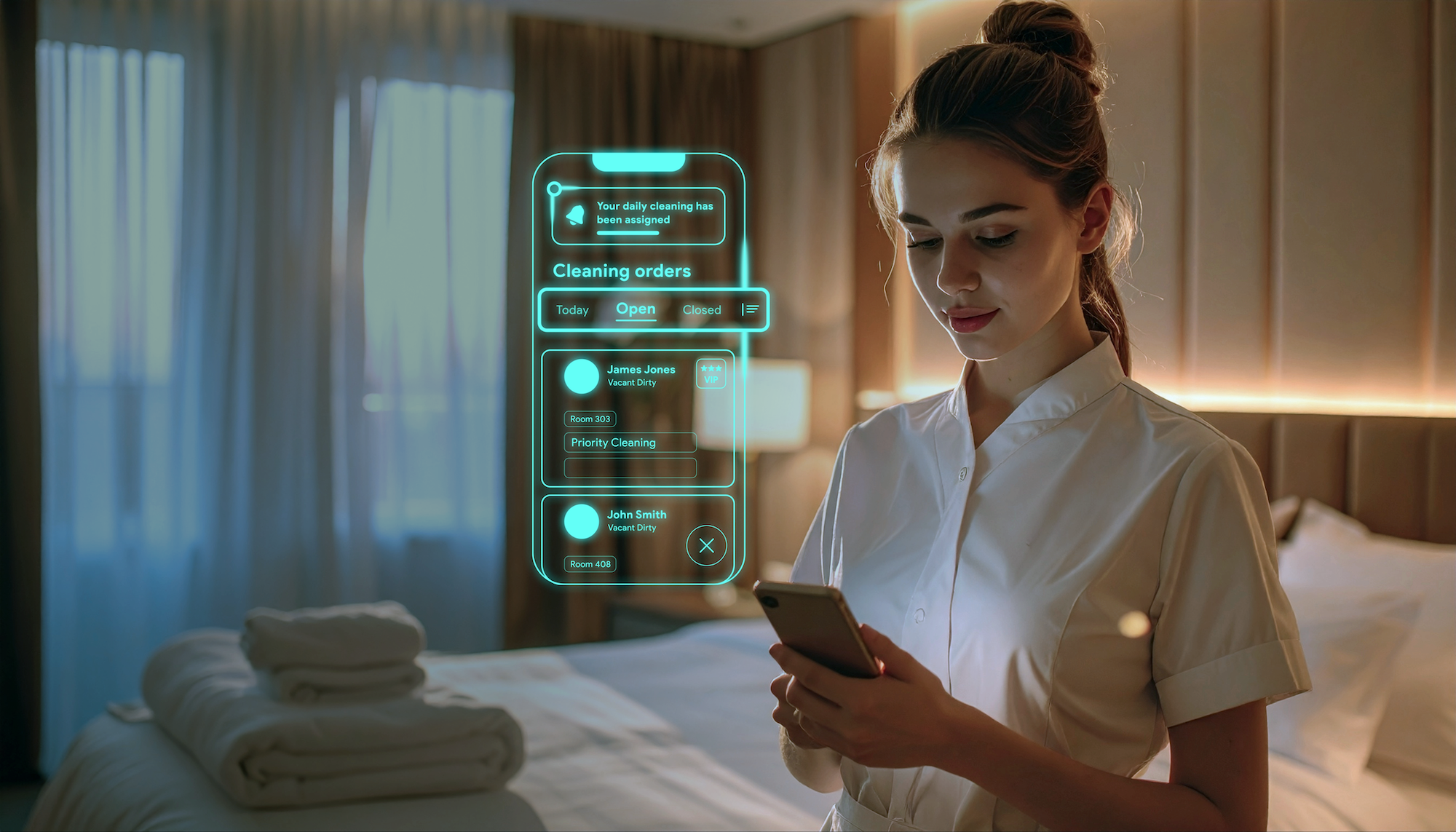
Os hotéis estão sob crescente pressão para manter os padrões de serviço e, ao mesmo tempo, gerenciar restrições trabalhistas, ocupação flutuante e ambientes tecnológicos mais complexos. A FCS Solutions está procurando enfrentar esses desafios conectando departamentos de hotéis e automatizando muitos processos de rotina nas operações do dia-a-dia.
A empresa de tecnologia hoteleira tem mais de quatro décadas de experiência e tem mais de 2.800 clientes hoteleiros em mais de 70 países, oferecendo suporte a mais de 975.000 quartos em todo o mundo.
No centro de sua oferta está a FCS1, uma plataforma de tecnologia unificada, baseada em nuvem, que prioriza dispositivos móveis e conecta tarefas domésticas, manutenção, serviços aos hóspedes, gerenciamento de incidentes e outras funções operacionais.
”Os problemas que a FCS Solutions está procurando resolver são fundamentalmente operacionais.”, disse Mahwish Saleem, diretor de vendas para as Américas da FCS Solutions. ”Os hotéis estão lidando com restrições de pessoal, ocupação flutuante, expectativas crescentes dos hóspedes e ambientes tecnológicos cada vez mais complexos. Quando os departamentos não estão conectados, a equipe gasta tempo buscando atualizações, as solicitações podem ser perdidas ou adiadas, a responsabilidade se torna difícil e a gerência tem visibilidade limitada do desempenho.”
O FCS1 foi projetado para dar aos departamentos uma visão comum do que está acontecendo em um hotel. As tarefas, o status da sala e a atividade de serviço podem ser atualizados em tempo real, enquanto os funcionários podem receber e atualizar tarefas por meio de dispositivos móveis.
”A principal vantagem do FCS1 é que ele oferece às equipes do hotel um ambiente operacional compartilhado, em vez de fluxos de trabalho separados para cada departamento.”, disse Saleem. ”O serviço de limpeza, a manutenção, o atendimento aos hóspedes, o gerenciamento de incidentes e outras funções operacionais podem funcionar na mesma plataforma, com tarefas, status do quarto e atividades de serviço atualizadas em tempo real.”
Uma solicitação de hóspede registrada pela recepção ou via celular pode ser encaminhada automaticamente para a equipe apropriada, rastreada até a conclusão e encaminhada em caso de atraso. Da mesma forma, um problema de manutenção descoberto pelo serviço de limpeza pode ser inserido imediatamente no fluxo de trabalho de manutenção, em vez de depender de ligações telefônicas ou acompanhamento manual.
”A eficiência vem da redução da comunicação desnecessária e da coordenação manual”, disse Saleem. ”As equipes passam menos tempo ligando para outros departamentos ou buscando atualizações, as tarefas podem ser atribuídas e escaladas automaticamente e os gerentes têm uma visão mais clara do desempenho operacional.”
A integração é outro componente da plataforma. O FCS1 foi projetado para funcionar junto com os sistemas hoteleiros existentes, incluindo PMS, PABX, fechaduras eletrônicas sem chave e controles no quarto, permitindo a troca de dados bidirecional em tempo real.
”Uma abordagem que prioriza a API é fundamental porque torna as integrações mais rápidas e flexíveis, ao mesmo tempo em que permite que os hotéis adicionem ou alterem tecnologias à medida que suas necessidades evoluem”, disse Saleem. ”Isso ajuda os hotéis a obter mais valor de seus investimentos existentes e de novas tecnologias.”
Entre os mais de 35 recursos do FCS1, trabalhos, limpeza e manutenção estão atualmente oferecendo alguns dos benefícios mais significativos, de acordo com Saleem. Os recursos automatizam as atribuições de tarefas, melhoram a entrega das salas e permitem uma manutenção mais proativa. A FCS Solutions também está expandindo o autoatendimento de hóspedes por meio de tecnologias como IRGS e vRequest, seu recurso de solicitação de voz por celular.
A eficiência do trabalho continua sendo uma consideração particularmente importante. ”O FCS1 ajuda os hotéis a fazerem mais com as equipes que possuem, automatizando fluxos de trabalho de rotina, otimizando a alocação de tarefas e reduzindo o tempo gasto na coordenação manual”, disse Saleem. ”Com base em nossos dados, os hotéis podem alcançar tempos de resposta de tarefas até 40% mais rápidos e um aumento de 25 a 30% na eficiência das tarefas de limpeza.”
O FCS1 também foi projetado para ser dimensionado em diferentes tipos de hotéis. Sua estrutura modular permite que as propriedades implantem somente os produtos de que necessitam e expandam a plataforma à medida que suas necessidades mudam.
A empresa espera que a IA, a automação inteligente e a análise preditiva desempenhem papéis maiores nas operações hoteleiras. Saleem vê o setor migrando em direção à tecnologia que pode ajudar as operadoras a antecipar as necessidades operacionais.
”Os dados desempenharão um papel cada vez mais importante nas operações hoteleiras”, disse ela. ”A análise preditiva pode ajudar os hotéis a antecipar as preferências dos hóspedes, identificar falhas recorrentes no serviço, fortalecer as medidas preventivas e oferecer um serviço mais proativo, personalizado e eficiente.”
Para a FCS Solutions, no entanto, o valor da tecnologia emergente será, em última análise, medido por seu impacto nas operações hoteleiras.
”Nosso foco não é a tecnologia pela tecnologia”, disse Saleem,”mas inovação que oferece melhorias mensuráveis na produtividade, eficiência e experiência do hóspede.”
Este artigo foi publicado originalmente em HotelBusiness.com
Conteúdo patrocinado. Este artigo faz parte de um editorial pago. O Hotel Tech News manteve o controle editorial sobre o enquadramento, os dados de mercado e a análise. Veja o artigo em hoteltech.news aqui.
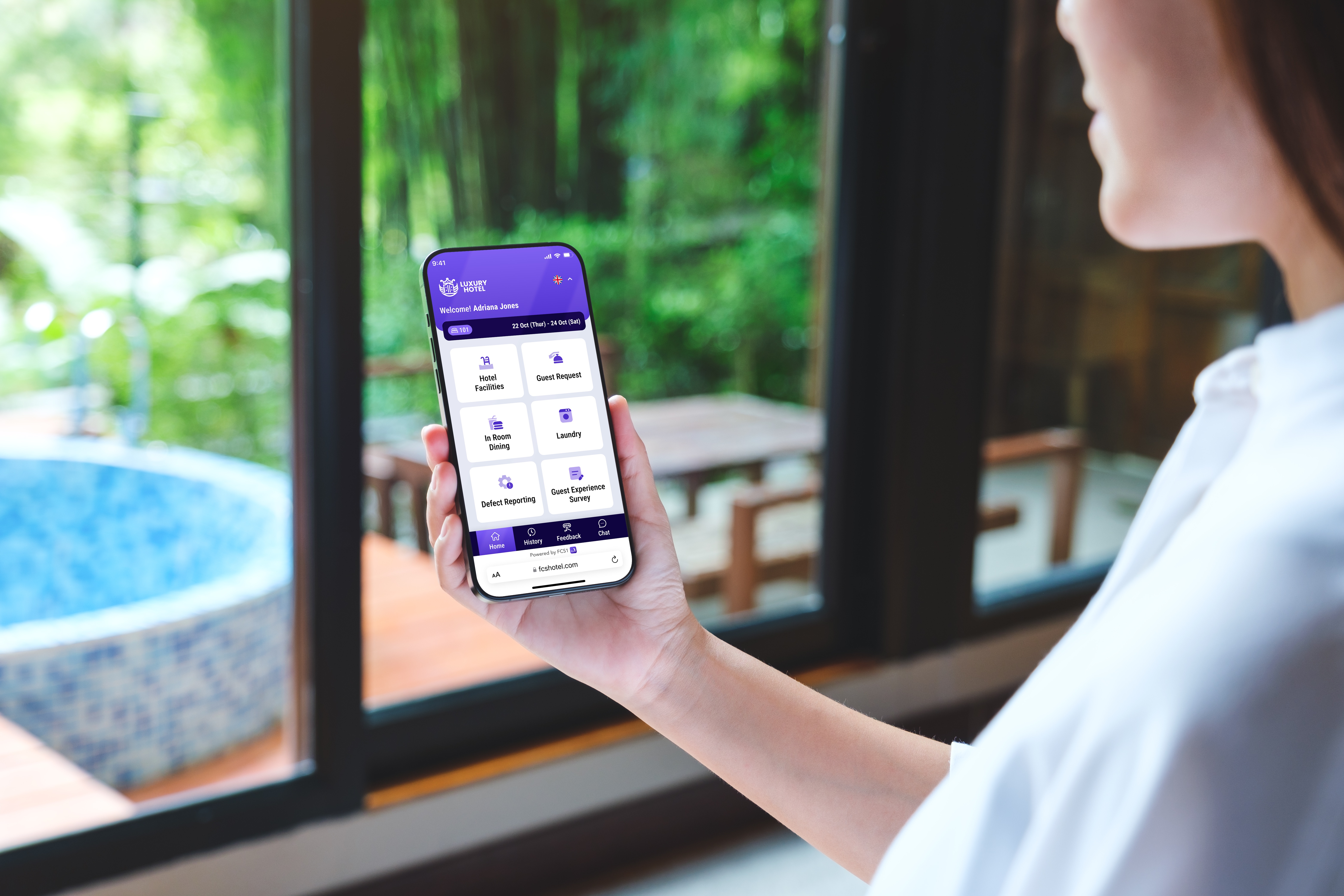
Resposta rápida:Serviços de hóspedes no quarto do FCS1 (IRGS) é o módulo voltado para hóspedes do FCS1, lançado em 25 de agosto de 2026. Um hóspede escaneia um código QR e solicita serviços de hotel em seu próprio telefone, sem nenhum aplicativo para baixar, e cada solicitação é enviada para Empregos no FCS1 para que o departamento certo possa atendê-lo, escalá-lo e monitorá-lo.
Em resumo
- O FCS1 IRGS foi lançado em 25 de agosto de 2026 como o módulo voltado para hóspedes do FCS1, não um produto independente.
- Os hóspedes escaneiam um código QR e solicitam serviços de seu próprio telefone no navegador, sem precisar baixar nenhum aplicativo.
- Cada solicitação chega ao FCS1 Jobs, é encaminhada para o departamento que a atende e é rastreada até a conclusão.
- Ele cobre solicitações de hóspedes, refeições no quarto, lavanderia e instalações do hotel, com um portal de autoatendimento para o hotel.
- Ainda não foram publicados resultados de clientes: FCS resultados de reivindicações, como menos solicitações perdidas e menos entregas, não porcentagens.
A lacuna não é o pedido, é o cumprimento
Um convidado pedindo algo é a parte mais fácil. O difícil é o que acontece a seguir: a solicitação chega à equipe certa e é fechada sem que ninguém a persiga. Essa lacuna é onde o serviço de hotel se rompe silenciosamente.
Ele quebra com mais frequência quando uma propriedade tem poucos funcionários. Quando nós soluções FCS perfiladas começamos com o número que enquadra todo o setor: a hospitalidade europeia está com cerca de 10% menos da força de trabalho de que precisa. Uma equipe menor que ocupa mais quartos não pode pagar chamadas perdidas na hora do check-in, entregas rabiscadas em papel ou um pedido que nunca chega à cozinha.
O FCS1 IRGS é a resposta do FCS para essa lacuna específica. Não é um aplicativo convidado e não é um diretório digital. É o ponto em que um hóspede pede algo e a equipe operacional responsável pela entrega pega.
Qual é a aparência de uma solicitação vista de dentro
O lado do convidado é deliberadamente simples. Digitalize um código QR, o navegador se abre, navegue pelo hotel ou escolha um serviço, envie. Sem download, sem conta.
O que importa é a segunda metade, a parte que o convidado nunca vê:
O hóspede faz isso.Torna-se isso dentro do hotel.Solicita uma comodidade ou relata um problemaUm trabalho encaminhado para a equipe operacional certa Solicita refeições no quartoUm pedido encaminhado diretamente para a F&BBooks, lavanderia ou lavanderia a secoUm pedido enviado, rastreado até a finalizaçãoConsulta instalações, horários e locaisInformações de autoatendimento que o hotel mantém atualizadas
Cada uma dessas inscrições chega Empregos no FCS1, o mecanismo de fluxo de trabalho por baixo. A partir daí, ele é encaminhado, trabalhado e rastreado desde o início até a conclusão, com o status visível para as equipes e gerentes que precisam dele.
É parte do FCS1, não é aparafusado
Esse é o posicionamento sobre o qual o FCS é mais deliberado e é a razão pela qual o IRGS é mais do que um menu. O IRGS é um módulo da plataforma FCS1 e o FCS1 Jobs deve estar habilitado para que seus recursos de solicitação funcionem. A camada voltada para o hóspede e a camada operacional são o mesmo sistema, não duas ferramentas unidas.
Essa continuidade é a linha de referência da plataforma que abordamos anteriormente: o FCS1 já conecta serviços de limpeza, manutenção, incidentes e hóspedes em hotéis complexos. O IRGS estende esse mesmo fluxo de trabalho conectado até o telefone do hóspede.
Qual é a aparência da plataforma embaixo
O FCS1 IRGS herda a forma da plataforma FCS1: baseada em nuvem, com foco em API, multiplataforma, totalmente personalizável, em vários idiomas e suportada pelo FCS 24 horas por dia. Os hóspedes o acessam por meio do navegador em seus próprios dispositivos, portanto, não há nenhum aplicativo convidado para instalar ou manter. Os hotéis mantêm suas próprias informações atualizadas por meio de um portal de gerenciamento de conteúdo de autoatendimento, sem precisar recorrer a um fornecedor para cada mudança de menu.
O que o FCS está reivindicando e o que não é
Vale a pena ser preciso aqui, porque o FCS é. No lançamento, não há nenhum cliente identificado nem dados de desempenho publicados, portanto, não há números para citar sobre tempo de resposta, produtividade ou satisfação do hóspede. O que o FCS garante são os resultados operacionais: menos solicitações perdidas, menos entregas manuais, menos dependência de chamadas para a recepção, roteamento mais eficiente e visibilidade mais clara de onde cada solicitação está.
Karen Bey, vice-presidente de vendas da Soluções FCS, enquadrou o lançamento desta forma:
“A FCS há muito tempo se concentra em ajudar os hotéis a otimizar os fluxos de trabalho operacionais e melhorar a produtividade da equipe. O FCS1 IRGS amplia essa capacidade, tornando simples para os hóspedes pedirem o que precisam. Ao conectar cada solicitação diretamente às operações do hotel, os hotéis podem reduzir as solicitações perdidas e fornecer um serviço mais rápido e consistente.”
Nossa opinião
A parte interessante do IRGS não é o menu para convidados, que toda ferramenta voltada para hóspedes tem. É que o menu está conectado à plataforma de operações por trás dele, portanto, uma solicitação não precisa ser reinserida, retransmitida ou lembrada por uma pessoa. Para um hotel com poucos funcionários, remover essa transferência vale mais do que outro aplicativo.
Para um hotel que está avaliando isso, as perguntas úteis são sobre todo o caminho, não sobre a tela frontal. Como uma solicitação é transferida do hóspede para a pessoa que a fecha? O que acontece quando a equipe designada está ocupada. Quais idiomas o lado convidado oferece suporte. E como é executado no dia a dia por meio do FCS1 Jobs. Pergunte primeiro.
Onde ver
O FCS publicou o FCS1 IRGS em 25 de agosto de 2026 (anúncio de lançamento). A página oficial do produto é Serviços de hóspedes no quarto do FCS1, e fica dentro do mais amplo FCS1 plataforma. Para uma visão mais ampla de como a FCS administra as operações hoteleiras, consulte nosso perfil anterior, FCS Solutions: uma plataforma de operações para os hotéis mais complexos.

O próximo ganho de produtividade pode vir da eliminação do trabalho manual que ainda existe entre os sistemas de tecnologia hoteleira.
O problema tecnológico mais caro em um hotel pode não ser um sistema que não funciona. Podem ser os funcionários que precisam contornar isso.
Os hotéis passaram anos digitalizando tudo, desde o serviço de limpeza e manutenção até as solicitações dos hóspedes e o status dos quartos, mas esses sistemas nem sempre se comunicam. Os funcionários ainda podem passar o tempo fazendo ligações, enviando mensagens e procurando informações para realizar o trabalho.
Isso cria um custo oculto para os proprietários de hotéis: a mão de obra necessária para conectar as operações. Quando os operadores estão sob pressão para controlar os custos sem comprometer o serviço, até mesmo pequenas quantidades desnecessárias de comunicação e coordenação manual podem se somar a centenas de funcionários e milhares de tarefas diárias.
O problema está crescendo à medida que os hotéis se concentram na produtividade. Relatório de custos trabalhistas do primeiro trimestre de 2026 da HotelData.com descobriram que os hotéis dos EUA reduziram as horas por quarto ocupado em 2,3% ano após ano, enquanto o custo de mão de obra por quarto ocupado aumentou 1,8%. A produtividade do serviço de limpeza também melhorou, com os minutos de atendente de quarto por quarto ocupado caindo 4,3%.
Os hotéis já estão encontrando maneiras de implantar suas forças de trabalho com mais eficiência. A próxima oportunidade pode ser examinar quanto trabalho ainda é consumido pela coordenação do trabalho.
O trabalho entre o trabalho
Considere uma interação rotineira com o hotel. Um hóspede liga para a recepção porque algo no quarto não está funcionando. Um funcionário aceita a solicitação e determina qual departamento deve lidar com ela. Alguém da engenharia recebe a solicitação, determina quem está disponível e responde. Posteriormente, talvez alguém precise confirmar que o problema foi resolvido enquanto a recepção atualiza o hóspede.
O reparo pode levar apenas alguns minutos. A coordenação em torno dela pode levar muito mais tempo.
A mesma dinâmica ocorre nas tarefas domésticas. Um atendente de sala descobre um problema de manutenção durante a manutenção de uma sala, mas as informações devem chegar à engenharia, o trabalho deve ser atribuído e concluído e o status da sala deve ser refletido com precisão em outras partes da operação.
Essas não são necessariamente falhas de funcionários individuais. Freqüentemente, são falhas no fluxo de trabalho.
A Deloitte descobriu que 45% dos hotéis pesquisados disseram que a tecnologia e os dados fragmentados os impediram de obter uma visão única e completa dos clientes e das operações. Aproximadamente um terço citou a integração com sua pilha de tecnologia existente como uma preocupação.
Quando os sistemas não se comunicam de forma eficaz, os funcionários se tornam a conexão entre eles. Isso cria o que poderia ser chamado de imposto de mão de obra invisível: as chamadas, mensagens, acompanhamentos e atualizações manuais necessárias para mover as informações de uma parte da operação para outra.
Mais tecnologia não é necessariamente a resposta
Isso não significa que os hotéis simplesmente precisem comprar mais tecnologia. Adicionar outro aplicativo a um ambiente já fragmentado pode criar outra camada de complexidade se ele não se comunicar com os sistemas que os funcionários já usam.
A questão mais importante é se a tecnologia conecta a operação.
Uma solicitação de hóspede pode chegar automaticamente ao funcionário adequado? Um problema de manutenção identificado pelo serviço de limpeza pode ser transferido diretamente para o fluxo de trabalho de engenharia? O status da sala pode se mover entre sistemas sem exigir que alguém insira as mesmas informações duas vezes?
Essas questões são cada vez mais importantes à medida que os hotéis avaliam a tecnologia com base em sua capacidade de melhorar a produtividade da equipe e o desempenho operacional.
Conectando a operação
A FCS Solutions se concentrou em conectar as operações hoteleiras por décadas. A empresa de tecnologia hoteleira tem mais de 40 anos de experiência no setor e afirma que mais de 2.800 propriedades usam sua tecnologia em mais de 70 países. Sua plataforma FCS1 conecta limpeza, manutenção, serviços aos hóspedes e gerenciamento de incidentes em um ambiente operacional compartilhado.
A FCS afirma que as solicitações dos hóspedes podem ser encaminhadas, rastreadas e escaladas automaticamente, enquanto os problemas de manutenção identificados pelo serviço de limpeza podem passar diretamente para o fluxo de trabalho de manutenção. Os gerentes podem ver o que está acontecendo sem precisar ligar para departamentos individuais para obter atualizações.
A plataforma também foi projetada para se integrar à tecnologia hoteleira existente, incluindo sistemas de gerenciamento de propriedades e soluções de terceiros, reduzindo a entrada manual de dados.
O FCS relata que os hotéis que usam o FCS1 podem alcançar tempos de resposta de tarefas até 40% mais rápidos e um aumento de 25% a 30% na eficiência das tarefas de limpeza. Esses são números relatados pela empresa, em vez de benchmarks independentes do setor, mas ilustram a oportunidade de produtividade que fluxos de trabalho conectados podem criar.
Os clientes do hotel descrevem o benefício em termos semelhantes. Jennifer Rice Palmer, vice-presidente de gerenciamento de receita e contato com hóspedes da RosenHotels & Resorts, diz que o FCS1 ajuda a gerenciar as solicitações dos hóspedes e as tarefas de manutenção com mais precisão. No Caribe Royale Orlando, Phil Klinkenberg, gerente do hotel, diz que a plataforma melhorou a eficiência e a comunicação entre departamentos entre tarefas domésticas, engenharia e front office.
O ponto comum é o que acontece quando os funcionários não precisam mais servir como conexão entre partes separadas da operação.
Medindo o retorno
Em vez de se concentrar apenas nos custos e nos recursos do sistema, os proprietários podem perguntar: Quantos minutos dos funcionários isso elimina? Quantas ligações e acompanhamentos desaparecem? Com que rapidez uma solicitação de hóspede chega ao funcionário que pode resolvê-la? Com que rapidez uma sala pode passar de suja para inspecionada e disponível?
Essas economias podem parecer pequenas individualmente, mas as operações hoteleiras são baseadas na repetição. Alguns minutos economizados em uma tarefa se transformam em horas quando multiplicados por um departamento, uma propriedade e, eventualmente, um portfólio.
Os hotéis demonstraram que podem melhorar a produtividade do trabalho. A próxima oportunidade é determinar o quanto mais produtiva essa força de trabalho poderia se tornar se a tecnologia eliminasse a comunicação desnecessária e a coordenação manual entre os departamentos.
Porque o custo oculto das operações hoteleiras desconectadas não é necessariamente a tecnologia em si. É a mão de obra necessária para contornar isso.
Sobre o autor
Rob Schneider é jornalista freelancer de investimentos em hotéis com sede no Texas, cujo trabalho apareceu recentemente na Hospitality Investor, Hotel Management, Luxury Travel Advisor e Skift. Anteriormente, ele atuou como editor-chefe da Hotel InvestmentToday, uma plataforma de mídia digital B2B focada no setor imobiliário global de investimento em hotéis e hospitalidade. Ele também trabalhou anteriormente no DallasBusiness Journal e no The Dallas Morning News.
Este artigo também foi publicado na HospitalityNet. Veja o artigo aqui.
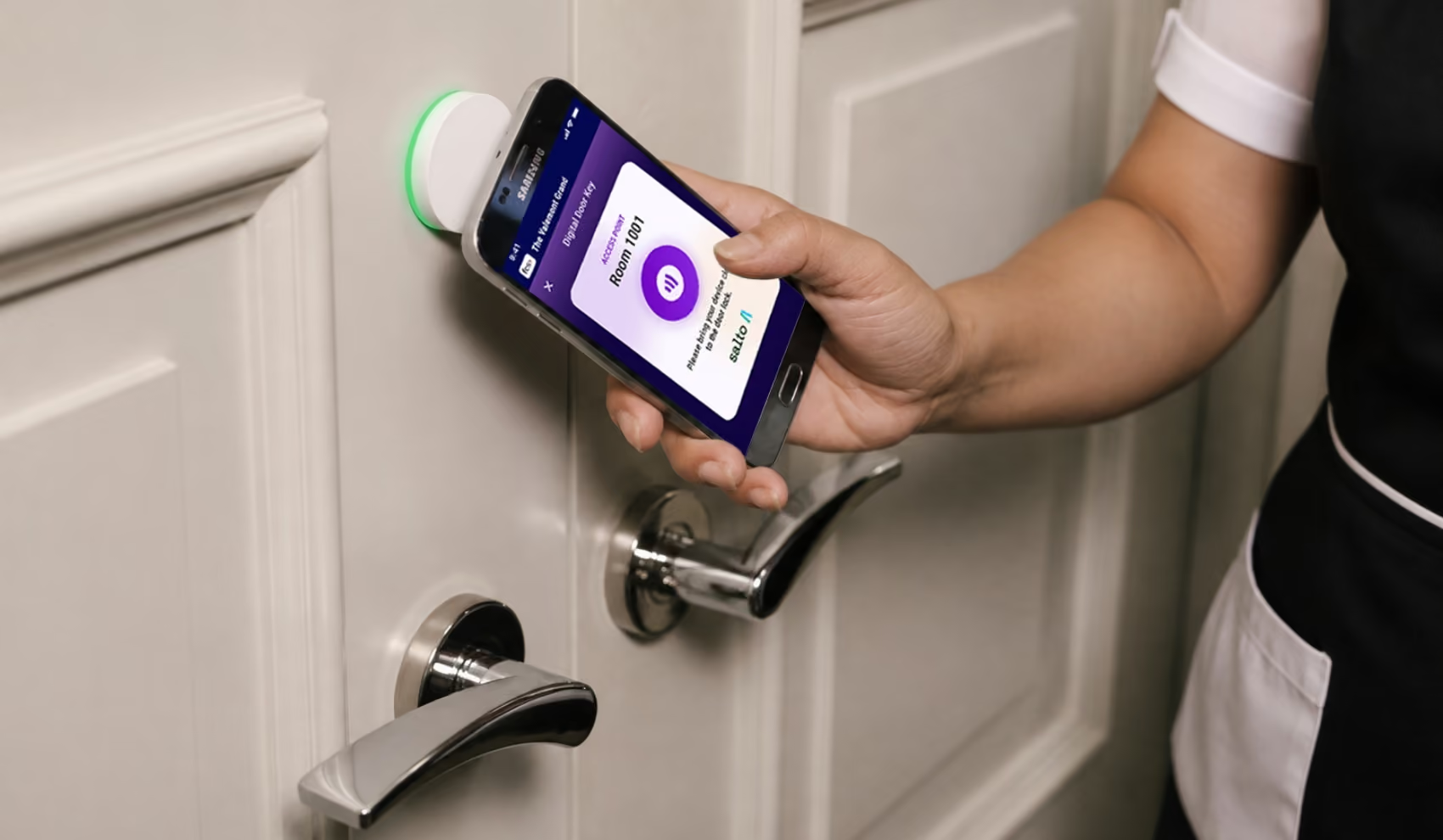
Equipa a equipe de limpeza com acesso móvel seguro, eliminando chaves perdidas e atrasos no acesso
A FCS Solutions integra sua plataforma FCS1 ao controle de acesso inteligente da Salto, permitindo que os atendentes de quarto desbloqueiem os quartos designados por meio de um aplicativo móvel e substituindo as chaves mestras por uma trilha de auditoria digital.
Cingapura, 11 de agosto de 2026 - Soluções FCS, fornecedora de tecnologia de operações hoteleiras nativa da nuvem, anunciou hoje sua integração com a Salto, líder global em soluções inteligentes de controle de acesso. A integração conecta FCS1 Plataforma de operações de hospitalidade com o Salto Plataforma de controle de acesso inteligente Space, permitindo que os hotéis digitalizem as operações de limpeza por meio de acesso seguro e sem chave ao quarto, aprimorando a segurança, a eficiência operacional e a responsabilidade do hotel.
Com a integração, os atendentes de quarto podem desbloquear os quartos atribuídos diretamente do aplicativo móvel FCS1 após um Limpeza O pedido (CO) é iniciado. O acesso é autorizado automaticamente somente para a sala atribuída e a tarefa ativa, garantindo que a equipe possa entrar somente nos quartos que estão programados para atender. Substituir as chaves mestras tradicionais por acesso digital seguro ajuda os hotéis a manter uma trilha de auditoria clara do acesso aos quartos.
“As chaves mestras são um dos últimos pontos fracos analógicos na segurança de hotéis porque são difíceis de rastrear, fáceis de perder e impossíveis de auditar em tempo real”, disse Karen Bey, vice-presidente de vendas da FCS Solutions. “Nossa parceria com a Salto fecha essa lacuna ao oferecer aos operadores hoteleiros maior visibilidade e controle sobre o acesso aos quartos, com um registro claro de quem acessou qual quarto e quando.”
“O acesso deve ser inteligente, seguro e perfeitamente integrado às operações diárias do hotel”, disse Winston Ng, gerente regional de contas estratégicas e corporativas, Salto. “Ao fazer uma parceria com a FCS Solutions, estamos estendendo essa inteligência para um dos fluxos de trabalho de operações mais usados no setor de hospitalidade. Uma fechadura não é mais apenas uma fechadura. Ele se torna parte do ecossistema operacional em tempo real de um hotel. As equipes de limpeza obtêm acesso mais rápido e seguro, enquanto os operadores se beneficiam da visibilidade, responsabilidade e trilha de auditoria que as chaves mestras tradicionais não podem oferecer.”
Essa colaboração reforça o compromisso da FCS Solutions com uma plataforma de hospitalidade aberta conectando hotéis a parceiros e tecnologias que estão moldando o futuro das operações hoteleiras.
Sobre a FCS Solutions
A FCS Solutions é uma fornecedora líder de tecnologia hoteleira, com a confiança de mais de 2.800 propriedades em 71 países para melhorar o desempenho operacional, a produtividade da equipe e a satisfação dos hóspedes. Sua principal solução, a FCS1, é uma plataforma de operações de hospitalidade baseada em nuvem que simplifica a limpeza, a manutenção e os serviços aos hóspedes por meio de automação inteligente, recursos baseados em IA, fluxos de trabalho móveis e visibilidade operacional em tempo real. Ao conectar pessoas, processos e tecnologia em uma única plataforma, a FCS Solutions capacita os hotéis a operar com mais eficiência e oferecer experiências excepcionais aos hóspedes.
CONECTE-SE COM SOLUÇÕES FCS
SITE | LINKEDIN | FACEBOOK | YOUTUBE
Sobre Salto
A Salto é uma provedora líder global de soluções de acesso, parte da ECOSSISTEMA DE SALTO. Desenvolvemos tecnologia pioneira de acesso às instalações, gerenciamento de identidade e bloqueio eletrônico que garantem experiências perfeitas, confiáveis e seguras. Por meio de relacionamentos estreitos com clientes e soluções inovadoras, nossa equipe global de especialistas cria produtos atemporais e significativos que impactam positivamente as pessoas e nosso planeta.
CONECTE-SE COM SISTEMAS DE SALTO
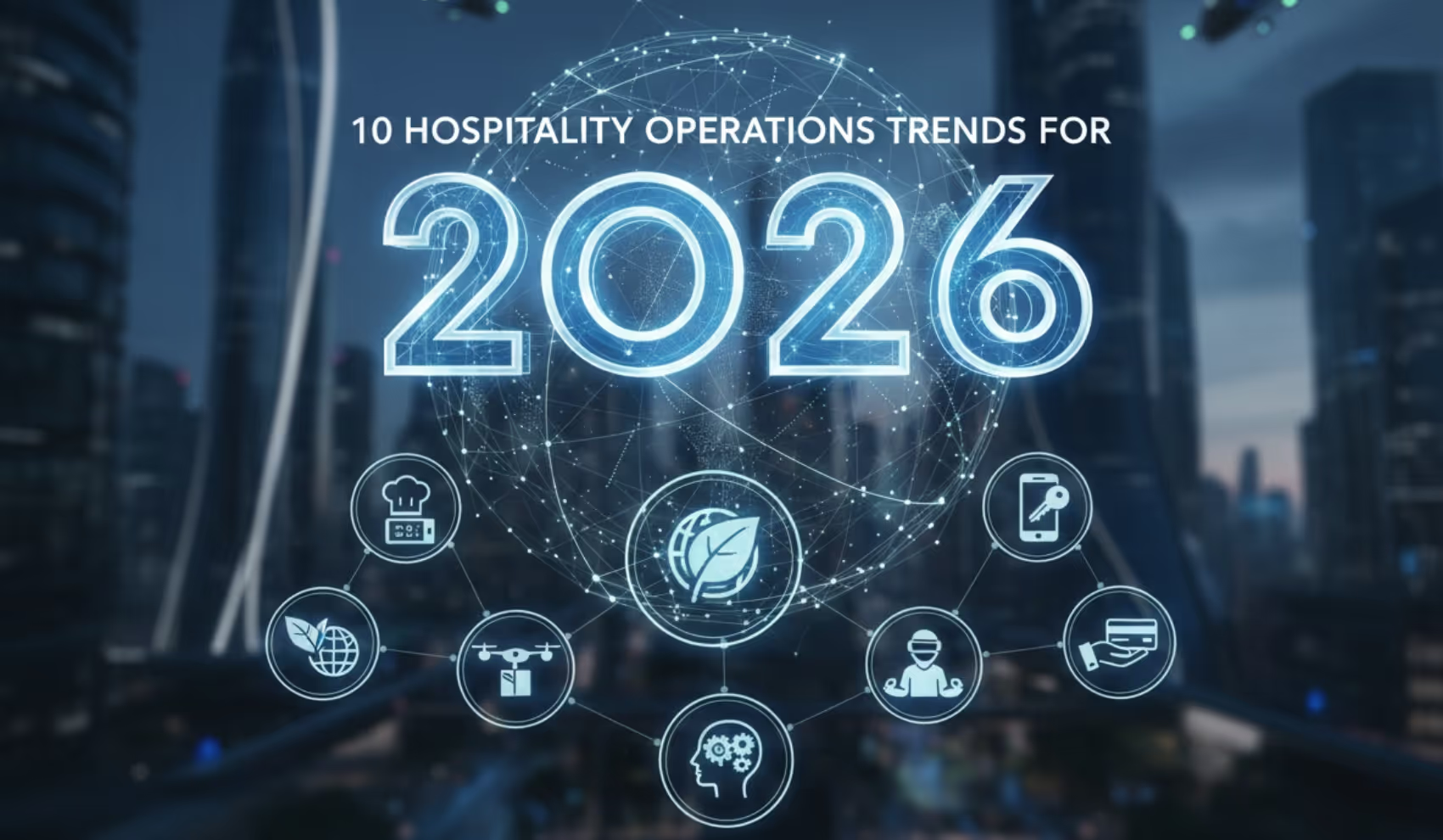
O setor hoteleiro está entrando em 2026 com um forte foco na disciplina operacional, lucratividade e adoção inteligente de tecnologia. A perspectiva de hospitalidade da PwC destaca que as operadoras que liderarão o mercado são aquelas que combinam tomadas de decisão baseadas em dados, estruturas de custos resilientes e experiências de hóspedes que parecem pessoais e eficientes. As dez tendências a seguir refletem o que as marcas de hotéis em todo o mundo estão realmente implementando, não previsões hipotéticas.
1. A IA se torna o centro nervoso operacional
A inteligência artificial não está mais confinada aos pilotos experimentais; ela agora sustenta as operações diárias. Os hotéis estão usando a IA para prever as necessidades de pessoal, automatizar as solicitações de serviço, otimizar os cronogramas de manutenção e apoiar as decisões de receita. A IA pode combinar dados de sistemas de gerenciamento de propriedades (PMS) e plataformas de ponto de venda (POS) para formar Perfis Inteligentes de Hóspedes (IGPs), capturando as preferências dos hóspedes em cada interação e possibilitando oportunidades de upsell sazonais mais relevantes.
2. A personalização se torna orientada pelo sistema em vez de depender da equipe
A personalização está mudando da memória e das anotações manuais para plataformas de dados conectadas. Os sistemas modernos de PMS, CRM e fidelidade agora reconhecem hóspedes repetidos, preferências e padrões de comportamento automaticamente. Isso reduz o atrito operacional e permite que os hotéis ofereçam um reconhecimento que pareça cuidadoso em vez de roteirizado, aumentando a satisfação dos hóspedes e a receita adicional.
3. A sustentabilidade evolui para uma estratégia central de margem
A sustentabilidade passou firmemente das mensagens corporativas para a prática operacional diária. Os hotéis estão investindo em sistemas de gerenciamento de energia, rastreamento de resíduos e programas de eficiência hídrica porque reduzem diretamente os custos operacionais e fortalecem o valor dos ativos. O desempenho do ESG agora é observado de perto por proprietários e investidores, tornando a responsabilidade ambiental um imperativo financeiro e estratégico.
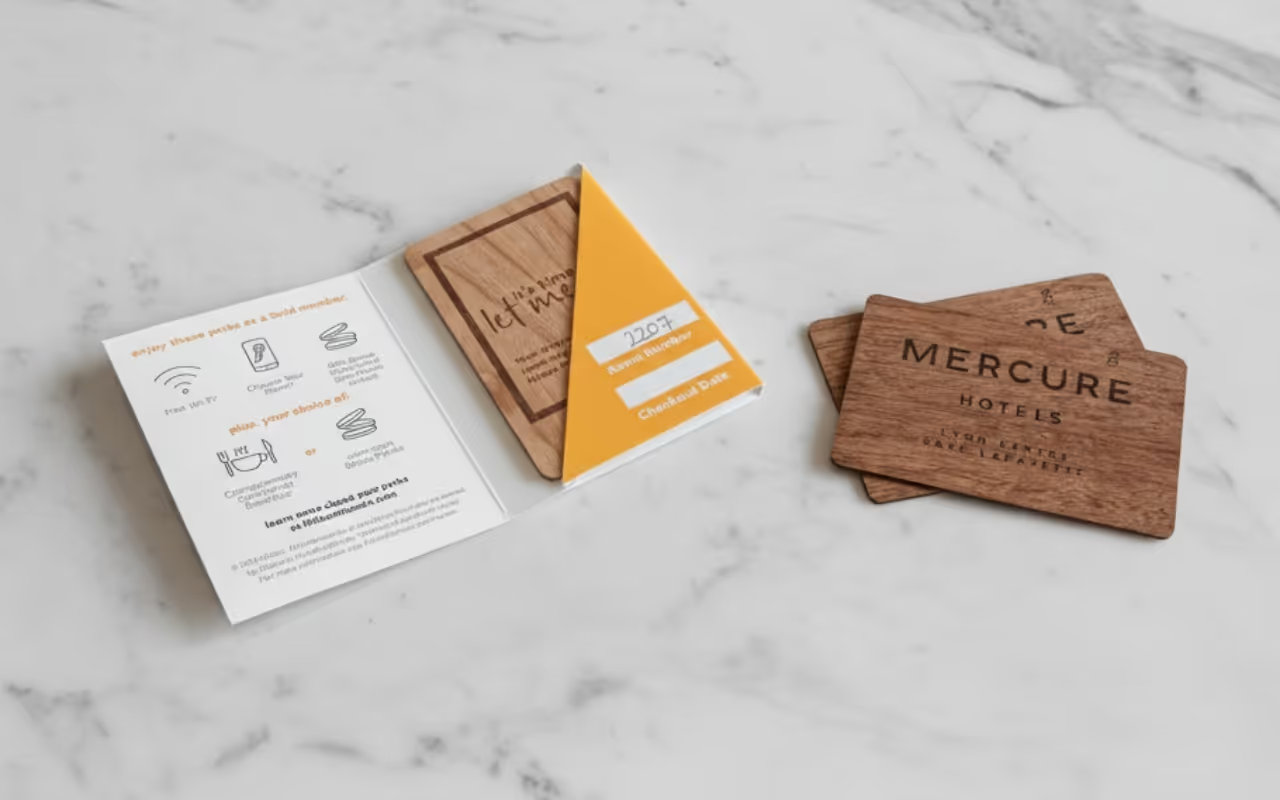
4. Os papéis humanos são redefinidos em torno do empoderamento, não da substituição
A tecnologia não está eliminando as pessoas dos hotéis; está reformulando a forma como elas trabalham. As tarefas administrativas rotineiras são cada vez mais automatizadas, permitindo que a equipe se concentre na empatia, na recuperação do serviço e nas situações complexas dos hóspedes. O treinamento cruzado e a multiqualificação estão se tornando comuns, criando equipes mais capazes, mais autônomas e mais engajadas.
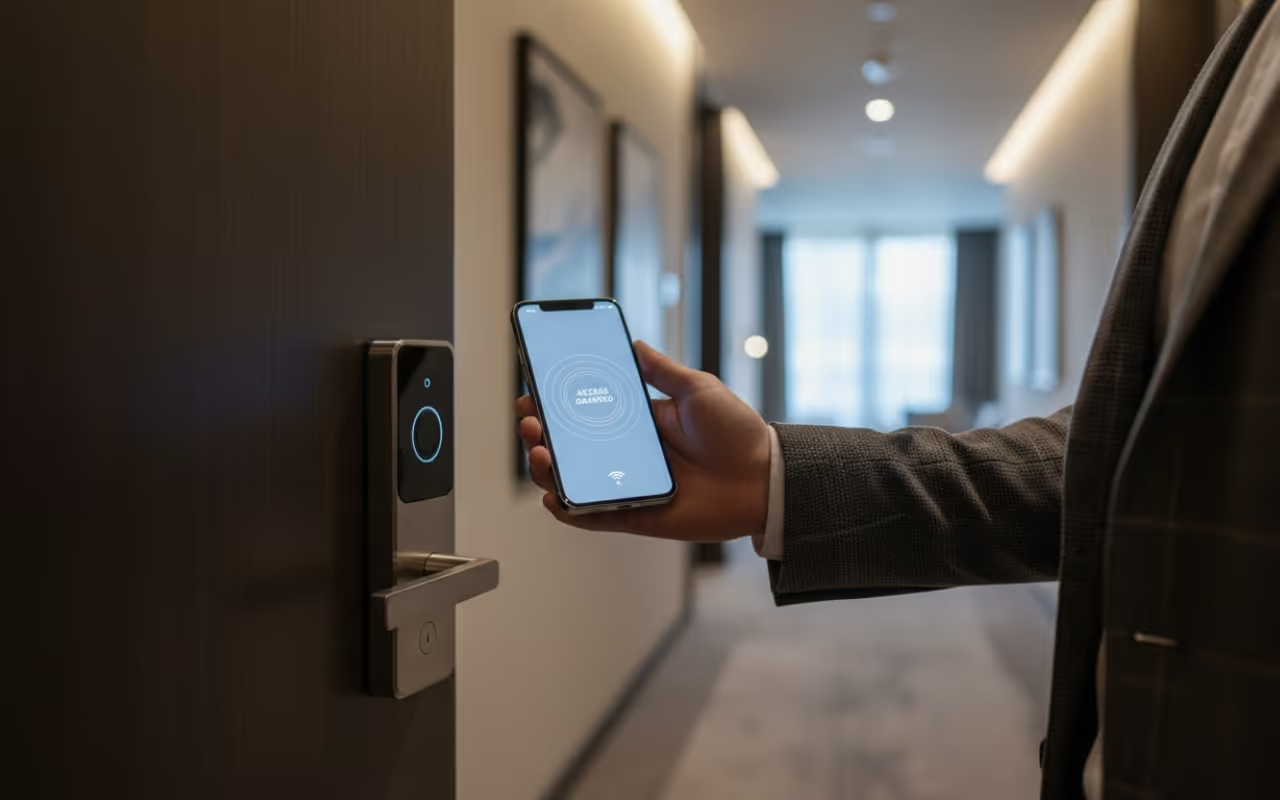
5. Viagens digitais e sem contato para hóspedes se tornam a norma
O check-in móvel, as chaves digitais e a comunicação baseada em aplicativos passaram de recursos interessantes para expectativas básicas. Essas ferramentas reduzem o congestionamento do saguão, eliminam a burocracia e oferecem aos hóspedes maior controle sobre sua estadia. Eles também criam registros digitais estruturados de solicitações e problemas, o que melhora a responsabilidade e a clareza operacional em todos os departamentos.
6. Edifícios inteligentes e IoT evitam falhas antes que elas aconteçam
Os hotéis estão cada vez mais equipados com sensores que monitoram sistemas HVAC, elevadores, iluminação e ocupação dos quartos em tempo real. Esses sistemas permitem que as equipes de engenharia identifiquem problemas antes que eles se tornem falhas visíveis aos hóspedes. A manutenção preditiva reduz o tempo de inatividade, protege a satisfação dos hóspedes e reduz o impacto nos custos de grandes reparos reativos.
7. O gerenciamento de receita muda para a inteligência em tempo real
A era de confiar principalmente em padrões históricos de preços está terminando. Agora, os hotéis estão usando ferramentas que combinam ritmo de reserva, movimentos de concorrentes, dados de eventos locais e sinais de demanda para refinar continuamente as decisões de preços. Em um mercado de viagens estruturalmente volátil, esse nível de agilidade é essencial para proteger a integridade das tarifas e, ao mesmo tempo, capturar oportunidades.
8. Ecossistemas de reserva direta fortalecem o controle comercial
Os hotéis estão redesenhando suas estratégias comerciais para aumentar o relacionamento direto com os hóspedes. Programas de fidelidade, ofertas personalizadas e canais digitais próprios estão sendo priorizados para reduzir a dependência de longo prazo das agências de viagens on-line. As OTAs continuam sendo importantes para a descoberta, mas os negócios recorrentes são cada vez mais recuperados por meio de plataformas controladas pela marca, nas quais os dados e a economia são mais fortes.
9. O bem-estar se torna fundamental para a forma como os hotéis projetam experiências
O bem-estar deixou de ser uma instalação independente para se tornar um princípio organizador de toda a estadia. Os hóspedes buscam ambientes que promovam descanso, clareza mental, conexão com a natureza, nutrição e movimento. Os hotéis que incorporam essas ideias ao design de quartos, à programação de alimentos e bebidas e à cultura de serviços estão obtendo estadias mais longas e maior lealdade emocional, especialmente em segmentos premium.

10. Premiumização das viagens: luxo como motor de crescimento
A crescente diferença entre os segmentos hoteleiros reflete a premiumização das viagens. As propriedades de luxo estão impulsionando o crescimento à medida que viajantes abastados buscam exclusividade, personalização e experiências emocionalmente ressonantes, não apenas quartos melhores. À medida que as viagens se tornam uma forma de expressão de status, esses hóspedes estão dispostos a pagar por privacidade, curadoria e distinção, dando aos hotéis de luxo maior poder de precificação e resiliência. Essa divisão deve aumentar à medida que as operadoras investem além das noções tradicionais de luxo.

Em 2026, as operações hoteleiras estão se tornando mais disciplinadas, orientadas por dados e intencionais. A tecnologia está incorporada ao modelo operacional, as equipes estão sendo capacitadas em vez de substituídas e o mercado está separando cada vez mais os operadores adaptáveis do resto.
Para os líderes hoteleiros, o sucesso não é mais perseguir todas as tendências, mas criar sistemas e experiências que se flexibilizem com a demanda, protejam as margens e aumentem a fidelidade. Aqueles que equilibram inteligência, resiliência e hospitalidade genuína definirão a próxima fase das operações hoteleiras.
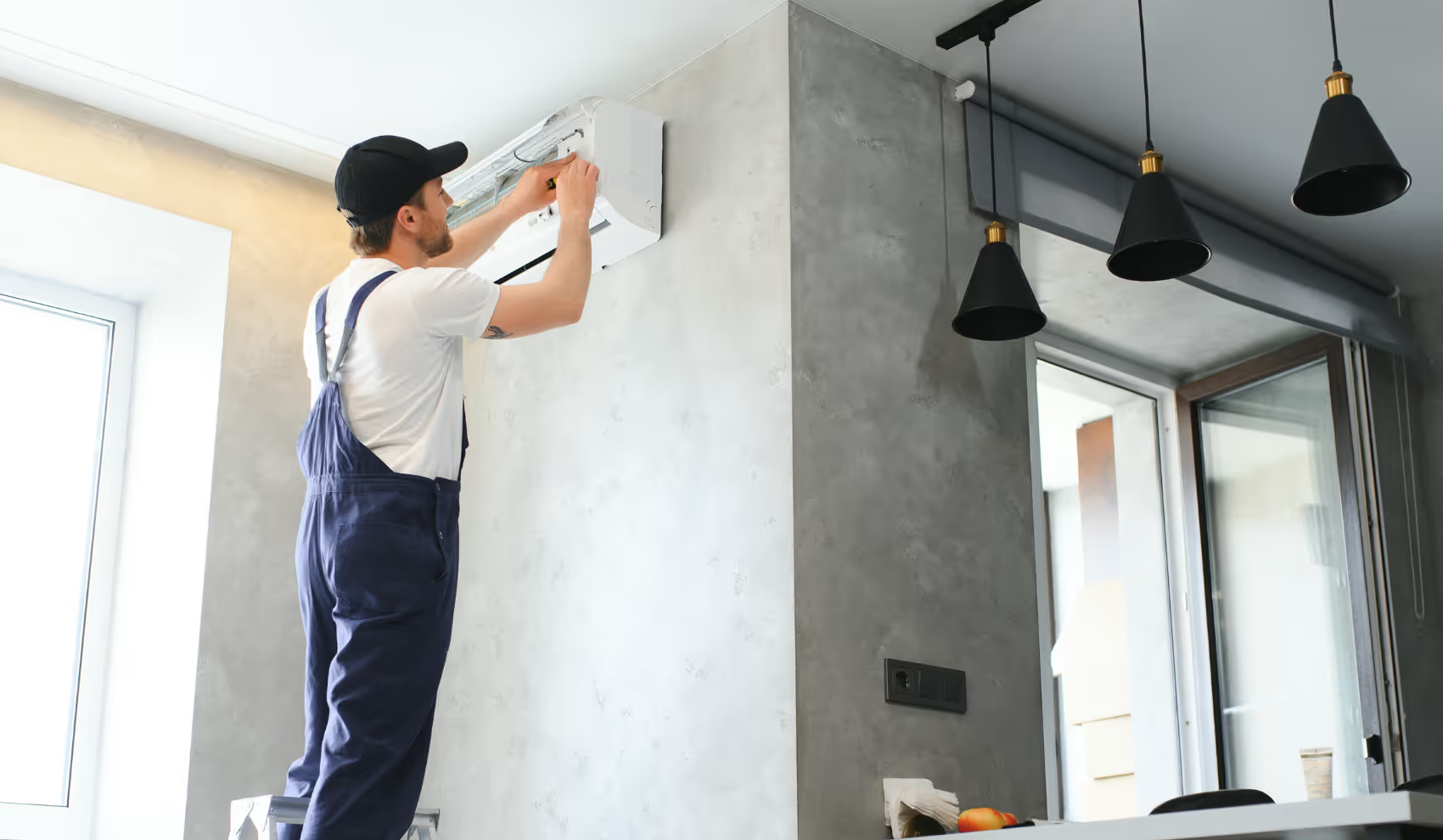
Os hotéis contam com uma rede complexa de ativos físicos, como sistemas HVAC, elevadores, caldeiras, máquinas de lavar roupa, minibares, aquecedores, tablets inteligentes e infraestrutura de TI de back-end. O desempenho desses ativos influencia diretamente a satisfação dos hóspedes, o tempo de atividade operacional, a segurança e a eficiência de custos.
Para muitos setores (incluindo hotelaria, manufatura e serviços públicos), pesquisas de consultoria mostram que estratégias estruturadas de manutenção e produtividade de ativos podem reduzir substancialmente os custos e melhorar a confiabilidade.
- De acordo com um relatório da McKinsey & Company, muitas empresas pesquisadas viram os custos de manutenção subirem acima da inflação, com 62% relataram esses aumentos no ano passado. Ao mesmo tempo, apenas 51% da atividade de manutenção é manutenção preventiva (PM) em média, deixando oportunidades significativas de melhoria.
Fonte: McKinsey & Company
- Onde as organizações têm programas de manutenção maduros e centrados na confiabilidade, até 70— 85% das horas técnicas são dedicados à manutenção preventiva, mostrando a vantagem de priorizar a PM sobre a manutenção reativa.
Fonte: McKinsey & Company
- Um relatório da Deloitte descreve como a manutenção preditiva (PdM), usando dados, sensores e análises, pode ajudar as organizações maximiza a vida útil dos ativos enquanto evita o tempo de inatividade não planejado.
Fonte: Deloitte
Sem uma estratégia definida de gerenciamento de ativos, os hotéis enfrentam uma série de problemas:
- Falhas de equipamento não planejadas que interrompem o atendimento ao hóspede
- Aumento dos custos de reparo devido à manutenção reativa
- Redução da vida útil dos ativos devido à manutenção irregular
- Falta de visibilidade da condição, do histórico ou do ROI dos ativos
- Aumento do consumo de energia e ineficiências operacionais
À medida que as expectativas dos hóspedes aumentam e as margens se estreitam, os hotéis não podem mais pagar por modelos reativos. O gerenciamento proativo de ativos não é mais opcional, é fundamental.
As operações eficazes de gerenciamento de ativos hoteleiros e manutenção preventiva começam com o rastreamento preciso dos ativos em todos os equipamentos e salas.
De reativo para preditivo: uma mudança nas operações hoteleiras
Tradicionalmente, muitos hotéis operavam em modo reativo, apenas consertando o equipamento quando ele falhava. Atualmente, as principais propriedades estão adotando abordagens preditivas e preventivas baseadas na tecnologia.
- Acompanhe o desempenho dos ativos em tempo real
As equipes obtêm visibilidade imediata do status do equipamento, dos problemas históricos, das informações de garantia e das necessidades de manutenção.
- Padronize processos e melhore a responsabilidade
Fluxos de trabalho consistentes ajudam as equipes de engenharia e operações a lidar com os problemas antes que eles se agravem, reduzindo a variabilidade e o erro humano.
- Estenda a vida útil de ativos de alto valor
Inspeções regulares, manutenção programada e substituições oportunas de peças protegem os investimentos de longo prazo.
- Reduza o tempo de inatividade operacional
Os insights preditivos ajudam as equipes a identificar sinais precoces de falha, evitando avarias que incomodam os hóspedes e aumentam os custos de reparos emergenciais.
- Fortaleça a conformidade e a segurança
Registros digitais e relatórios automatizados garantem a adesão aos padrões da marca, às regulamentações do setor e aos requisitos de auditoria.
O papel da tecnologia na promoção da eficiência dos ativos
Plataformas baseadas em nuvem e ferramentas móveis estão transformando a forma como as equipes hoteleiras gerenciam seus ativos. Quando combinado com automação e inteligência de dados, o gerenciamento de ativos se torna uma alavanca poderosa para a eficiência do hotel.
Os principais recursos incluem:
- Acompanhamento de ativos no nível da sala e do equipamento para melhorar a precisão e a velocidade de resposta
- Fluxos de trabalho de manutenção que priorizam dispositivos móveis que capacitam engenheiros em movimento
- Etiquetagem de ativos com código QR para identificar itens rapidamente e recuperar o histórico de serviços
- Lembretes de serviço automatizados para garantir tarefas oportunas
- Painéis ao vivo mostrando indicadores de desempenho e tendências de custo
- Análise preditiva que prevêem possíveis falhas e priorizam reparos
Os sistemas orientados por IA abrem ainda mais oportunidades ao fazer a triagem de problemas, rotear tarefas e aprender com padrões em todas as propriedades.
Ganhos operacionais: onde os hotéis veem o maior impacto
Hotéis que adotam uma estratégia estruturada de gerenciamento de ativos relatam consistentemente melhorias nas principais métricas:
- Tempos de resposta e resolução mais rápidos
- Menores custos de manutenção e serviços públicos
- Maior satisfação dos hóspedes com a redução das interrupções no serviço
- Aumento da produtividade da equipe com fluxos de trabalho mais claros
- Melhor orçamento por meio de previsões precisas e planejamento do ciclo de vida dos ativos
Para empresas de gestão e grupos com várias propriedades, os ganhos aumentam. Os insights de todo o portfólio ajudam os líderes a avaliar o desempenho, planejar o CAPEX com mais eficiência e implementar procedimentos operacionais padrão que escalam.
Construindo uma forte cultura de gerenciamento de ativos
A tecnologia é apenas parte da solução. Hotéis de alto desempenho combinam ferramentas digitais com processos disciplinados e uma mentalidade voltada para o serviço. Equipes bem-sucedidas se concentram em:
- Propriedade e responsabilidade claras
- Documentação consistente
- Comunicação entre departamentos
- Análises regulares do desempenho dos ativos
- Treinando equipes para entender não apenas O quê para fazer, mas Por que importa
Quando as equipes de engenharia, limpeza e operações trabalham no mesmo sistema e seguem os mesmos padrões, os hotéis operam com clareza e agilidade.
Conclusão: Uma vantagem competitiva que todo hotel pode construir
O gerenciamento de ativos é mais do que manter equipamentos, mas uma abordagem estratégica que molda a eficiência, a consistência e a resiliência das operações hoteleiras. Quando apoiados pelo rastreamento de ativos hoteleiros e por um programa estruturado de manutenção preventiva, os hotéis obtêm uma vantagem operacional escalável. Seja estendendo a vida útil do equipamento, minimizando o tempo de inatividade ou proporcionando experiências aos hóspedes sem interrupção, uma estrutura de gerenciamento de ativos bem projetada se torna uma vantagem competitiva a longo prazo.
À medida que a hospitalidade evolui, os hotéis que incorporarem o gerenciamento proativo de ativos em seu DNA operacional serão aqueles que operarão de forma mais inteligente, permanecerão ágeis e fornecerão um serviço excepcional, dia após dia, quarto após quarto.
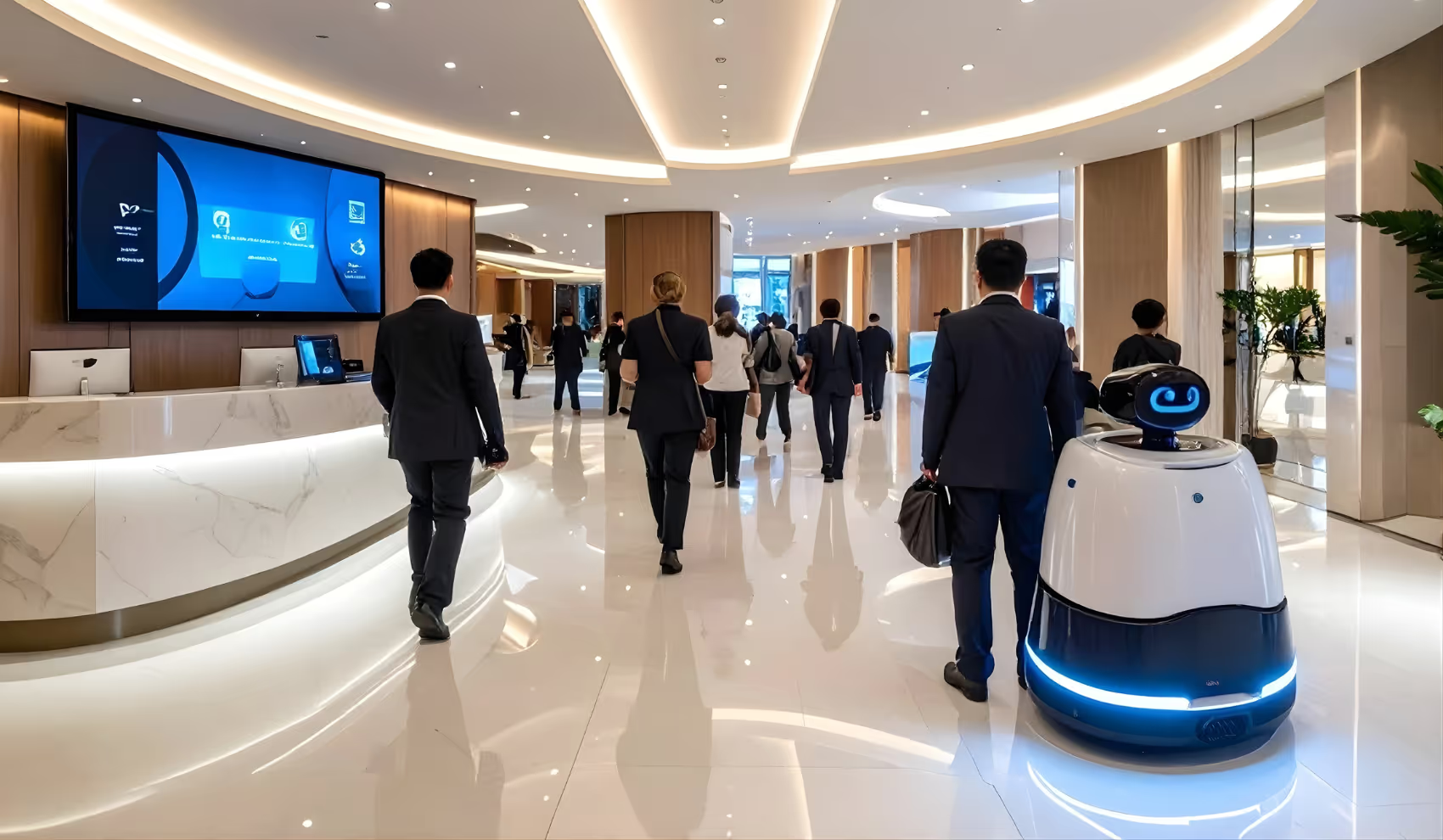
In every era of hospitality, a single technology quietly transforms how hotels think, work, and connect with guests. The first Property Management Systems digitized reservations. Channel managers expanded reach. Mobile apps gave guests control at their fingertips. Now, a new frontier is emerging, driven by hotel business intelligence tools that go beyond automation. Artificial Intelligence is no longer just an assistant to humans. It is becoming a co-operator that thinks, adapts, and acts alongside them. We are entering the age of cognitive hospitality.
From Reactive Operations to Predictive Intelligence
Today, most hotels still operate reactively, responding to guest requests, occupancy changes, or service gaps. But the next evolution will be guided by hotel business intelligence software that predicts needs before they even appear. Imagine your property’s digital systems like PMS, housekeeping, maintenance, CRM, all feeding data into one unified intelligence. It can recognize early check-in patterns, forecast service bottlenecks, and allocate staff automatically based on what’s happening in real time. In this near future, a housekeeping system doesn’t just schedule cleaning rounds; it senses when rooms are ready through motion, temperature, and guest device signals. Maintenance no longer waits for a service ticket. It detects unusual vibration patterns in the HVAC system and creates a task before anyone calls. The hotel of tomorrow will not just run faster. It will run smarter, continuously learning from its own rhythm and data patterns.

Where Conversations Become Commerce
The guest journey is turning into a continuous conversation. Instead of scrolling through websites or apps, travelers will simply tell their digital assistants what they want, and those assistants will handle everything.
“Find me a resort in Kyoto with private onsen villas, a mountain view, and electric vehicle pickup.”
“Book me a three-night stay in Paris near the Louvre with a large workspace and late checkout.”
In seconds, the system compares live inventories, reviews, and prices, completes the booking, processes payment, and even pre-selects preferred amenities. Guests may never touch an OTA or open a browser again. The entire transaction could happen through a single exchange between two digital assistants, the traveler’s and your hotel’s AI-powered system. This is already becoming real. Stripe’s Agentic Commerce allows AI agents to handle payments securely, while conversational systems like PolyAI are learning to speak the language of hospitality naturally and intelligently. For hotels, the next booking engine might not be a webpage. It could be a smart hotel system that knows when a traveler is ready to book.
The Rebirth of the Concierge
As hotel business intelligence tools and automation handle routine work, the human role will shift from transactional to emotional. Front-desk teams will no longer be valued for speed, but for empathy, and for noticing small cues, handling recovery moments, and adding human warmth where technology cannot. The AI concierge will take care of confirmations, reminders, and upgrades. The human concierge will become the storyteller, curating experiences that make every stay memorable. We will no longer train staff to follow steps. We will train them to design moments.
Data: The New Language of Hospitality
AI thrives on clarity, not just volume. In tomorrow’s hospitality landscape, your property’s visibility will depend on how well your data can be read, understood, and trusted by hotel business intelligence tools. Every room description, amenity tag, and review becomes a digital signal. Hotels that organize their data properly like linking services, locations, sustainability, and experience details, will appear more naturally in AI-powered searches and travel planning tools. Your ranking will not only live on a website anymore. It will be decided in a conversation between two intelligent systems that understand which hotel truly fits a traveler’s intent.

Hospitality Intelligence: Beyond Automation
Real transformation begins when technology becomes a collaborator rather than just a helper. This is where hospitality data intelligence takes center stage. AI and analytics will blend data, timing, and emotion into a learning system that helps your hotel:
- Predict occupancy and staffing needs before demand rises
- Detect guest emotions through voice and behavior in real time
- Adjust pricing dynamically based on market context and guest sentiment
- Recommend sustainability actions that improve efficiency and reduce waste
When every department, from housekeeping to CRM, becomes part of one connected network, the hotel evolves into a living system powered by hotel business intelligence software. It starts to feel the rhythm of its guests and respond with precision.
Redefining What It Means to Be Human in Hospitality
This future doesn’t remove the human touch in hospitality; it enhances it. Teams will have more time for empathy, creativity, and genuine connection, the parts of service that can’t be coded. Leaders such as General Managers and Directors of Operations will no longer just manage performance metrics. They will design intelligence itself, deciding how systems think and what values they optimize for. The real question for tomorrow’s hoteliers isn’t “How do we use AI?” but “How do we teach it to understand what makes hospitality human?” Imagine a stay where your hotel already knows you but still manages to surprise you. Your favorite cookie is waiting in the room. The temperature, pillow firmness, and music are just the way you like them.
The age of cognitive hospitality and hotel business intelligence is here. The question isn’t when it arrives. It’s whether your hotel is ready to think.

In today’s hospitality landscape, speed is more than a luxury - it’s the baseline.
According to a recent global guest feedback report, 54% of hotel complaints relate to delays in service and 61% of guests now expect staff to respond within 5 minutes or less.
But what happens behind the scenes tells a different story.
A guest requests extra towels. Ten minutes pass. They call again. Front desk checks with housekeeping. Housekeeping never received the request. The towels? Still sitting in a storage closet. The issue isn’t that your team isn’t trying. It’s that they’re over-relying on fragmented channels—walkie-talkies, phone calls, WhatsApp groups, even sticky notes.
The result? Slow service, duplicated work, and rising frustration on both sides of the desk.
This is where FCS1 makes the difference.
FCS1 is a hospitality operations solution built to match the speed of today’s guest expectations.
It ensures that every request - be it room service, engineering, cleaning, or luggage delivery - is immediately routed to the right person, tracked in real time, and closed with full accountability.
Hotels using FCS1 report:
- Up to 40% faster task response times
- 25–30% increase in housekeeping task efficiency
- Fewer missed or repeated service calls
- Tangible improvement in guest satisfaction and online ratings
Managers get full visibility into who’s doing what, and when. Frontline staff focus on delivering, not relaying. Guests notice - not because you tell them, but because everything just works.
The best-run hotels don’t react faster. They’re simply better equipped to anticipate, assign and act - without chaos.
Your guests won’t wait.
Now your team doesn’t have to either.
Let’s talk about making that happen for you. Get in touch today.

According to PwC, U.S. hotels can anticipate a 1.5% increase in RevPAR in 2025, signaling steady recovery and growth following challenging years. While the forecast indicates a modest rise, it underscores a pivotal opportunity for hotels to optimize operations, enhance guest experiences, and position themselves for long-term success.
As demand escalates, efficiency and innovation will become essential. This is where technology can make a significant impact.
Key Focus Areas for Growth
Streamlining Operations
Automation tools, real-time data insights, and optimized staff management will enable hotels to meet rising demand without compromising quality. A focus on predictive analytics can help in managing inventory and streamlining processes during peak periods. Additionally, workflow automation for maintenance and housekeeping can reduce operational inefficiencies.
Revenue Optimization
With RevPAR growth, dynamic pricing and revenue management systems will empower hotels to adjust rates in real-time, maximizing profitability. Hotels that integrate advanced revenue intelligence platforms can identify emerging trends and adapt their strategies to seize opportunities quickly. Bundled offers and loyalty-driven promotions can further boost revenue potential.
Guest Experience
More opportunities for personalization through mobile engagement, in-room automation, and tailored services will help attract and retain high-value guests. Hotels should also consider incorporating AI-driven chatbots and virtual concierge services to elevate responsiveness and ensure a seamless guest journey from booking to checkout.
Sustainability
Investment in energy-saving technologies and sustainable practices can create efficiencies while enhancing a hotel’s brand reputation. Initiatives like waste reduction, water conservation systems, and green certifications are increasingly becoming deciding factors for environmentally conscious travelers.
Technology-Driven Marketing
Digital campaigns focused on hyper-targeted content can attract new customer segments. Hotels can utilize geo-targeting and retargeting strategies to engage local and global travelers effectively. User-generated content and influencer partnerships can also drive awareness while building trust with potential guests.
Staff Empowerment
With increased demand, ensuring that hotel staff are well-trained and equipped with the right tools will be critical. Investing in training programs and equipping teams with mobile task management solutions can improve efficiency and morale, resulting in better guest satisfaction.
Opportunities on the Horizon
While the forecasted 1.5% RevPAR increase may seem modest, it reflects resilience and a clear path toward sustained growth. By leveraging innovation and data-driven strategies, hotels can future-proof their operations, boost profitability, and deliver superior guest experiences.
#HotelIndustry #RevPAR #HotelTech #RevenueManagement #GuestExperience #Sustainability #Innovation #FCSsolutions

In the evolving landscape of U.S. hotel operations, housekeeping has emerged as one of the most consequential yet often underexamined frontiers for efficiency improvement.
While industry attention frequently gravitates toward revenue management, distribution strategy, and guest-facing technologies, operational performance continues to be shaped by back-of-house functions that directly influence room availability, service responsiveness, and guest satisfaction. Housekeeping, positioned at the center of this operational ecosystem, is increasingly impacted by structural labor constraints, rising wage pressures, and heightened service expectations.
Within this context, artificial intelligence is moving from conceptual promise to practical operational tool.
Efficiency Pressures Reflect Structural Industry Shifts
Across the United States, hotel operators are navigating a labor environment that reflects a long-term structural reset rather than a temporary disruption.
Many U.S. hotels are still struggling to hire and retain enough employees especially in core operational roles like housekeeping, front desk, and maintenance. Nearly two-thirds (65%) of U.S. hotels still report staffing shortages as of 2025. Housekeeping is consistently cited as the top hiring need and hardest role to fill, according to a survey conducted by the American Hotel & Lodging Association (AHLA). Even with wage increases and incentives, properties continue to report multiple open positions per hotel, creating workload gaps and adding stress for existing staff. Rising wages and cost-of-living pressures further heighten financial strain, while unpredictable occupancy, late check-outs, and fluctuating service demands introduce operational volatility. At the same time, evolving guest expectations and new technology adoption increase role complexity, requiring staff to learn and balance multiple skills. These factors combine to create high burnout risk, morale challenges, and retention difficulties.
These pressures manifest acutely within housekeeping departments. Housekeeping workflows must now absorb:
- Greater occupancy volatility
- Shorter booking cycles
- Increased service request variability
- Tighter staffing conditions
Efficiency challenges, therefore, are less about labor intensity alone and more about coordination complexity.
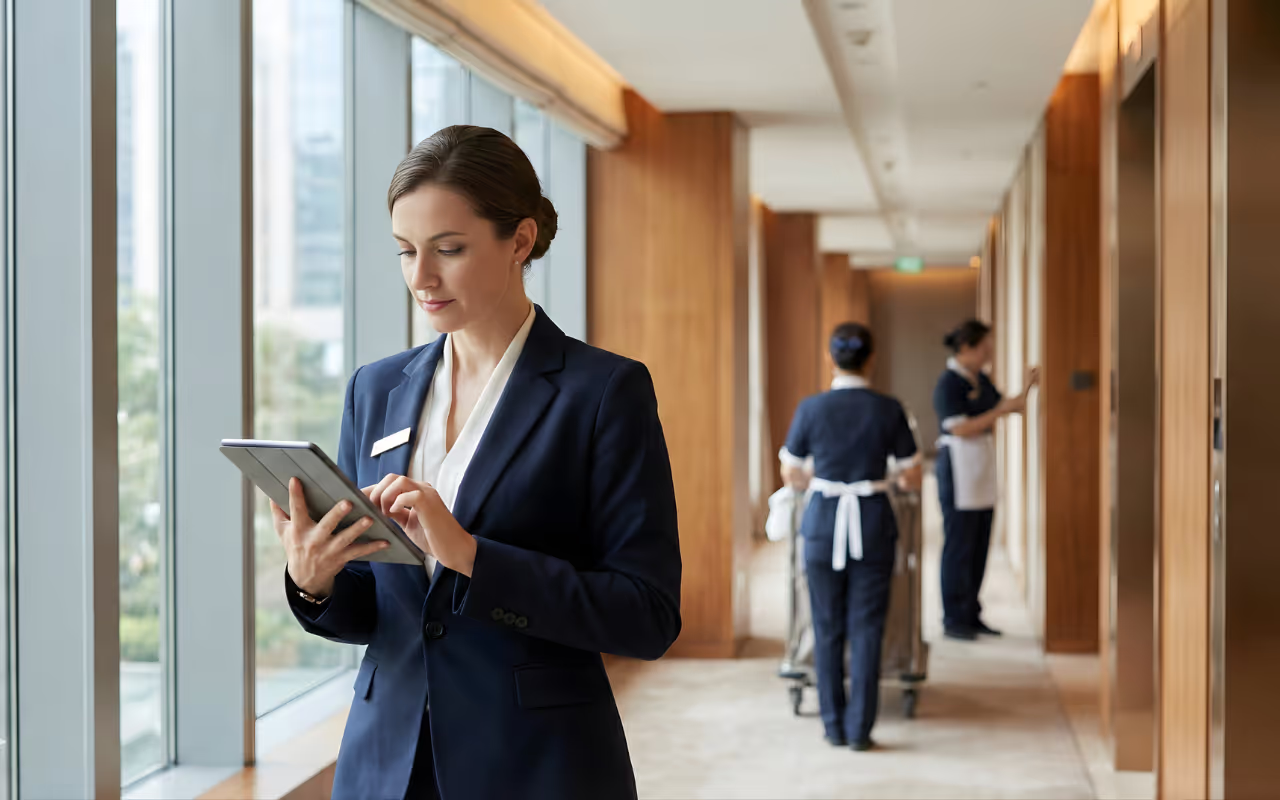
The Hidden Drivers of Housekeeping Inefficiency
Operational inefficiencies in housekeeping rarely stem from cleaning execution alone. Instead, they accumulate through systemic friction in how work is planned, assigned, tracked, and adjusted throughout the day.
Experts in hospitality operations note that productivity losses are often driven by process breakdowns, fragmented communication, delayed or incomplete information, and manual coordination, rather than staffing levels alone. When frontline teams operate with partial visibility, even well-resourced departments experience wasted time, rework, and uneven output.
Variability, not workload volume, has become the dominant challenge in service operations. Demand shifts, room readiness uncertainty, late check-outs, maintenance overlaps, and guest requests introduce constant volatility that traditional static workflows struggle to absorb.
Within housekeeping, this volatility concentrates friction at points where information must move quickly and accurately between people, systems, and tasks.
Coordination Rigidity in a Dynamic Environment
Traditional housekeeping workflows often rely on static room assignments or fixed cleaning sequences. Yet modern hotel operations are inherently fluid.
Early arrivals, late check-outs, VIP movements, maintenance dependencies, and guest requests continuously reshape priorities. Without mechanisms for dynamic reprioritization, teams are forced into reactive adjustments, introducing delays and operational strain.
AI-driven systems address this by continuously interpreting live operational signals, enabling priorities to shift in real time.
Communication Dependency and Workflow Interruptions
Routine guest requests represent a persistent source of friction.
Extra towels, amenities, housekeeping items, and servicing calls frequently interrupt planned workflows. In traditional models, these requests depend on staff availability, triggering multi-step communication chains that introduce latency.
AI-enabled solutions such as Lucy, the AI Operator by FCS AIOP, reduce this dependency by functioning as a constant guest-facing interface. By answering routine calls, interpreting guest requests, and routing them to the right department, Lucy stabilizes task flow while reducing communication overhead across front desk and housekeeping teams.
Information Integrity and Operational Noise
Information delays and inconsistencies remain significant efficiency constraints.
Research on operational performance consistently shows that decision-making quality is inseparable from information clarity. In housekeeping environments, delayed updates, duplicate assignments, and incomplete task logging create operational noise that directly erodes productivity.
AI-supported workflows contribute to information stability through consistent task capture, timestamp accuracy, and synchronized updates.
AI's Emerging Role: From Automation to Operational Stability
The adoption of AI within housekeeping reflects a broader shift in how U.S. hotels define efficiency.
Rather than focusing narrowly on labor compression, operators are increasingly prioritizing operational resilience. Organizations facing structural workforce constraints must redesign workflows to reduce friction, variability impact, and coordination overhead.
AI, in this context, functions as an enabler of stability. It supports:
- Dynamic prioritization
- Continuous service responsiveness
- Reduced workflow disruption
- Improved information clarity
Importantly, this shift does not disminish the role of housekeeping professionals.
Reframing the Efficiency Conversation
The relationship between AI and housekeeping efficiency is often oversimplified. AI does not clean rooms or even clean the rooms.
AI removes what slows cleaning operations down:
- Coordination delays
- Communication bottlenecks
- Prioritization rigidity
- Information inconsistencies
A Strategic Imperative for U.S. Hotels
As labor dynamics, guest expectations, and operational complexity continue to evolve, housekeeping efficiency is becoming a strategic priority rather than a departmental concern.
Artificial intelligence is no longer positioned solely as an innovation initiative. It is emerging as operational infrastructure supporting hotels in managing variability, protecting service continuity, and sustaining productivity under structural constraints.
Solutions such as FCS AIOP - Lucy exemplify this progression: AI designed not as a technological replacement, but as a stabilizing force within modern hotel operations.
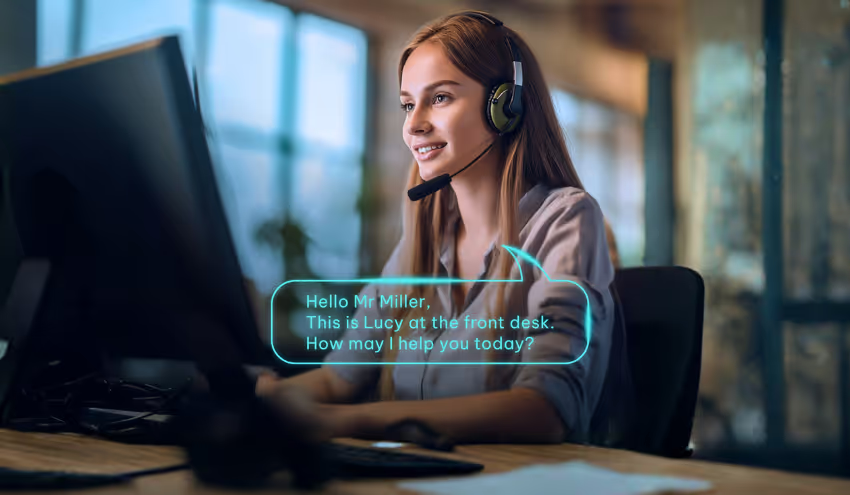
It’s 3:17 AM at a bustling downtown hotel. A guest calls the front desk requesting extra towels. Another needs to know about the hotel amenities. A third reports a malfunctioning thermostat. Meanwhile, your skeleton night crew is juggling a tour group check-in, handling an emergency maintenance issue, and fielding complaints about noise from the wedding party in the ballroom.
Sound familiar? If you’re in hospitality, it’s probably Tuesday.
The Invisible Crisis in Hotel Operations
The hospitality industry faces a paradox that keeps general managers awake at night. Guest expectations have never been higher with instant responses, personalized service, every detail dialed in perfectly. Yet the resources to deliver on these promises have never been thinner.
The revolving door of staff departures only compounds the issue. The real challenge runs deeper: a fundamental scarcity of skilled hospitality professionals. Today’s hotels are expected to do more with less, maintaining five-star standards with three-star staffing levels.
Meet Lucy: The AI Operator Who Never Sleeps
Guests now expect real-time, personalized, and conversational experiences. They want to be helped immediately. When that guest picks up the phone, a warm, professional voice responds within seconds: “Hello Mr. Miller, this is Lucy at the front desk. How may I help you today?“
Lucy never takes a coffee break. She knows every guest by name, and can handle dozens of calls simultaneously during peak periods. And Lucy isn’t human, she’s an AI operator, built for hospitality.
How Lucy Works
When a guest makes a call from their room, Lucy answers on the first ring. She identifies the request—housekeeping, maintenance, concierge services, and processes it through natural conversation. The moment the call ends, the request routes automatically to the FCS1 platform, where it’s instantly assigned to the appropriate department with complete details.
Housekeeping receives the exact room number and specific items requested. Maintenance gets precise descriptions of the issue. Nothing gets lost in translation between departments.
Every interaction Lucy handles is recorded and logged. For properties, this creates an invaluable audit trail for training, quality assurance, and operational insights. Which rooms generate the most calls? When do maintenance requests peak? Which services do guests request most often? The data reveals patterns that enable smarter decisions.
Lucy differs from traditional IVR systems in key ways. She’s been specifically trained in hospitality service protocols, greeting guests by name, adapting to their preferred language, and responding with contextual awareness. Hotels can customize her persona, greetings, and responses to reflect their brand identity, whether understated elegance or vibrant warmth.
Real Operational Impact
Lucy operates on-premise, integrating directly with existing PABX infrastructure through a simple plug-and-play installation. No massive system overhaul. No months of painful implementation. The technology works within current hotel operations, becoming an invisible layer that amplifies capability.
Night operations: Smaller teams maintain full service capability. Lucy handles the steady stream of routine calls –extra pillows, thermostat adjustments, wake-up calls– while human staff focus on security, emergencies, and guests who need personal attention.
Peak periods: During morning checkout and afternoon check-in rushes, Lucy manages concurrent phone inquiries while front desk agents handle face-to-face interactions that benefit from human touch, warm welcomes to problem resolution.
Cost structure: With four concurrent operators included in the deployment, properties gain 24/7 coverage that would traditionally require multiple full-time equivalent positions across shifts. The fixed cost model provides budget predictability that variable staffing cannot match, while eliminating overtime expenses during unexpectedly busy periods.
AI handles the routine, Humans deliver the Magic
Lucy isn’t replacing humans, she is liberating them. When AI handles the predictable stream of towel requests, thermostat adjustments, and routine inquiries, your staff can focus on what drew them to this industry in the first place: genuine human connection. The guest who needs reassurance about a flight, or the family celebrating their anniversary.
Because at 3:17 AM, guests don’t just want their towels delivered – they want reliability, trust, and reassurance. Your night crew will still face those calls. The difference? Now they’re not drowning in volume. They have the bandwidth to provide the kind of attentive, personal service that turns a satisfied guest into a loyal one.
Article Source:
https://ilha.org/how-ai-operators-keep-hotels-running-around-the-clock/
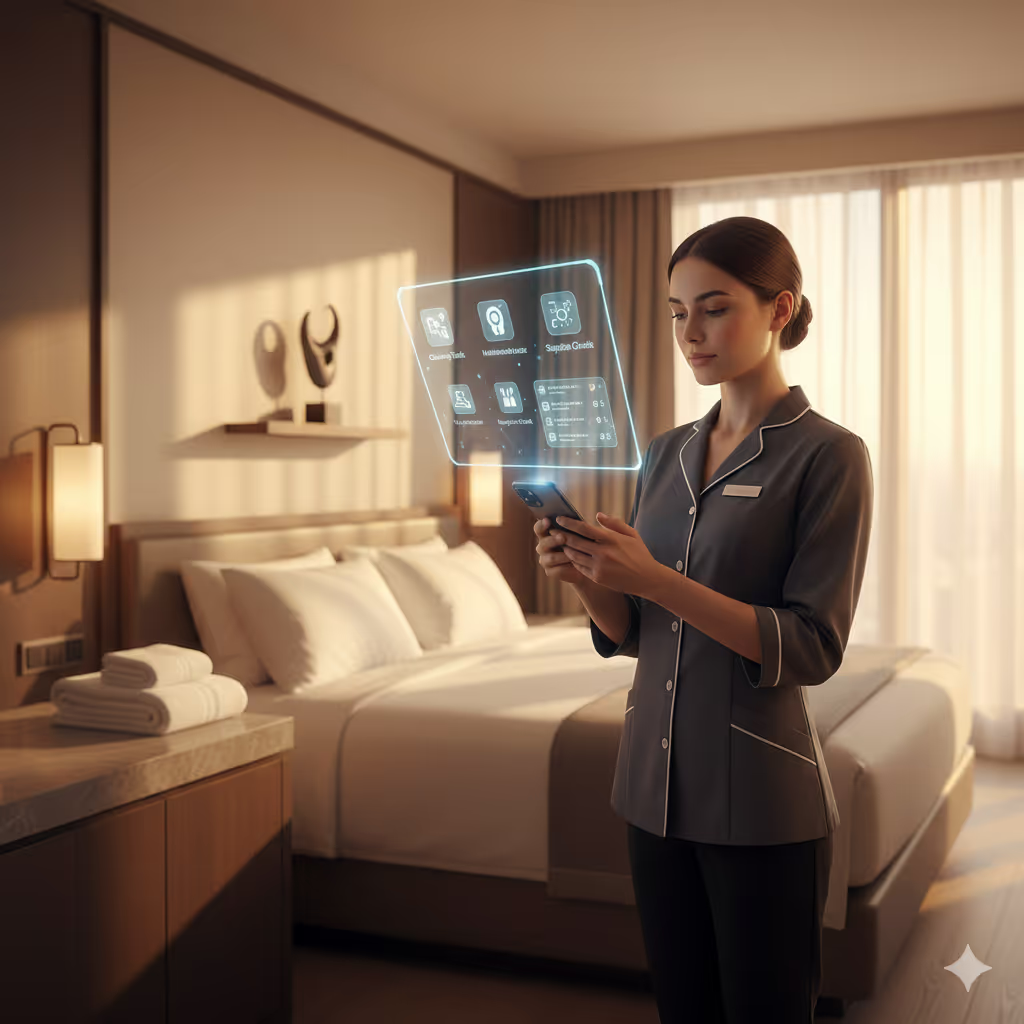
Managing a hotel workforce has never been more complex. Guest expectations are rising, labor costs continue to increase, and unpredictable demand makes it nearly impossible to rely on outdated scheduling practices. Many hotels still juggle Excel spreadsheets or manual rosters, but these tools leave managers stuck between overstaffing, which drives up costs, and understaffing, which frustrates both employees and guests.
The hospitality industry runs on people, yet the way staff are scheduled often creates inefficiency and burnout. To move forward, hotels need to rethink how they plan, assign, and adapt their staffing. By turning to automated scheduling tools, hotels can simplify staffing, reduce operational headaches, and unlock new levels of staff efficiency that directly enhance the guest experience.
Why Simplifying Staffing Matters
Staffing is the backbone of hotel operations, but it’s also one of the greatest sources of inefficiency. Manual scheduling often means relying on assumptions, guesswork, or last-minute fixes when demand changes. For example, a sudden surge in check-ins due to a local conference might overwhelm an understaffed front desk, while an overstaffed housekeeping team on a slow weekday leads to wasted labor costs.
Simplifying staffing through automation addresses these issues at the root. Instead of reacting to problems as they arise, managers can plan proactively with the help of data-driven tools. Scheduling software draws on historical performance, real-time demand forecasts, and labor compliance rules to ensure that every shift has the right balance of people and skills. In turn, employees feel supported, service quality improves, and operational efficiency rises.
From Spreadsheets to Smarter Scheduling
The shift away from manual spreadsheets is not just a matter of convenience—it’s a matter of survival in an increasingly competitive hospitality landscape. Spreadsheets were never designed to handle the complexity of today’s hotels, where demand can change overnight based on seasonality, promotions, or local events. Automated scheduling systems, however, can anticipate those fluctuations and adjust staffing levels accordingly.
This means managers no longer have to spend hours manually reworking schedules when an employee calls in sick or when an unexpected tour group arrives. Instead, the system recalculates staffing needs instantly, creating flexibility without chaos. By simplifying staffing in this way, hotels save time, control costs, and ensure service delivery remains consistent no matter what comes their way.
Driving Hotel Staff Efficiency Through Data
At the heart of hotel staff efficiency is the ability to match people to demand as precisely as possible. Automated scheduling achieves this by combining predictive analytics with real-time adjustments. Forecasting tools use historical booking data, occupancy trends, and even external factors such as holidays or events to anticipate how many staff will be needed in each department. When reality doesn’t match the forecast, schedules can be updated immediately without disrupting operations.
This smarter approach also extends beyond simply “filling shifts.” Automated systems can factor in skills, certifications, and employee preferences to create more balanced and effective teams. During peak occupancy, for instance, the software can prioritize assigning more experienced front desk staff, while also ensuring that newer team members are paired with mentors. This not only improves service quality but also contributes to ongoing staff development and morale.
The Employee Experience: A Hidden Efficiency Driver
Hotel staff efficiency isn’t just about doing more with less—it’s also about keeping employees engaged, satisfied, and motivated. When scheduling is handled manually, staff often feel frustrated by last-minute changes, unclear communication, or a lack of flexibility. Automated systems address these challenges by putting more control in employees’ hands.
With self-service features accessible through mobile apps, staff can view schedules, request time off, or swap shifts without having to track down a manager. This level of autonomy creates a stronger sense of fairness and trust, leading to higher job satisfaction and lower turnover. In a sector known for its high attrition rates, retaining experienced employees is one of the most effective ways to safeguard both efficiency and service quality.
Compliance and Fairness Without the Headache
Labor compliance is another area where manual scheduling often falls short. Keeping track of overtime, mandatory breaks, or maximum shift limits can be tedious and prone to error. Mistakes not only expose hotels to legal risk but also erode employee confidence in management. Automated scheduling tools remove this burden by embedding compliance rules directly into the system.
Schedules are generated in a way that respects both labor laws and internal policies, while also ensuring fair distribution of shifts across the workforce. This creates an environment where employees know they are treated equitably, managers avoid costly penalties, and the hotel as a whole operates more smoothly.
Preparing Hotels for the Future
Simplifying staffing is not a one-time initiative but an ongoing strategy that positions hotels for long-term success. As guest expectations evolve and labor markets shift, the ability to adapt quickly will become the defining feature of efficient operations. Automated scheduling doesn’t just improve day-to-day efficiency—it builds a foundation for agility, scalability, and resilience.
Hotels that embrace these tools will be able to respond to demand shifts faster, reduce unnecessary costs, and deliver consistently high-quality service. They will also cultivate a stronger employee culture, where staff feel supported and valued, ultimately leading to higher guest satisfaction and loyalty.
Conclusion
In today’s hospitality landscape, hotels cannot afford to manage their workforce with outdated tools. The complexity of staffing demands a smarter, more flexible approach. By adopting automated scheduling, hotels can simplify staffing processes, unlock greater hotel staff efficiency, and create a workplace where both employees and guests thrive.
The result is not only smoother operations but also a more sustainable model for long-term growth.

The hospitality industry stands at a critical juncture in telecommunications infrastructure evolution. As hotels navigate the complex landscape of digital transformation, legacy voice systems present increasingly significant operational, security, and financial challenges. This strategic guide examines the current state of hotel voice infrastructure, analyzes the risks associated with traditional systems, and presents a strategic framework for modernization that balances operational continuity with technological advancement.
The hospitality sector's unique operational requirements - 24/7 availability, guest experience prioritization, and regulatory compliance - demand a carefully orchestrated approach to voice system modernization. Rather than pursuing disruptive full-scale cloud migration, forward-thinking hotels are adopting hybrid middleware solutions that preserve existing investments while establishing pathways to future technologies.
The Current State of Hotel Voice Infrastructure
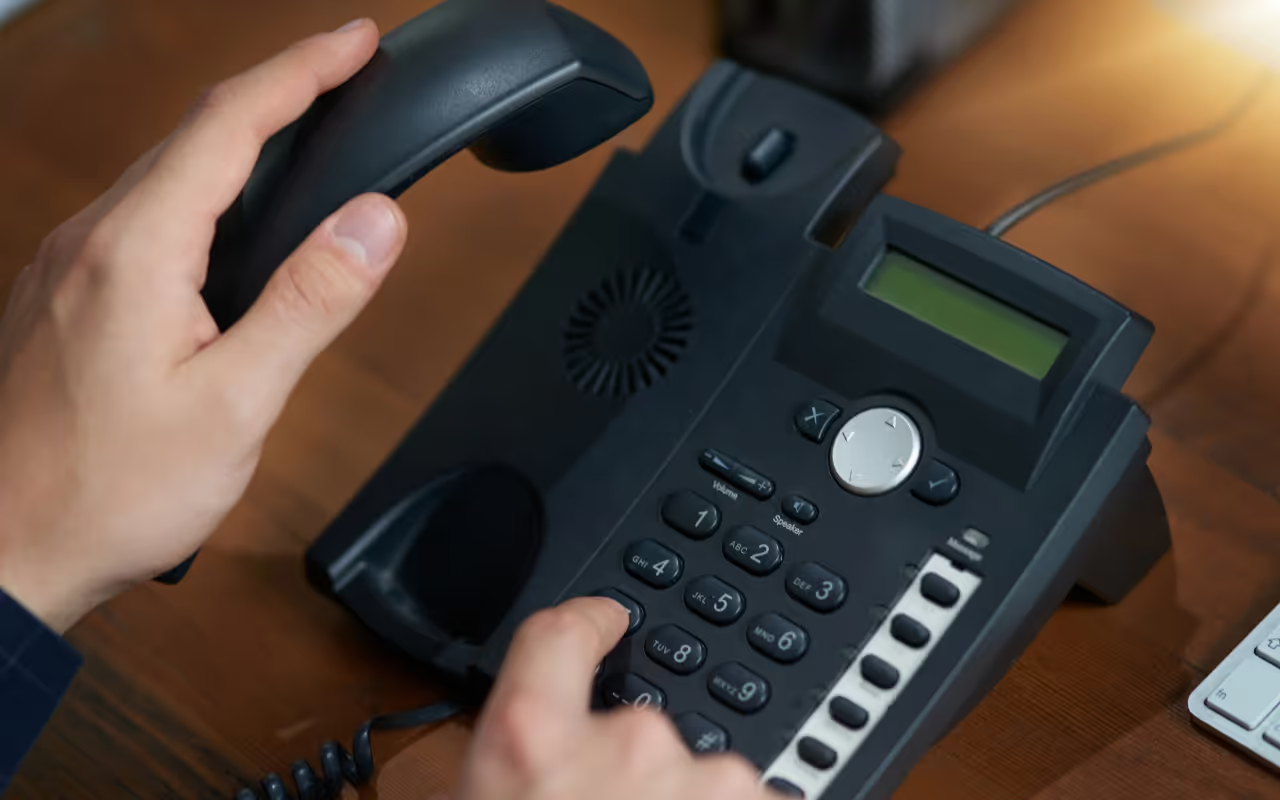
Legacy System Challenges
The hospitality industry's reliance on traditional Private Automatic Branch Exchange (PABX) systems has created a complex web of operational dependencies that extend far beyond basic voice communication. These systems, often integrated with Property Management Systems (PMS), in-room devices, and emergency notification systems, form the backbone of hotel operations.
However, this integration comes at a significant cost. Legacy voice infrastructure typically operates on Windows-based gateway systems that require constant maintenance, present security vulnerabilities, and consume substantial IT resources. The complexity of these systems often necessitates dedicated server rooms, specialized technical staff, and ongoing licensing fees that compound operational expenses.
Security Landscape Analysis

The cybersecurity landscape for hospitality has evolved dramatically, with voice systems emerging as a primary attack vector. The hospitality industry faces unprecedented cyber threats, with global cybercrime damage costs expected to grow by 15% per year over the next two years, reaching $10.5 trillion USD annually by 2025. According to IBM's Cost of a Data Breach Report 2023, the average cost of a data breach in hospitality reached $3.36 million, with legacy voice systems representing a particularly vulnerable entry point for malicious actors.
The scale of the threat is staggering. Cyberattacks occur at an alarming rate of over 2,200 times daily, with someone falling victim every 39 seconds. The hospitality sector has experienced some of the most devastating attacks in recent years, as demonstrated by the September 2023 incidents affecting major Las Vegas casino operators.
Traditional telephony infrastructure presents multiple security vulnerabilities

Persistent Storage Risks: Legacy systems maintain extensive databases of call records, configuration data, and system logs on local storage devices. This persistent data creates attractive targets for ransomware attacks and data exfiltration attempts.
Network Exposure: Conventional voice gateways often require multiple open ports for various services, creating potential entry points for unauthorized access. Remote Desktop Protocol (RDP) access, commonly used for system administration, has become a favored attack vector for cybercriminals. The Caesars Entertainment breach in September 2023 demonstrated how simple social engineering tactics can compromise entire hotel networks when attackers impersonated legitimate employees to request password resets through voice communication channels.
Configuration Drift: Over time, manual system modifications and patches create configuration inconsistencies that can inadvertently introduce security gaps or system instabilities. An estimated 83% of businesses reported experiencing at least one insider attack in 2024, highlighting the risks of systems requiring frequent manual intervention.
The Business Case for Modernization

Financial Impact Assessment
The total cost of ownership for legacy voice systems extends beyond initial hardware and software investments. Hotels face ongoing expenses related to:
- Maintenance and Support: Aging Windows-based systems require regular patching, updates, and technical support, often necessitating specialized vendors or internal IT expertise.
- Infrastructure Overhead: Server rooms, cooling systems, and backup power solutions add significant operational costs.
- Downtime Costs: System failures can disrupt guest services, potentially impacting revenue and brand reputation.
Operational Efficiency Considerations
Modern hotel operations demand seamless integration between voice services and other property systems. Traditional architectures often create silos that hinder operational efficiency and guest experience optimization. Call billing systems may operate independently from property management platforms, creating manual reconciliation processes and potential revenue leakage.
Furthermore, multi-property hotel chains face additional complexity when managing disparate voice systems across locations. Standardization efforts become costly and time-consuming when each property operates unique infrastructure configurations.
Strategic Modernization Framework

The Middleware Approach
Rather than pursuing immediate full-scale cloud migration, the middleware approach offers a pragmatic path forward that addresses immediate security and operational concerns while preserving existing infrastructure investments. This strategy recognizes that hotel voice systems must maintain absolute reliability while gradually evolving toward cloud-native architectures.
The middleware model introduces a secure bridge between existing on-premises systems and cloud-based management platforms. This approach provides immediate security benefits while establishing the foundation for future technological advancement.
Architecture Principles
Security-First Design: Modern middleware solutions should implement zero-trust security principles, eliminate persistent storage vulnerabilities, and minimize attack surfaces. RAM-only operation ensures that temporary data cannot be exploited by malicious actors, while strict access controls prevent unauthorized system entry.
Operational Continuity: Modernization efforts must prioritize uninterrupted service delivery. Middleware solutions should integrate seamlessly with existing PABX systems, PMS platforms, and in- room devices without requiring substantial operational changes or staff retraining.
Scalability and Standardization: Multi-property operations benefit from standardized infrastructure that can be centrally managed while accommodating location-specific requirements. Cloud-controlled management enables consistent policy enforcement and simplified troubleshooting across property portfolios.
Technical Implementation Strategy

Hardware Architecture
The shift from Windows-based gateways to ARM-based middleware devices represents a fundamental change in hotel voice infrastructure design. ARM processors offer several advantages for hospitality applications:
Power Efficiency: ARM devices consume significantly less power than traditional x86 systems, reducing operational costs and environmental impact.
Form Factor: Compact ARM devices eliminate the need for dedicated server rooms and associated cooling infrastructure.
Reliability: Simplified hardware designs with fewer moving parts reduce failure rates and maintenance requirements.
Security Implementation
Zero-Trust Network Access: Modern middleware implementations should establish secure communication channels using industry-standard SSL encryption over port 443, eliminating the need for multiple open ports or complex firewall configurations.
Ephemeral Storage: RAM-only operation ensures that all system data is automatically purged during power cycles, preventing data persistence that could be exploited by attackers.
Access Control: Key-based SSH authentication and optional secure file sharing capabilities provide necessary administrative access while maintaining security boundaries.
Integration Capabilities
Effective middleware solutions must support comprehensive integration with existing hotel systems:
- Voice Services: Call Detail Record (CDR) processing, voicemail management, and AI-powered operator services.
- Property Management: Minibar posting, room status updates, and guest service integrations.
- Emergency Systems: Wake-up call management and emergency broadcast capabilities.
- Network Services: IPTV integration and IP telephony preparation.
Implementation Considerations
Deployment Strategy
Successful voice infrastructure modernization requires careful planning and phased implementation.
The deployment process should minimize service disruption while ensuring thorough testing and validation at each stage.
Pre-Deployment Assessment: Comprehensive analysis of existing infrastructure, integration requirements, and operational dependencies provides the foundation for successful implementation.
Staged Rollout: Gradual deployment across property locations allows for real-world testing and refinement before full-scale implementation.
Staff Training: While middleware solutions reduce operational complexity, staff must understand new management interfaces and troubleshooting procedures.
Change Management
Technology modernization efforts often face resistance from operational staff familiar with existing systems. Successful implementations require clear communication about benefits, comprehensive training programs, and ongoing support during the transition period.
Vendor Selection Criteria
When evaluating middleware solutions, hotels should consider:
Security Certifications: Vendors should demonstrate compliance with relevant cybersecurity standards and provide documentation of security testing procedures.
Integration Experience: Proven experience with hotel-specific systems and protocols ensures smooth implementation and ongoing support.
Scalability: Solutions should accommodate growth and changing requirements without requiring substantial architectural changes.
Support Structure: 24/7 technical support and rapid response capabilities are essential for hospitality operations.
Future Considerations

IP Telephony Migration
While middleware solutions address immediate modernization needs, hotels should develop long-term strategies for transitioning to IP-based telephony systems. The middleware approach provides time and flexibility to evaluate IP telephony options while maintaining operational stability.
Cloud Integration Evolution
As cloud-based communication services continue to mature, hotels can gradually migrate additional voice services to cloud platforms while maintaining local optimization for high-bandwidth applications.
Artificial Intelligence Integration
Modern voice platforms increasingly incorporate AI-powered features such as automated attendants, natural language processing, and predictive analytics. Middleware architectures should support these advanced capabilities while maintaining security and reliability standards.
Conclusion

Hotel voice infrastructure modernization represents both a critical operational necessity and a strategic opportunity. The challenges posed by legacy systems—security vulnerabilities, maintenance overhead, and operational inefficiencies—demand immediate attention. However, the complexity of hotel operations requires modernization approaches that balance innovation with operational continuity.
The middleware strategy offers a pragmatic path forward, addressing immediate security and operational concerns while establishing the foundation for future technological advancement. By implementing secure, cloud-ready bridge solutions, hotels can eliminate the risks associated with legacy systems while preserving existing infrastructure investments and maintaining service reliability.
Success in voice infrastructure modernization requires careful planning, appropriate vendor selection, and commitment to ongoing evolution. Hotels that embrace strategic modernization approaches will achieve improved security posture, operational efficiency, and competitive positioning in an increasingly digital hospitality landscape.
The hospitality industry's digital transformation continues to accelerate, and voice infrastructure modernization represents a critical component of this evolution. Organizations that act decisively to address legacy system challenges while preparing for future technological opportunities will be best positioned to deliver exceptional guest experiences while maintaining operational excellence.
This strategic guide provides a framework for hotel voice infrastructure modernization based on current industry trends and security requirements. For specific implementation guidance and technical specifications, consult with qualified telecommunications professionals and cybersecurity experts.

Smart hospitality tools don’t need to be oversized or overpriced.
In the world of hospitality, complexity tends to scale with size. Bigger properties adopt bigger systems. More rooms mean more workflows, more software, and more hands trying to stay involved.
But smaller hotels and boutique properties face the same pressures. Guest expectations don’t shrink just because the team does. In fact, they often juggle just as much, if not more, with fewer resources, tighter budgets, and leaner teams doing twice the work.
Here’s the irony. Most “smart” hotel tech isn’t built for the people who actually need it to be smart.
So we asked ourselves what would it look like if task management was built not for the biggest hotels, but for the boutique, busiest, and most agile?
Built for the Hustler Behind the Hospitality

FCS1 Lite was designed for the reality of modern independent hotels. It’s a cloud-native, subscription-based task management system tailored for small hotels, boutique properties under 50 users, and independent operators who need to do more with less.
From maintenance to guest requests, FCS1 Lite keeps operations organized and teams on track, without the steep learning curve or expensive onboarding that usually comes with “enterprise” systems. It’s mobile-first and cross-platform, so your team can work from any device, anywhere, from the front desk to the laundry room.
Key Features include:
- Automated Guest Request Management: Enable guests to submit service requests via mobile, with real-time updates and direct routing to service teams.
- Job Dispatch & Maintenance Order Tracking: Create, track, and complete orders with escalation support. Have a centralized overview of all active and completed orders for clearer visibility and control.
- Built-in Messenger: Chat in real time to coordinate tasks across departments internally.
- Reports: Track completion rates, tasks statuses in real-time.
Tech That Works Without the Overhead
One of the most frustrating aspects of hotel technology is how heavy it often is, with the cost of servers, licensing, onboarding, IT support. FCS1 Lite strips that away. There’s no hardware to install, no complicated setup, and no IT team needed. Thanks to its SaaS architecture, onboarding can happen in a day - not weeks.
What makes it different is that it’s not just lightweight - it’s intentionally frictionless. It’s designed to fit into your hotel’s workflow, not the other way around.
Real-Time Visibility, Real-World Impact
Great service is about timing. That means knowing which rooms are ready, which ones need attention, and which requests are unresolved—before a guest brings it up.
FCS1 Lite gives your team real-time visibility into all of it. Maintenance teams and front office stay aligned with live status updates, digital task tracking, and zero paper trails.
It’s streamlined collaboration that replaces radios and room logs with instant notifications and overview of order listings.
Ready for Now. Scalable for Later

While FCS1 Lite is built for speed and simplicity today, it’s also ready to grow with your property. As you scale, you can unlock advanced functionality or upgrade to the full FCS1 suite without disrupting your operations or retraining your team.
You get cost-effective scalability with no heavy upfront investment, just a flexible subscription that grows as you do.

Let Your Team Focus on Guests. We’ll Handle the Rest
If you're ready to simplify your operations, reduce the noise, and give your staff tools they’ll actually use, it might be time to see what FCS1 Lite can do.
In the heart of Shanghai’s North Bund, where vibrant city life meets contemporary luxury, W Shanghai – The Bund has long been a leader in bold hospitality. Now, with the adoption of FCS1 Cleaning, the hotel is making waves not only for its design and guest experiences—but also for the efficiency behind the scenes.
We spoke with Max Mei, Director of Style at W Shanghai – The Bund, to understand how FCS1 has reshaped their housekeeping operations over the past year.
1. What prompted the adoption of FCS1?
“The main issue we faced was keeping track of room status in real-time,” Max shared. “Housekeeping reports were printed in the morning, which meant the data quickly became outdated. Front desk staff might check in guests while we were unaware of the updated room status. There were instances where we entered rooms already occupied by guests.”
That led W Shanghai to implement FCS1 Cleaning, a housekeeping solution offering real-time room status updates - ensuring no more awkward interruptions and better coordination between departments.
2. Has the system improved cleaning speed and staff coordination?
"This helps the front desk manage check-ins more effectively—especially with our high room turnover rate.
They can now give guests precise availability times and monitor progress directly from the system, no phone calls needed.”
3. What about guest satisfaction?
“Guests’ expectations are higher than ever,” Max noted. “Being able to check room status in real time reduces back-and-forth and delays. It improves communication and ultimately leads to a smoother experience for our guests.”
4. Any unexpected outcomes?
“Yes. One pleasant surprise has been the drop in minibar losses—from 50% down to 30%. That’s a significant improvement in cost control. Also, the staff adapted to the system very quickly and gave positive feedback.
The system is stable and easy to use, and your support team has been very responsive.”
5. How would you rate FCS1?
“We’ve been using it for over a year. I’d give it a 90 out of 100. It’s stable, reliable, and genuinely helps us run our operations more smoothly.”
6. Would you recommend it?
“Definitely. FCS1 has helped us reduce errors, improve team coordination, and deliver better service. It’s made
a big difference.”
According to Max Mei, Director of Style at W Shanghai – The Bund, FCS1 has been a game-changer for their housekeeping operations—offering stability, real-time connectivity through its mobile-first design, and improved room tracking and automation that have significantly enhanced both efficiency and the guest experience.
In today’s luxury travel landscape, travelers want more than just a beautiful property and consistent service. They’re looking for experiences that feel uniquely tailored to them — a seamless blend of the comfort of a trusted brand and the discovery of local culture. This shift is redefining how luxury hotel brands like EDITION, W, NoMad, and The Ritz-Carlton deliver value.
Empowering Personalization Through Experiences
Personalization extends beyond amenities and services—it’s woven into the entire guest journey. Every detail, from room design to dining, can be an opportunity to make guests feel valued and understood.
EDITION Hotels, for instance, often collaborate with local artists and brands to create signature experiences. At "The Tokyo EDITION" a "Sustainable and Timeless Christmas Tree", designed by Kengo Kuma and crafted by Karimoku, will be transformed into elegant tables, preserving the legacy of the original tree. Punch Room, EDITION’s global cocktail bar concept, blends 19th-century London club traditions with Japanese culture. As Japan's first authentic punch bar, it offers innovative drinks made with sustainable, local ingredients in an intimate, sophisticated setting.
The Ritz-Carlton Bali’s partnership with Missoni for a Resort Club collection illustrates how collaborations can elevate the guest experience while staying true to the brand’s identity. These partnerships allow properties to feel both globally consistent and locally relevant, creating meaningful connections with guests.

Anticipating Guest Needs
With the global luxury market forecast to hit $1.6 trillion in 2024, the hospitality industry faces increasing pressure to align with changing expectations. Guests today seek more than physical luxury; they want to feel understood. Younger travelers are drawn to experiences like yoga retreats, spa treatments, and innovative sleep technologies, while older generations favor familiar comforts delivered with precision.
The secret to meeting these expectations lies in understanding individual preferences and anticipating needs. Chinese tourists, for example, are shifting their focus from shopping to immersive cultural and experiential activities. Hotels that adapt to these trends can deliver tailored journeys that leave a lasting impression.
Moving Beyond Localization
While localization remains important, personalization takes it further by creating a sense of connection. At The Ritz-Carlton Shanghai Pudong, this philosophy is evident. Guests can enjoy Michelin-starred Chinese cuisine at Jin Xuan or indulge in authentic Italian dishes at Scena di Angelo, on 52nd floor, providing both a taste of Shanghai’s vibrant culture, mediterranean flavors, and view of the Bund. These thoughtful options cater to a spectrum of guests, from first-time international visitors to seasoned business travelers.
Personalization as a Growth Strategy
Luxury hospitality is no longer just about offering opulence—it’s about creating a deep emotional connection. Personalization enables brands to transform generic stays into unforgettable journeys. Whether through tailored wellness options, culturally immersive dining experiences, or thoughtful gestures, every interaction can reinforce the brand’s value in the guest’s mind.
By focusing on personalization, luxury hotel brands can build stronger relationships, inspire repeat visits, and turn guests into advocates. The future of luxury travel lies in meeting the traveler where they are—not just physically, but emotionally. It’s about crafting experiences that feel truly individual, leaving guests with the sense that their journey was designed just for them.
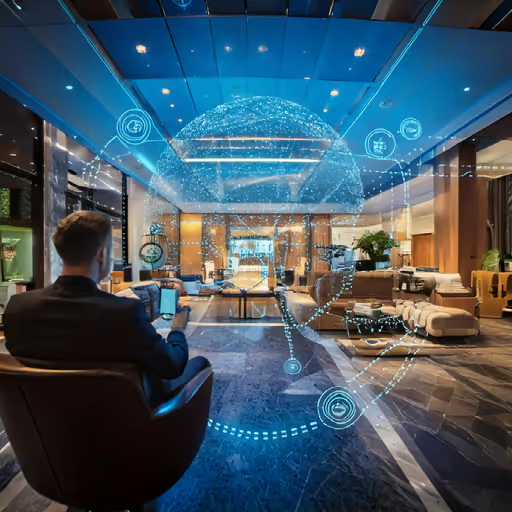
The landscape of hospitality is transforming, driven by new guest expectations and technology advancements. FCS Solutions believes success lies in harmonizing operational success with outstanding guest interactions.
Top Industry Shifts
1. Personalized Guest Interactions
Hotels today must go beyond conventional services, providing hyper-tailored experiences. By harnessing data and AI, hotels can anticipate and meet unique guest desires, raising the bar for satisfaction.
2. Comprehensive and Adaptive Solutions
Operational barriers are dissolving with cohesive systems enhancing everything from PMS to maintenance, all through an API-first approach that keeps hotels adaptable and competitive.
3. Central Focus on Sustainability
Operating smartly now includes sustainability. From energy-efficient tech to waste management improvements, hotels are minimizing expenses and meeting eco-friendly demands.
4. Empowering Hotel Employees
Guest improvements aren’t the only focus. With automation, routine chores become efficient, allowing hotel staff to hone in on remarkable guest service.
FCS Solutions is revolutionizing hotel management with flexibility, efficiency, and exceptional service. With systems ready for integration and 24/7 language support, our solutions allow hotels to stay competitive while creating unforgettable guest experiences. The evolution of hospitality is about building meaningful connections through technology. We're thrilled to contribute to this evolution.
Guest-Centric Personalization
Hotels are no longer offering just standard services. Guests now expect hyper-personalized experiences. By leveraging data and AI, hotels can predict and anticipate and fulfill individual needs with precision accuracy, setting new benchmarks for guest satisfaction.
Integrated, Flexible Solutions
Operational silos are being replaced with unified platforms that streamline workflows across systems like Property Management Systems (PMS), housekeeping, and maintenance. API-first tools. Tools built with an API-first approach keep hotels agile and adaptable, enabling smarter decision-making in a rapidly changing environment.
Sustainability as a New Standard
Sustainability is no longer just about going green—it’s about operating smarter. From energy-efficient technology to better waste management, hotels are cutting costs while also meeting the growing demand for eco-conscious environmentally responsible practices.
Empowering Hotel Teams
Technology isn’t only about guest-facing improvements. Automating repetitive routine tasks and enhancing communication tools allows hotel teams staff to focus on delivering memorable guest experiences, boosting both efficiency and satisfaction.
Curious how FCS Solutions can elevate your hotel operations?

Tucked away in Bali's most vibrant district, Avani Seminyak Bali Resort is your private island hideaway with 37 suites and pool villas. Each retreat blends tropical charm with modern comforts, from spacious interiors to your own refreshing pool. Just a 15-minute walk to Seminyak Center or a 5-minute drive to the beach, you're perfectly placed for world-class cafés, shopping and Bali's famous sunsets while still enjoying the peace of a secluded sanctuary. With Ngurah Rai International Airport only 30 minutes away, the best of Bali is always within reach.
Thanks to FCS1, our team works more efficiently and stays better connected which allows us to focus on what matters most!
Komang Suambara
Executive Assistant Manager, Avani Seminyak Bali Resort

The Challenge
Before adopting FCS1, Avani Seminyak Bali Resort relied on manual records for guest orders, defects and maintenance tasks. This made it difficult to identify frequent or recurring problems in the same areas. Without digital tools, productivity tracking and reporting were slow and staff had to depend on paperwork to monitor issues. Coordination across departments was limited as everything required manual input and follow-ups.
The Solution
Avani Seminyak Bali Resort implemented FCS1 Jobs and FCS1 Maintenance, allowing the team to
- Monitor and manage job orders
- Enable room attendants to acknowledge and complete cleaning requests digitally
- Move towards paperless, digitalized reporting to replace manual documentation
- Properly record all guest orders, defects and maintenance issues including repetitive problems for better tracking and reporting

The Results
1. Accurate Record-keeping & Problem Tracking
All issues are now captured in FCS1, helping the team to quickly identify top recurring problems and follow up effectively.
2. Improved Monitoring & Accountability
Job orders and maintenance tasks are managed within the app ensuring nothing is missed and reducing reliance on paper.
3. Efficient & Smarter Operations
Described as "very good, smart and effective", even with their current device limitations, the resort has already seen improvements in efficiency and team connectivity.
FCS1 is a very good solution as it is intelligent and effective. I would highly recommend for big resorts.
Komang Suambara
Executive Assistant Manager, Avani Seminyak Bali Resort
Book a demo today to learn how FCS1 improves your hotel operations.
Transforme as operações do seu hotel



.png)


