


.svg)

The hotel industry is entering 2026 with a strong focus on operational discipline, profitability, and intelligent technology adoption. PwC’s hospitality outlook highlights that the operators who will lead the market are those who combine data-driven decision-making, resilient cost structures, and guest experiences that feel both personal and efficient. The following ten trends reflect what hotel brands worldwide are actually implementing, not hypothetical predictions.
1. AI Becomes the Operational Nerve Centre
Artificial intelligence is no longer confined to experimental pilots; it now underpins daily operations. Hotels are using AI to forecast staffing needs, automate service requests, optimize maintenance schedules, and support revenue decisions. AI can combine data from property management systems (PMS) and point-of-sale (POS) platforms to form Intelligent Guest Profiles (IGPs), capturing guest preferences across every interaction and enabling more relevant, seasonal upsell opportunities.
2. Personalisation Becomes System-Driven Rather Than Staff-Dependent
Personalisation is shifting from memory and manual notes to connected data platforms. Modern PMS, CRM, and loyalty systems now recognize repeat guests, preferences, and behaviour patterns automatically. This reduces operational friction while allowing hotels to deliver recognition that feels thoughtful rather than scripted, increasing both guest satisfaction and ancillary revenue.
3. Sustainability Evolves Into a Core Margin Strategy
Sustainability has moved firmly from corporate messaging into day-to-day operational practice. Hotels are investing in energy-management systems, waste tracking, and water-efficiency programs because they directly lower operating costs and strengthen asset value. ESG performance is now closely watched by owners and investors, making environmental responsibility both a financial and strategic imperative.
4. Human Roles Are Redefined Around Empowerment, Not Replacement
Technology is not eliminating people from hotels; it is reshaping how they work. Routine administrative tasks are increasingly automated, allowing staff to focus on empathy, service recovery, and complex guest situations. Cross-training and multi-skilling are becoming common, creating teams that are more capable, more autonomous, and more engaged.
5. Digital and Contactless Guest Journeys Become the Norm
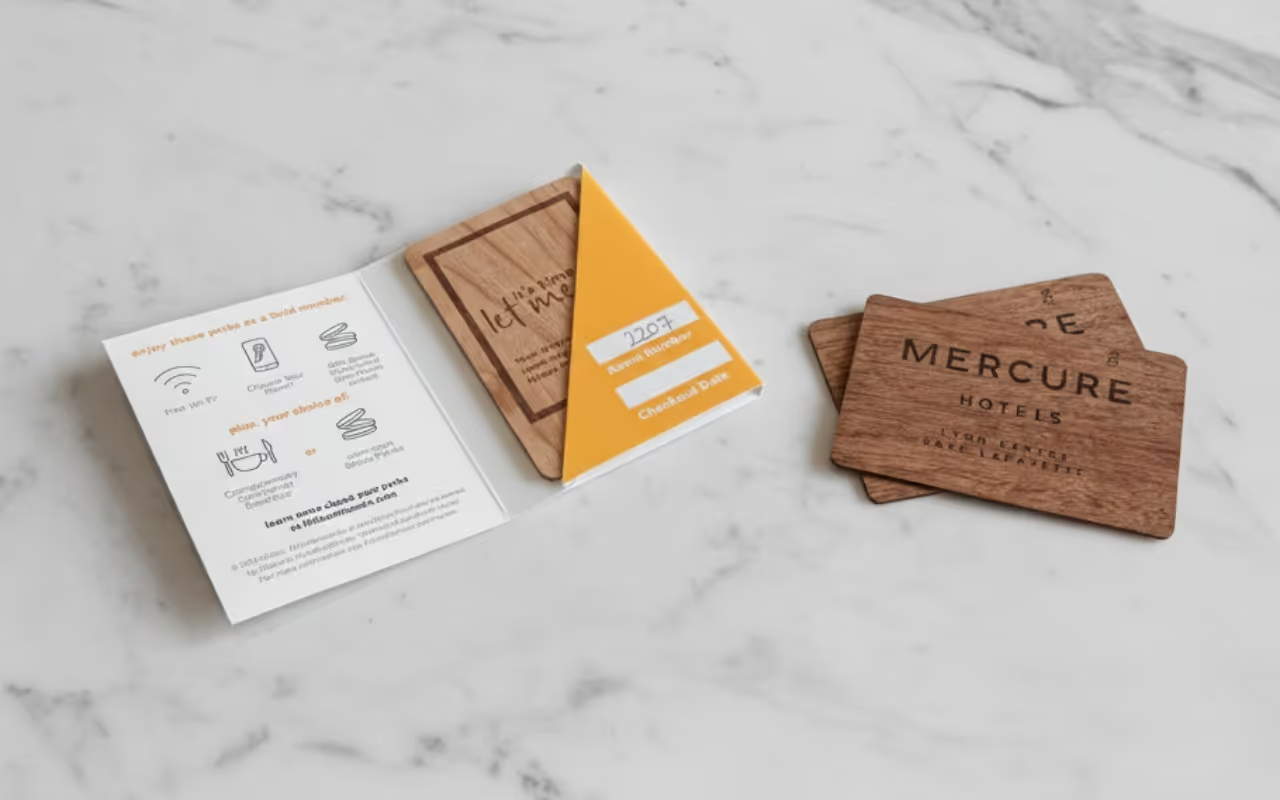
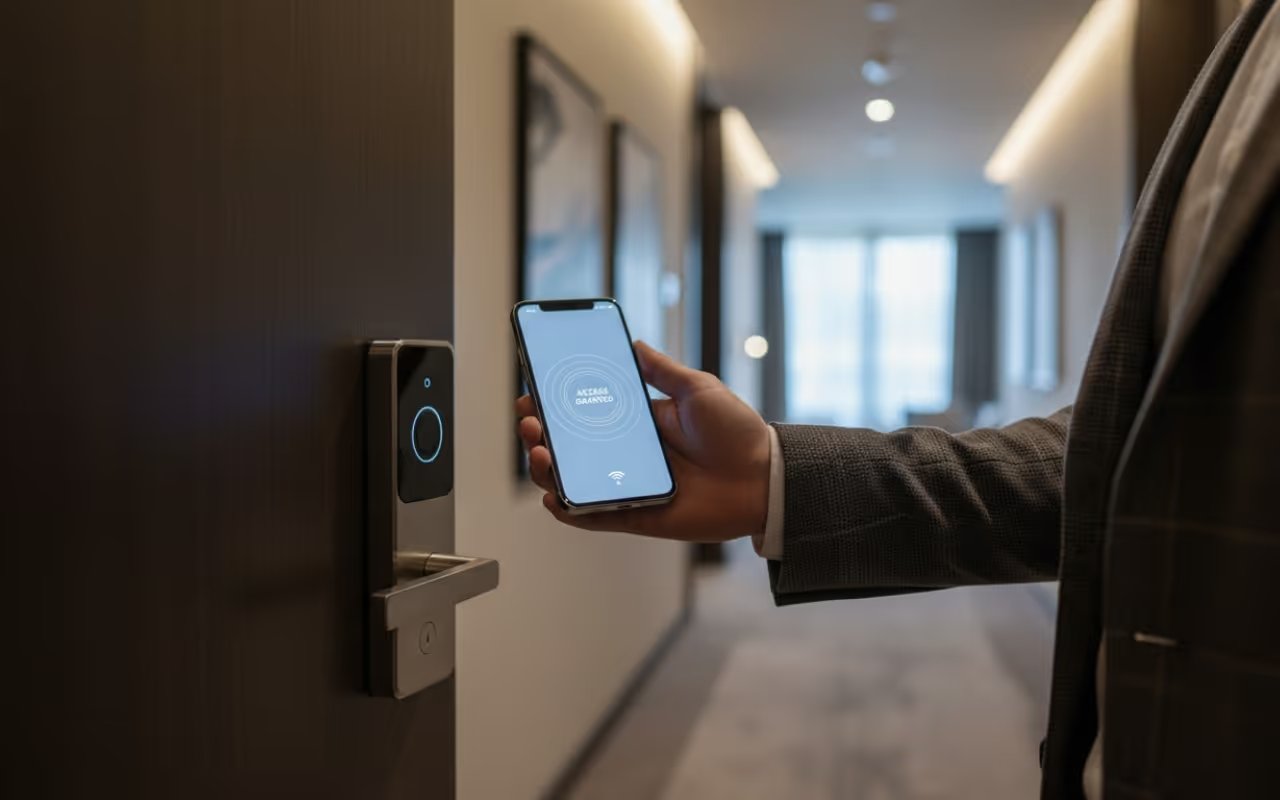
Mobile check-in, digital keys, and app-based communication have shifted from nice-to-have features to baseline expectations. These tools reduce lobby congestion, eliminate paperwork, and provide guests with greater control over their stay. They also create structured digital records of requests and issues, which improves accountability and operational clarity across departments.
6. Smart Buildings and IoT Prevent Failures Before They Happen
Hotels are increasingly equipped with sensors that monitor HVAC systems, elevators, lighting, and room occupancy in real time. These systems allow engineering teams to identify problems before they become guest-visible breakdowns. Predictive maintenance lowers downtime, protects guest satisfaction, and reduces the cost impact of large reactive repairs.
7. Revenue Management Shifts to Real-Time Intelligence
The era of relying mainly on historical pricing patterns is ending. Hotels are now using tools that combine booking pace, competitor moves, local event data, and demand signals to refine pricing decisions continuously. In a structurally volatile travel market, this level of agility is essential to protect rate integrity while still capturing opportunity.
8. Direct Booking Ecosystems Strengthen Commercial Control
Hotels are redesigning their commercial strategies to grow direct relationships with guests. Loyalty programs, personalized offers, and owned digital channels are being prioritized to reduce long-term reliance on online travel agencies. OTAs remain important for discovery, but repeat business is increasingly recaptured through brand-controlled platforms where data and economics are stronger.
9. Wellness Becomes Central to How Hotels Design Experiences
Wellbeing has shifted from being a stand-alone facility to an organizing principle for the entire stay. Guests are seeking environments that promote rest, mental clarity, nature connection, nutrition, and movement. Hotels that embed these ideas into room design, F&B programming, and service culture are seeing longer stays and stronger emotional loyalty, especially in premium segments.

10. Premiumization of Travel: Luxury as the Growth Engine
The widening gap between hotel segments reflects the premiumisation of travel. Luxury properties are driving growth as affluent travellers seek exclusivity, personalisation, and emotionally resonant experiences, not just better rooms. As travel becomes a form of status expression, these guests are willing to pay for privacy, curation, and distinction, giving luxury hotels stronger pricing power and resilience. This divide is set to widen as operators invest beyond traditional notions of luxury.

By 2026, hotel operations are becoming more disciplined, data-driven, and intentional. Technology is embedded within the operating model, teams are being enabled rather than replaced, and the market is increasingly separating adaptable operators from the rest.
For hotel leaders, success is no longer about chasing every trend, but about building systems and experiences that flex with demand, protect margins, and deepen loyalty. Those who balance intelligence, resilience, and genuine hospitality will define the next phase of hotel operations.
Featured posts
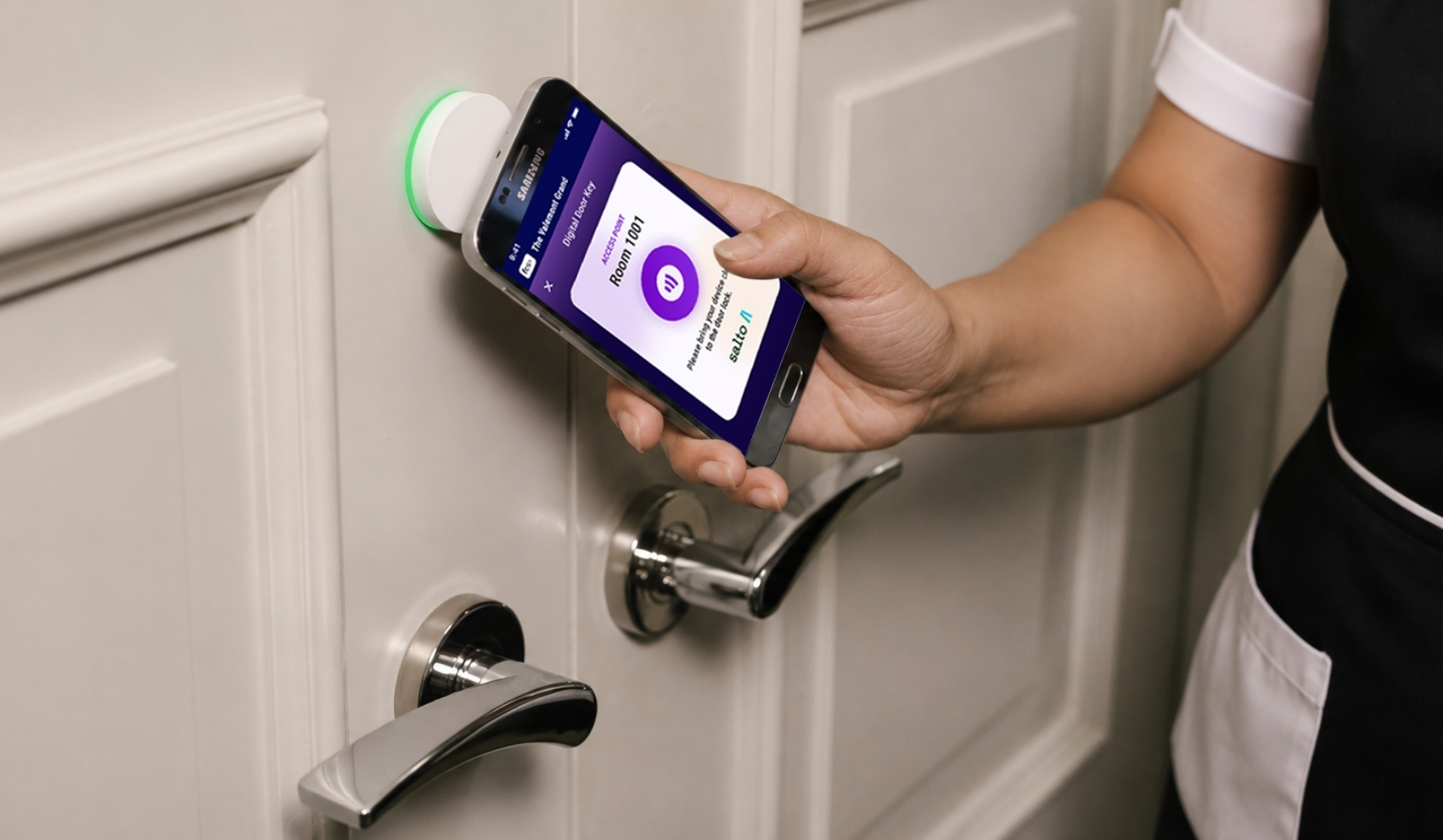
FCS Solutions, a cloud-native hospitality operations technology provider, today announced its integration with Salto, a global leader in smart access control solutions. The integration connects FCS1 Hospitality Operations Platform with the Salto Space smart access control platform, enabling hotels to digitize housekeeping operations through secure, keyless room access, enhancing hotel security, operational efficiency, and accountability.
With the integration, Room Attendants can unlock assigned guest rooms directly from the FCS1 mobile application after a Cleaning Order (CO) is initiated. Access is automatically authorised only for the assigned room and active task, ensuring staff can enter only the guest rooms they are scheduled to service. Replacing traditional master keys with secure digital access helps hotels maintain a clear audit trail of room access.

"Master keys are one of the last analog weak points in hotel security because they are difficult to track, easy to lose, and impossible to audit in real time," said Karen Bey, Vice President of Sales, FCS Solutions. "Our partnership with Salto closes that gap by giving hotel operators greater visibility and control over room access, with a clear record of who accessed which room and when."
"Access should be intelligent, secure and seamlessly integrated into daily hotel operations," said Winston Ng, Regional Manager, Strategic & Enterprise Accounts, Salto. "By partnering with FCS Solutions, we're extending that intelligence into one of the hospitality industry's most widely used operations workflows. A lock is no longer just a lock. It becomes part of a hotel's real-time operational ecosystem. Housekeeping teams gain faster, secure access, while operators benefit from the visibility, accountability, and audit trail that traditional master keys cannot provide.”
This collaboration reinforces FCS Solutions' commitment to an open hospitality platform connecting hotels with the partners and technologies that are shaping the future of hotel operations.
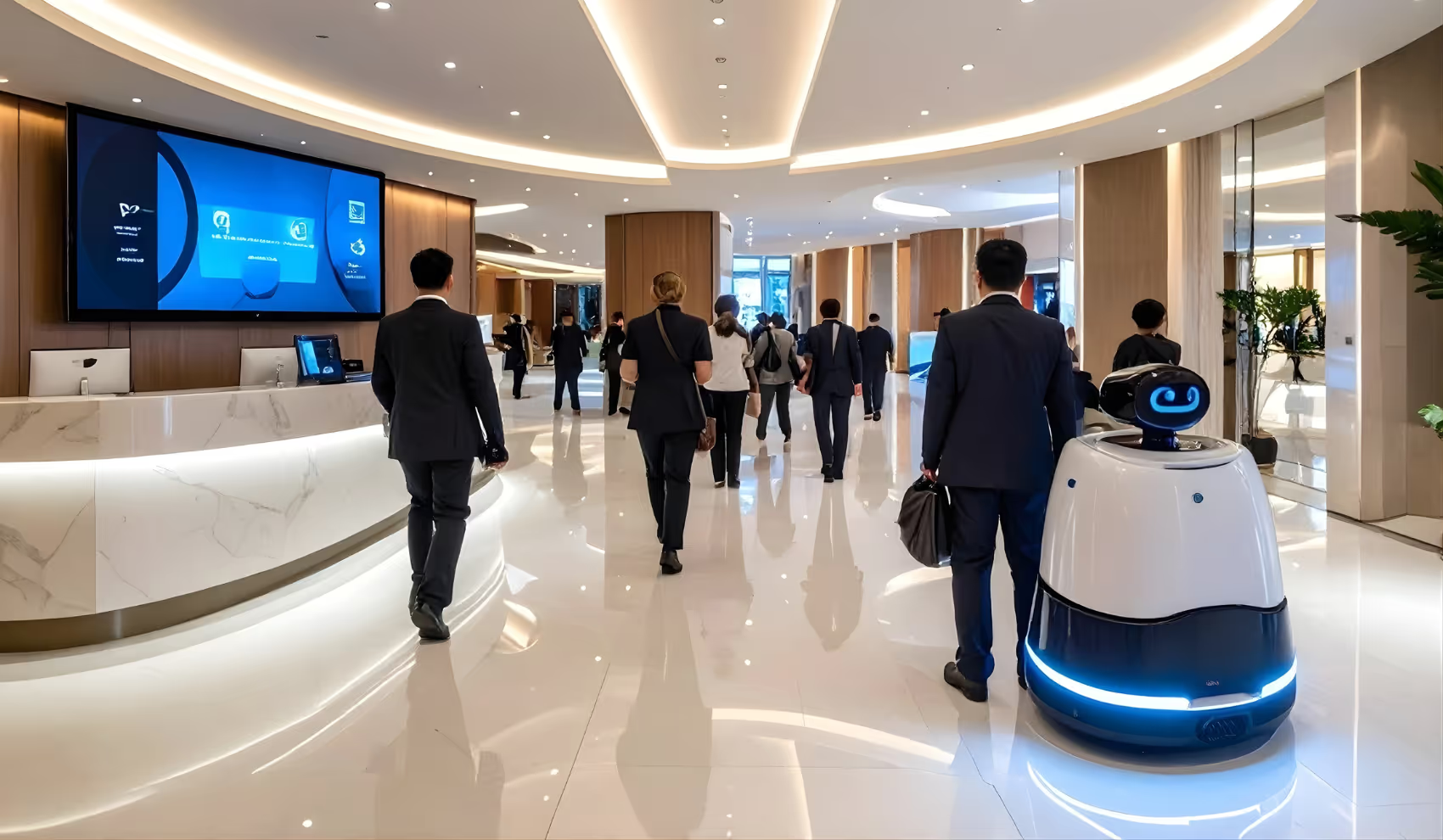
In every era of hospitality, a single technology quietly transforms how hotels think, work, and connect with guests. The first Property Management Systems digitized reservations. Channel managers expanded reach. Mobile apps gave guests control at their fingertips. Now, a new frontier is emerging, driven by hotel business intelligence tools that go beyond automation. Artificial Intelligence is no longer just an assistant to humans. It is becoming a co-operator that thinks, adapts, and acts alongside them. We are entering the age of cognitive hospitality.
From Reactive Operations to Predictive Intelligence
Today, most hotels still operate reactively, responding to guest requests, occupancy changes, or service gaps. But the next evolution will be guided by hotel business intelligence software that predicts needs before they even appear. Imagine your property’s digital systems like PMS, housekeeping, maintenance, CRM, all feeding data into one unified intelligence. It can recognize early check-in patterns, forecast service bottlenecks, and allocate staff automatically based on what’s happening in real time. In this near future, a housekeeping system doesn’t just schedule cleaning rounds; it senses when rooms are ready through motion, temperature, and guest device signals. Maintenance no longer waits for a service ticket. It detects unusual vibration patterns in the HVAC system and creates a task before anyone calls. The hotel of tomorrow will not just run faster. It will run smarter, continuously learning from its own rhythm and data patterns.

Where Conversations Become Commerce
The guest journey is turning into a continuous conversation. Instead of scrolling through websites or apps, travelers will simply tell their digital assistants what they want, and those assistants will handle everything.
“Find me a resort in Kyoto with private onsen villas, a mountain view, and electric vehicle pickup.”
“Book me a three-night stay in Paris near the Louvre with a large workspace and late checkout.”
In seconds, the system compares live inventories, reviews, and prices, completes the booking, processes payment, and even pre-selects preferred amenities. Guests may never touch an OTA or open a browser again. The entire transaction could happen through a single exchange between two digital assistants, the traveler’s and your hotel’s AI-powered system. This is already becoming real. Stripe’s Agentic Commerce allows AI agents to handle payments securely, while conversational systems like PolyAI are learning to speak the language of hospitality naturally and intelligently. For hotels, the next booking engine might not be a webpage. It could be a smart hotel system that knows when a traveler is ready to book.
The Rebirth of the Concierge
As hotel business intelligence tools and automation handle routine work, the human role will shift from transactional to emotional. Front-desk teams will no longer be valued for speed, but for empathy, and for noticing small cues, handling recovery moments, and adding human warmth where technology cannot. The AI concierge will take care of confirmations, reminders, and upgrades. The human concierge will become the storyteller, curating experiences that make every stay memorable. We will no longer train staff to follow steps. We will train them to design moments.
Data: The New Language of Hospitality
AI thrives on clarity, not just volume. In tomorrow’s hospitality landscape, your property’s visibility will depend on how well your data can be read, understood, and trusted by hotel business intelligence tools. Every room description, amenity tag, and review becomes a digital signal. Hotels that organize their data properly like linking services, locations, sustainability, and experience details, will appear more naturally in AI-powered searches and travel planning tools. Your ranking will not only live on a website anymore. It will be decided in a conversation between two intelligent systems that understand which hotel truly fits a traveler’s intent.

Hospitality Intelligence: Beyond Automation
Real transformation begins when technology becomes a collaborator rather than just a helper. This is where hospitality data intelligence takes center stage. AI and analytics will blend data, timing, and emotion into a learning system that helps your hotel:
- Predict occupancy and staffing needs before demand rises
- Detect guest emotions through voice and behavior in real time
- Adjust pricing dynamically based on market context and guest sentiment
- Recommend sustainability actions that improve efficiency and reduce waste
When every department, from housekeeping to CRM, becomes part of one connected network, the hotel evolves into a living system powered by hotel business intelligence software. It starts to feel the rhythm of its guests and respond with precision.
Redefining What It Means to Be Human in Hospitality
This future doesn’t remove the human touch in hospitality; it enhances it. Teams will have more time for empathy, creativity, and genuine connection, the parts of service that can’t be coded. Leaders such as General Managers and Directors of Operations will no longer just manage performance metrics. They will design intelligence itself, deciding how systems think and what values they optimize for. The real question for tomorrow’s hoteliers isn’t “How do we use AI?” but “How do we teach it to understand what makes hospitality human?” Imagine a stay where your hotel already knows you but still manages to surprise you. Your favorite cookie is waiting in the room. The temperature, pillow firmness, and music are just the way you like them.
The age of cognitive hospitality and hotel business intelligence is here. The question isn’t when it arrives. It’s whether your hotel is ready to think.

The hospitality industry stands at a critical juncture in telecommunications infrastructure evolution. As hotels navigate the complex landscape of digital transformation, legacy voice systems present increasingly significant operational, security, and financial challenges. This strategic guide examines the current state of hotel voice infrastructure, analyzes the risks associated with traditional systems, and presents a strategic framework for modernization that balances operational continuity with technological advancement.
The hospitality sector's unique operational requirements - 24/7 availability, guest experience prioritization, and regulatory compliance - demand a carefully orchestrated approach to voice system modernization. Rather than pursuing disruptive full-scale cloud migration, forward-thinking hotels are adopting hybrid middleware solutions that preserve existing investments while establishing pathways to future technologies.
The Current State of Hotel Voice Infrastructure

Legacy System Challenges
The hospitality industry's reliance on traditional Private Automatic Branch Exchange (PABX) systems has created a complex web of operational dependencies that extend far beyond basic voice communication. These systems, often integrated with Property Management Systems (PMS), in-room devices, and emergency notification systems, form the backbone of hotel operations.
However, this integration comes at a significant cost. Legacy voice infrastructure typically operates on Windows-based gateway systems that require constant maintenance, present security vulnerabilities, and consume substantial IT resources. The complexity of these systems often necessitates dedicated server rooms, specialized technical staff, and ongoing licensing fees that compound operational expenses.
Security Landscape Analysis

The cybersecurity landscape for hospitality has evolved dramatically, with voice systems emerging as a primary attack vector. The hospitality industry faces unprecedented cyber threats, with global cybercrime damage costs expected to grow by 15% per year over the next two years, reaching $10.5 trillion USD annually by 2025. According to IBM's Cost of a Data Breach Report 2023, the average cost of a data breach in hospitality reached $3.36 million, with legacy voice systems representing a particularly vulnerable entry point for malicious actors.
The scale of the threat is staggering. Cyberattacks occur at an alarming rate of over 2,200 times daily, with someone falling victim every 39 seconds. The hospitality sector has experienced some of the most devastating attacks in recent years, as demonstrated by the September 2023 incidents affecting major Las Vegas casino operators.
Traditional telephony infrastructure presents multiple security vulnerabilities

Persistent Storage Risks: Legacy systems maintain extensive databases of call records, configuration data, and system logs on local storage devices. This persistent data creates attractive targets for ransomware attacks and data exfiltration attempts.
Network Exposure: Conventional voice gateways often require multiple open ports for various services, creating potential entry points for unauthorized access. Remote Desktop Protocol (RDP) access, commonly used for system administration, has become a favored attack vector for cybercriminals. The Caesars Entertainment breach in September 2023 demonstrated how simple social engineering tactics can compromise entire hotel networks when attackers impersonated legitimate employees to request password resets through voice communication channels.
Configuration Drift: Over time, manual system modifications and patches create configuration inconsistencies that can inadvertently introduce security gaps or system instabilities. An estimated 83% of businesses reported experiencing at least one insider attack in 2024, highlighting the risks of systems requiring frequent manual intervention.
The Business Case for Modernization

Financial Impact Assessment
The total cost of ownership for legacy voice systems extends beyond initial hardware and software investments. Hotels face ongoing expenses related to:
- Maintenance and Support: Aging Windows-based systems require regular patching, updates, and technical support, often necessitating specialized vendors or internal IT expertise.
- Infrastructure Overhead: Server rooms, cooling systems, and backup power solutions add significant operational costs.
- Downtime Costs: System failures can disrupt guest services, potentially impacting revenue and brand reputation.
Operational Efficiency Considerations
Modern hotel operations demand seamless integration between voice services and other property systems. Traditional architectures often create silos that hinder operational efficiency and guest experience optimization. Call billing systems may operate independently from property management platforms, creating manual reconciliation processes and potential revenue leakage.
Furthermore, multi-property hotel chains face additional complexity when managing disparate voice systems across locations. Standardization efforts become costly and time-consuming when each property operates unique infrastructure configurations.
Strategic Modernization Framework

The Middleware Approach
Rather than pursuing immediate full-scale cloud migration, the middleware approach offers a pragmatic path forward that addresses immediate security and operational concerns while preserving existing infrastructure investments. This strategy recognizes that hotel voice systems must maintain absolute reliability while gradually evolving toward cloud-native architectures.
The middleware model introduces a secure bridge between existing on-premises systems and cloud-based management platforms. This approach provides immediate security benefits while establishing the foundation for future technological advancement.
Architecture Principles
Security-First Design: Modern middleware solutions should implement zero-trust security principles, eliminate persistent storage vulnerabilities, and minimize attack surfaces. RAM-only operation ensures that temporary data cannot be exploited by malicious actors, while strict access controls prevent unauthorized system entry.
Operational Continuity: Modernization efforts must prioritize uninterrupted service delivery. Middleware solutions should integrate seamlessly with existing PABX systems, PMS platforms, and in- room devices without requiring substantial operational changes or staff retraining.
Scalability and Standardization: Multi-property operations benefit from standardized infrastructure that can be centrally managed while accommodating location-specific requirements. Cloud-controlled management enables consistent policy enforcement and simplified troubleshooting across property portfolios.
Technical Implementation Strategy

Hardware Architecture
The shift from Windows-based gateways to ARM-based middleware devices represents a fundamental change in hotel voice infrastructure design. ARM processors offer several advantages for hospitality applications:
Power Efficiency: ARM devices consume significantly less power than traditional x86 systems, reducing operational costs and environmental impact.
Form Factor: Compact ARM devices eliminate the need for dedicated server rooms and associated cooling infrastructure.
Reliability: Simplified hardware designs with fewer moving parts reduce failure rates and maintenance requirements.
Security Implementation
Zero-Trust Network Access: Modern middleware implementations should establish secure communication channels using industry-standard SSL encryption over port 443, eliminating the need for multiple open ports or complex firewall configurations.
Ephemeral Storage: RAM-only operation ensures that all system data is automatically purged during power cycles, preventing data persistence that could be exploited by attackers.
Access Control: Key-based SSH authentication and optional secure file sharing capabilities provide necessary administrative access while maintaining security boundaries.
Integration Capabilities
Effective middleware solutions must support comprehensive integration with existing hotel systems:
- Voice Services: Call Detail Record (CDR) processing, voicemail management, and AI-powered operator services.
- Property Management: Minibar posting, room status updates, and guest service integrations.
- Emergency Systems: Wake-up call management and emergency broadcast capabilities.
- Network Services: IPTV integration and IP telephony preparation.
Implementation Considerations
Deployment Strategy
Successful voice infrastructure modernization requires careful planning and phased implementation.
The deployment process should minimize service disruption while ensuring thorough testing and validation at each stage.
Pre-Deployment Assessment: Comprehensive analysis of existing infrastructure, integration requirements, and operational dependencies provides the foundation for successful implementation.
Staged Rollout: Gradual deployment across property locations allows for real-world testing and refinement before full-scale implementation.
Staff Training: While middleware solutions reduce operational complexity, staff must understand new management interfaces and troubleshooting procedures.
Change Management
Technology modernization efforts often face resistance from operational staff familiar with existing systems. Successful implementations require clear communication about benefits, comprehensive training programs, and ongoing support during the transition period.
Vendor Selection Criteria
When evaluating middleware solutions, hotels should consider:
Security Certifications: Vendors should demonstrate compliance with relevant cybersecurity standards and provide documentation of security testing procedures.
Integration Experience: Proven experience with hotel-specific systems and protocols ensures smooth implementation and ongoing support.
Scalability: Solutions should accommodate growth and changing requirements without requiring substantial architectural changes.
Support Structure: 24/7 technical support and rapid response capabilities are essential for hospitality operations.
Future Considerations

IP Telephony Migration
While middleware solutions address immediate modernization needs, hotels should develop long-term strategies for transitioning to IP-based telephony systems. The middleware approach provides time and flexibility to evaluate IP telephony options while maintaining operational stability.
Cloud Integration Evolution
As cloud-based communication services continue to mature, hotels can gradually migrate additional voice services to cloud platforms while maintaining local optimization for high-bandwidth applications.
Artificial Intelligence Integration
Modern voice platforms increasingly incorporate AI-powered features such as automated attendants, natural language processing, and predictive analytics. Middleware architectures should support these advanced capabilities while maintaining security and reliability standards.
Conclusion

Hotel voice infrastructure modernization represents both a critical operational necessity and a strategic opportunity. The challenges posed by legacy systems—security vulnerabilities, maintenance overhead, and operational inefficiencies—demand immediate attention. However, the complexity of hotel operations requires modernization approaches that balance innovation with operational continuity.
The middleware strategy offers a pragmatic path forward, addressing immediate security and operational concerns while establishing the foundation for future technological advancement. By implementing secure, cloud-ready bridge solutions, hotels can eliminate the risks associated with legacy systems while preserving existing infrastructure investments and maintaining service reliability.
Success in voice infrastructure modernization requires careful planning, appropriate vendor selection, and commitment to ongoing evolution. Hotels that embrace strategic modernization approaches will achieve improved security posture, operational efficiency, and competitive positioning in an increasingly digital hospitality landscape.
The hospitality industry's digital transformation continues to accelerate, and voice infrastructure modernization represents a critical component of this evolution. Organizations that act decisively to address legacy system challenges while preparing for future technological opportunities will be best positioned to deliver exceptional guest experiences while maintaining operational excellence.
This strategic guide provides a framework for hotel voice infrastructure modernization based on current industry trends and security requirements. For specific implementation guidance and technical specifications, consult with qualified telecommunications professionals and cybersecurity experts.



.png)


